

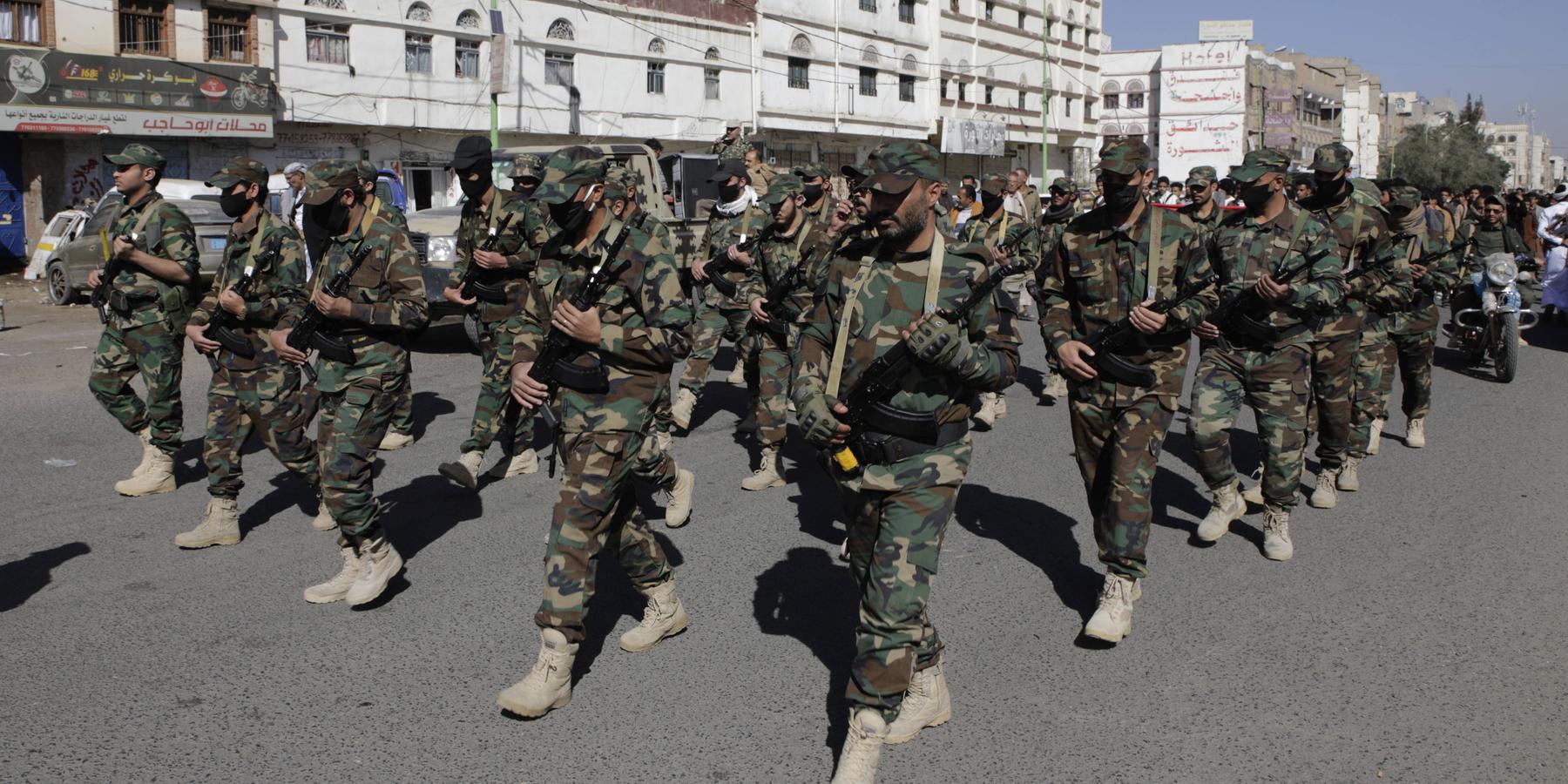
This week, after launching an unprecedented series of strikes on Saudi Arabia, the Houthis embarked on a sweeping offensive in Yemen, seizing large swathes of territory along the Red Sea coast. These rapid changes have pushed Yemen’s war back into the regional arena, threatening Red Sea shipping and placing the country’s Saudi-backed, internationally-recognized government on the back foot.
The rapid reversal came only days after the government declared a campaign to retake Sanaa, Yemen’s capital, amid a broader escalation in fighting across the country.
A 2022 truce had reduced large-scale combat and allowed Saudi Arabia to distance itself from the conflict, but it left the capital under Houthi control and did nothing to establish centralized control over the country and its heavy weapons.
Now, as the Houthis advance rapidly toward government strongholds in the south, Yemen’s military is scrambling to regroup and make progress on its planned offensive in the north. The question now is whether Saudi Arabia, the U.S., and other powers will now intervene to help blunt the Houthis’ rapid advances.
A showdown
Maj. Gen. Samir al-Sabri, Yemen’s assistant defense minister for international cooperation, said Monday that operations would extend from Marib and Al-Jawf to Al-Bayda, Taiz, and the western coast. Pressure across several fronts could force the Houthis to disperse fighters and resources, but it also risks exposing weaknesses among anti-Houthi forces.
Those forces do not all operate through a single structure. Some are tied directly to the government, while others are connected to local power centers or regional patrons with different priorities. A push toward Sanaa would require secure supply lines, reliable intelligence, coordination between commands, tribal understandings, and a plan for administering areas that change hands.
Presidential Leadership Council Chairman Rashad al-Alimi says the government is not asking foreign states to fight the war on Yemen’s behalf. Still, Saudi Arabia has restarted some airstrikes against Houthi positions near Sanaa, and Saudi Crown Prince Muhammad Bin Salman has asked the U.S. to launch airstrikes of its own — a request that Washington has so far declined, according to Axios.
Yemen’s internationally-recognized government has launched airstrikes on Houthi targets along the coast in an attempt to slow the group’s advance, according to Al Jazeera, but there is so far little indication these attacks are having an effect on the offensive.
When the war crossed the border
The return of Houthi attacks on Saudi territory raised the stakes. On September 8, ballistic missiles and drones were launched toward Abha, Khamis Mushait, Jazan, and Najran.
The Houthis said they had targeted an air base and oil facilities, while Saudi authorities reported civilian injuries and disruption at some facilities. And on Friday, reports emerged of smoke rising near Saudi Arabia’s East-West Pipeline, which has provided a crucial outlet for exporting Saudi oil as the Strait of Hormuz remains largely closed. The attack on the pipeline originated in Iraq, not Yemen, according to the Iraqi government.
For Riyadh, this escalation reopens a problem it had spent years trying to contain. The experience after 2015 showed that air superiority could damage military targets without producing a stable political outcome. Saudi Arabia gradually lowered its direct involvement because the costs were high and the strategic return was limited.
That calculation becomes harder to sustain if missiles and drones continue to cross the border. A strike that seriously damages energy infrastructure could force a stronger response. At that point, for Riyadh, deterrence becomes as important as Yemen policy.
Bab al-Mandab makes the problem more sensitive because instability there affects actors far beyond Yemen and Saudi Arabia. The strait links the Red Sea with the Gulf of Aden and the Indian Ocean and is critical to international trade and energy flows.
The Houthis have said their restrictions are directed at Saudi shipping and that other vessels can pass. Shipping companies and insurers, however, are highly risk-averse and may be unwilling to pass through contested waters. The Houthis’ growing power along the coast could thus give the U.S. and European states reason to become more involved in Yemen.
Will Washington and Riyadh join the war directly?
The United States approaches the conflict from a narrow strategic position. Washington wants to protect Saudi territory, reduce the missile and drone threat, limit weapons flows, and keep maritime routes open. The Yemeni government wants something broader: a change in the internal balance of power and restoration of state authority over territory and weapons.
That distinction will shape how far foreign support goes amid rapid shifts on the frontlines.
Washington can expand intelligence sharing, strengthen Saudi air and missile defenses, increase maritime surveillance, support weapons interdiction, and impose sanctions without endorsing a full campaign toward Sanaa.
Saudi Arabia is likely to prefer a similarly selective approach. Riyadh can provide weapons, intelligence, and logistical support to government forces while strengthening its own defenses and avoiding the scale of direct intervention seen earlier in the war.
Iran complicates the calculation. Tehran denies controlling Houthi decisions, while Western and regional governments accuse it of supplying weapons, technology, and military assistance. Even if the Houthis retain substantial autonomy, their ability to threaten Saudi Arabia and Red Sea shipping gives Iran strategic leverage.
Other major powers will view the conflict mainly through their own interests. China wants secure maritime trade. Britain and France have condemned attacks while supporting a UN-led political process. None has an obvious interest in assuming responsibility for Yemen’s internal war.
Their position could change if Bab al-Mandab becomes persistently unsafe. Expanded naval patrols, tighter sanctions, and additional defensive assistance for the internationally-recognized government would become easier to justify. Support for a major ground offensive would still depend on what comes after military gains.
If Yemen’s government cannot show that it can administer recaptured areas, integrate security forces, restore basic services, and limit rivalry among its allies, outside powers may decide that containment remains less risky than backing a broad military transformation without a clear political end state.
This is why the near-term outcome is more likely to be a prolonged contest than a rapid march on Sanaa. Fighting may intensify on several fronts, Houthi missiles and drones may continue to pressure Saudi Arabia, naval deployments may grow, and sanctions may expand without producing a decisive result.
This could, of course, change rapidly if the Houthis manage to solidify their gains along the Red Sea, which would create a lasting threat to shipping.
Saudi Arabia does not want to return to an open-ended war. Washington does not want another major military commitment in the Middle East. The United Nations wants to preserve a political channel. Yemen’s government wants stronger support without abandoning its goal of restoring state authority. The Houthis want to show that pressure against them can impose costs beyond Yemen.
The key question is what happens on Saudi territory and around Bab al-Mandab. If attacks there continue and expand, Washington, Riyadh, and other powers may enter the war more directly, expanding beyond the airstrikes the U.S. launched during the Biden administration and in the early days of the Trump administration.
Such a shift could turn the Yemen war into a major front of the growing conflagration that is already consuming much of the Middle East.
- The Houthi blockade puts Trump in a serious bind ›
- The Houthis are increasingly setting their own agenda ›
- Vance claims US 'on top' of Red Sea crisis. Houthis say otherwise. ›
- The Houthis could tip the Iran war in Tehran's favor | Responsible Statecraft ›
- How Saudi Arabia's anti-Houthi strategy crashed and burned | Responsible Statecraft ›
- When Saudi Arabia realizes it's backed the wrong horse | Responsible Statecraft ›