

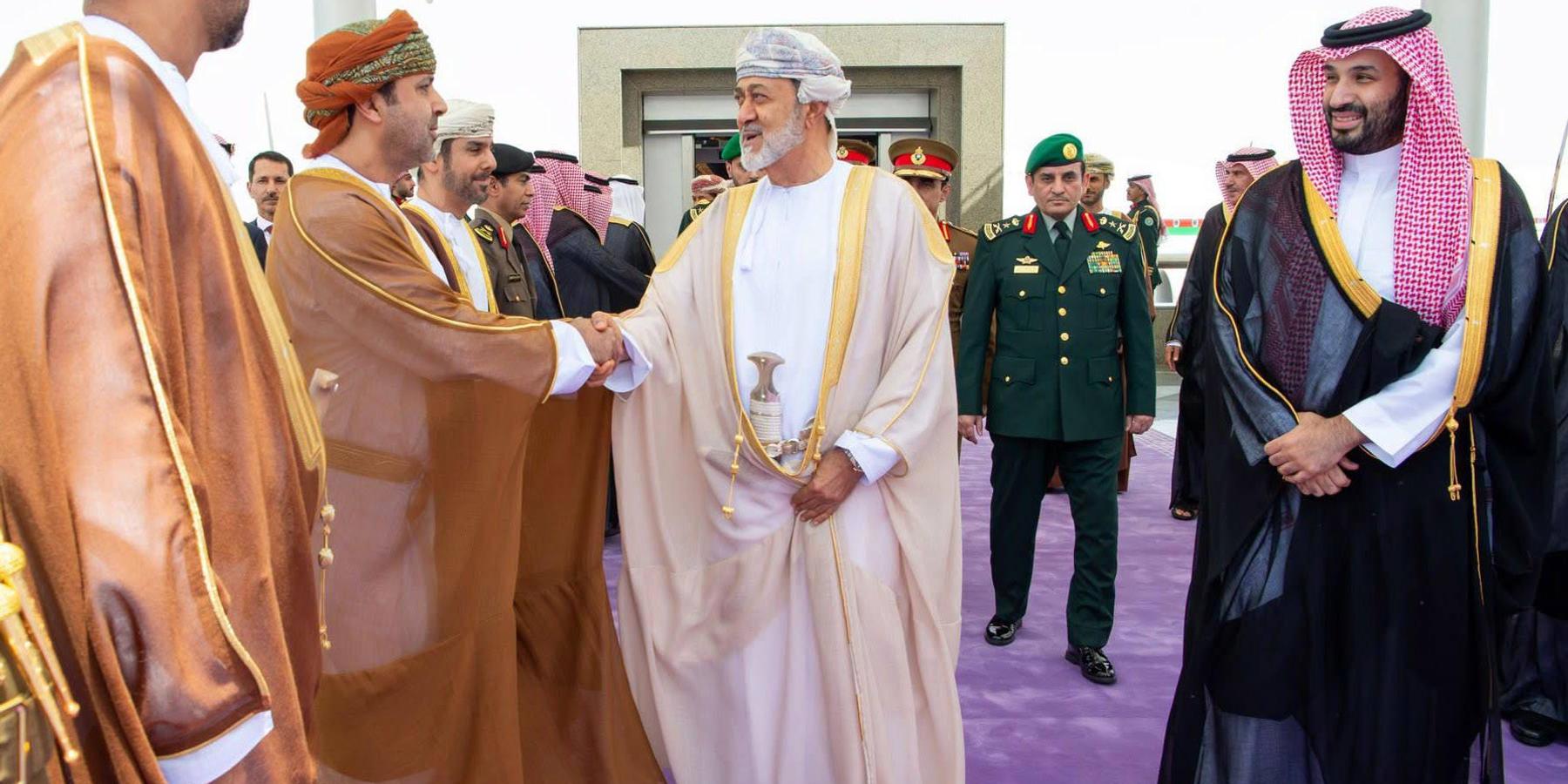
The Sultanate of Oman’s willingness to engage all actors in the Middle East and beyond has long been a pillar of Muscat’s foreign policy. Yet with the war raging in the region, Oman’s efforts to maintain a pragmatic and normal relationship with Iran has fueled friction with the White House.
This was notably underscored by President Donald J. Trump’s earlier threats to “blow up” and “bomb the shit out of” Oman in response to Muscat’s talks with Tehran about the future status of the Strait of Hormuz.
Despite these threats, it is clear that Washington recognizes Oman’s value as a bridge to Iran and other regional actors.
With the struggle for control over Yemen’s Red Sea coast and the Bab el-Mandab becoming the “Western Front” in the wider U.S.-Iran crisis, the Trump administration has turned to Oman for help with de-escalation efforts and direct talks between Washington and the Ansar Allah movement, better known as the Houthis. On September 15, Secretary of State Marco Rubio spoke by phone with his Omani counterpart, Sayyid Badr al-Busaidi, and “expressed support for deepening ties between Oman and the United States,” according to a State Department press release.
“The significance of the Rubio–al-Busaidi call is best understood here in Oman not as an isolated diplomatic courtesy, but as a strong indication that Washington still sees Oman as a necessary diplomatic and strategic interlocutor,” explained a former Omani diplomat who spoke to RS on the condition of anonymity.
“It can be also read as a form of ‘strategic correction’. Whatever the political rhetoric, the U.S. administration needs a functioning relationship with Muscat,” he added.
Several days before Rubio and al-Busaidi spoke by phone, U.S. officials and senior Ansar Allah representatives met at the U.S. embassy in Muscat with support from Omani mediators. During this meeting, which came several days after the Houthis carried out their successful offensive against the forces of the Saudi-backed internationally recognized Yemeni government on the country’s west coast, the Houthis reportedly relayed to U.S. officials that their group has no intention of targeting American vessels.
Meanwhile on September 12, Trump stated that Ansar Allah phoned his administration and asked for Washington to refrain from entering the conflict in Yemen. Two days later, Vice President JD Vance confirmed that Washington was in direct contact with the Houthi movement.
This U.S.-Houthi meeting illustrates how “Muscat is not simply a diplomatic partner in the abstract,” noted the former Omani diplomat. “It is functioning as one of the few places where multiple actors in the regional confrontation can potentially communicate.”
As officials in Muscat see it, instability in Yemen will always threaten Oman’s vital security and economic interests. Conflict in or around the Bab el-Mandab will inevitably disrupt commerce and energy flows. This stands to harm the broader maritime environment, undermining Oman’s ambitions for its ports and logistics hubs, which are key to the country’s Vision 2040 economic development and diversification agenda.
Therefore, preventing an arc of maritime insecurity stretching from Yemen to the Persian Gulf is very much in Oman’s own national interests.
With a relatively neutral foreign policy, Omani officials like to remain somewhat distant from problems plaguing the wider region. “But they realize these problems affect them and when there is something really important in Washington, Oman is willing to help and play a role,” explained David Des Roches, a professor at the Thayer Marshall Institute, in an RS interview.
Hawkish, neo-conservative organizations, such as Foundation for Defense of Democracies, like to portray Oman as an untrustworthy and problematic actor aligned with the Iran-led camp. But, a U.S. foreign policy that treats Muscat as a threat to Washington’s interests would make it more difficult for the U.S. to pursue its interests vis-à-vis Yemen, the Red Sea, and the Strait of Hormuz.
Rubio’s call with his Omani counterpart “suggests that Washington does not want the U.S.-Oman relationship to become collateral damage in the Iran conflict,” said the former Omani diplomat, who believes that the Trump administration has “realized that a breakdown in U.S.–Oman relations would therefore damage an established American security relationship and potentially eliminate an important diplomatic channel at exactly the moment Washington needs one.”
There is a paradoxical dynamic in play: The ongoing U.S.-Iran crisis makes Muscat’s diplomatic role more valuable at the same time it becomes more potentially dangerous.
“The more Washington needs Oman as an intermediary, the greater Oman’s diplomatic relevance becomes,” said the former Omani diplomat. “But the more Oman becomes involved in U.S.-Iran or U.S.-Houthi diplomacy, the greater the risk that one side interprets Oman’s role as alignment with the other.”
- The Houthis could tip the Iran war in Tehran's favor ›
- How Saudi Arabia's anti-Houthi strategy crashed and burned ›
- When Saudi Arabia realizes it's backed the wrong horse | Responsible Statecraft ›