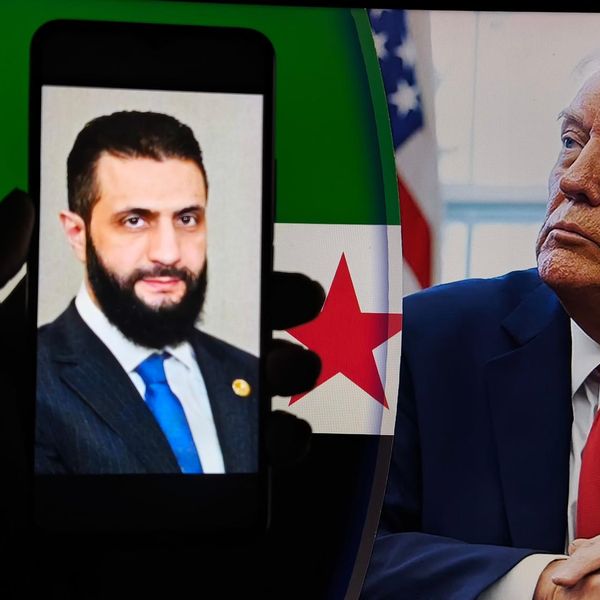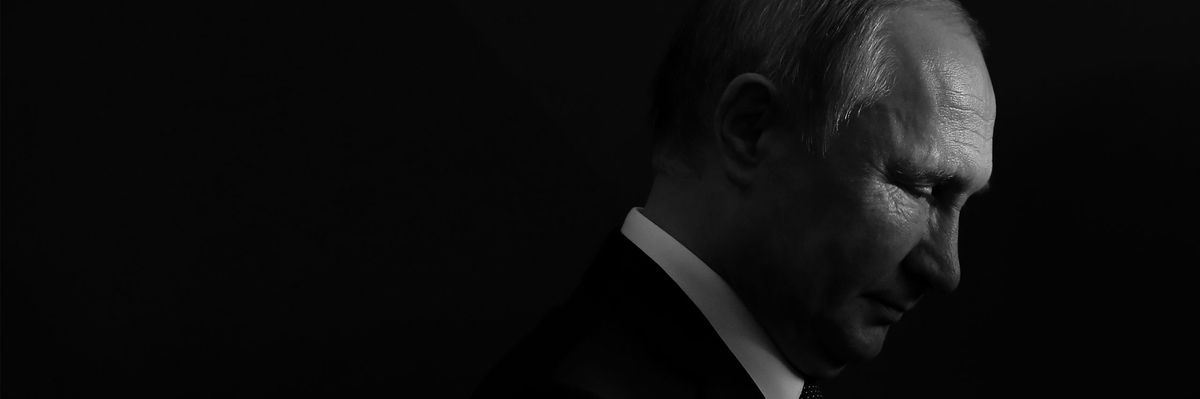
As the presidential campaign continues to unfold with a Democratic candidate debate this week, it will no longer be enough for the contenders to lambaste Russian President Vladimir Putin’s interference in the 2016 elections and invasion of Ukraine, embrace retaliatory sanctions and cyber defenses, and mock President Donald Trump’s unseemly courtship of Putin. They will inevitably be called upon to further elaborate on their policies towards Russia, encompassing Syria, Venezuela, NATO, nuclear weapons competition, and Putin’s growing authoritarianism. Some candidates may be tempted by their disgust with Putin and Trump to view these issues through a starkly anti-Russian prism. That would be a big mistake, both substantively and politically.
To get Russia policy right, the Democratic candidates need first to stop ignoring the underlying condition for Russia’s unjustified election meddling in 2016: the deterioration of Moscow’s relations with Washington over the previous five years. The truth is, Russia’s leaders would never have contemplated a propaganda campaign in American elections during the first Obama administration. It is therefore critical to draw lessons from the crash landing of President Obama’s 2009 “Reset” of Russian relations. Initially, the Reset induced cooperation leading to several positive diplomatic achievements. While it was ultimately buried by Putin’s military aggression in Ukraine and “active measures” in U.S. elections, few have noticed that it was already on life support as a result of poorly conceived U.S. “regime change” military interventions in Libya and Syria.
Nevertheless, the shared interests and mutual dependence that led to the Reset persist. Rather than offering simplistic soundbites, the candidates should concern themselves with revising the Reset to address the problems that arose from both sides. Politically, a significant easing of tensions with Russia would enable a new Democratic administration to tap a swollen Pentagon budget to help pay for the costly social and environmental programs the candidates are promising their supporters.
Rise and Fall of the Reset
Obama attempted to engage with Moscow in areas of common interest without abandoning necessary criticism on other issues including Putin’s rising authoritarianism. Beginning in 2009, Washington and Moscow cooperated in a number of important areas. Together, they countered terrorism in Afghanistan, with Russia furnishing major logistical support for the escalating U.S.-NATO presence; prevented ethnic and regional war in two former Soviet republics bordering Afghanistan; lowered the risks of war as well as their military costs through the New START Treaty for mutual reductions of nuclear weapons; and fostered nuclear nonproliferation through U.N. Security Council economic sanctions against Iran and North Korea and negotiation of the international accord to prevent an Iranian nuclear weapons “breakout.”
These “win-win” gains pushed into the background Russia’s fear that the U.S. and NATO threatened its security. Moscow’s grievances included: NATO’s eastward expansion to Russia’s borders and suggestion of future membership for the former Soviet republics of Ukraine and Georgia, perceived (if exaggerated) contributions of U.S. democracy assistance programs to anti-Russian “color revolutions” in those countries and the precedent they set for Russia and Western recognition of independent, monoethnic Kosovo, which the Kremlin viewed as encouraging violent separatism in the mostly Muslim North Caucasus.
However, when the U.S. and its allies embarked upon overt and covert military interventions in Libya and Syria in 2011-12, they ruptured the fragile framework of American-Russian cooperation, allowing the Kremlin’s existential fears to re-emerge. Despite reservations, President Dmitry Medvedev agreed to abstain on a March 2011, Western-sponsored U.N. Security Council Resolution authorizing limited humanitarian military intervention in Libya to protect civilians threatened with attack by the Muammar Qaddafi regime. Both Vice President Joe Biden and President Obama assured Medvedev they had no intention of effecting “regime change,” which the Russians feared would fuel chaos and violent Islamic extremism.
But, eager to reposition themselves on “the right side of history” during the “Arab Spring” revolts, the U.S. and NATO provided decisive military assistance to the rebels, who overthrew and eventually murdered the Libyan dictator. They disdained establishing a protective military stalemate or supporting a promising African Union effort to mediate a political transition with United Nations peacekeeping. Medvedev felt “betrayed…. I had never seen him so upset,” the National Security Council’s Senior Director for Russian Affairs subsequently observed in “From Cold War to Hot Peace.” In response, Russia vetoed a U.S.-sponsored Security Council Resolution threatening Syrian dictator Bashar al-Assad, whom Obama had called upon to resign, with sanctions for using force against civilian protesters. This set the table for the subsequent U.S.-Russia proxy war over Syria.
The consequences of Obama’s Libya regime change policy for the Reset have been vastly unappreciated in the U.S. Putin himself told the Moscow Times in 2014, “You know, it’s not that it [the Reset) has ended now over [Russian annexation of] Crimea. I think it ended earlier, right after the events in Libya.”
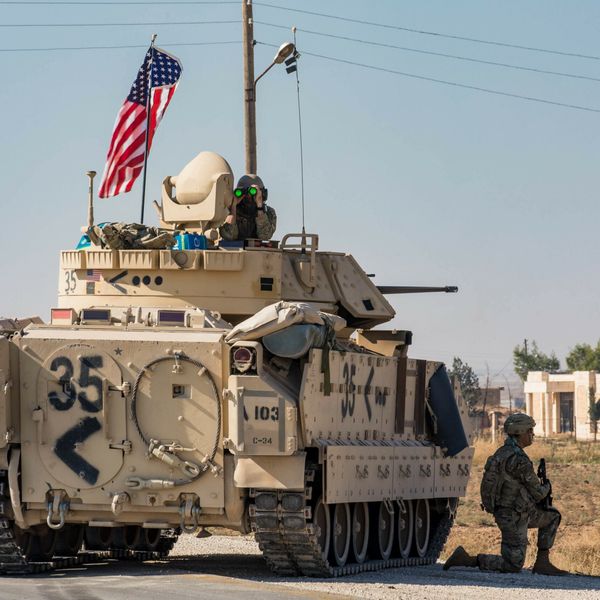
In the absence of a U.N. consensus on Syria’s future, the U.S., Arab allies, and Turkey coordinated to arm, train, and finance tens of thousands of rebels to displace Assad. Syria’s traditional supporters — Iran, Lebanese Hezbollah, and Russia — responded by dispatching additional arms, money, and forces to bolster him. By 2016, Russian air power and advisers had provided the Syrian regime a decisive edge.
Beyond their negative effect on Russian relations, U.S. regime change policies in Libya and Syria seriously damaged American interests, spreading extremism, enhancing adversaries’ influence and risking military quagmires. In “The Back Channel,” Former Deputy Secretary of State William Burns kindly characterized these profoundly misconceived policies as “wishful thinking.”
After the 2014 overthrow of the generally pro-Russian Ukrainian President by pro-European demonstrators, Moscow annexed Crimea and fueled separatist violence in Eastern Ukraine. Putin’s hasty overreach was prompted by his fear that a pro-European government would go beyond its predecessor’s ambivalent dabbling with membership in the European Union and gravitate towards NATO.
Finally, Russia launched its propaganda campaign against 2016 Democratic Presidential candidate and former Secretary of State Hillary Clinton. Not coincidentally, Secretary Clinton had been a decisive vote in favor of U.S. intervention in Libya and a proponent of additional U.S. military force in Syria.
Back to the Future
Notwithstanding the Reset’s breakdown, the common interests and mutual dependence that underlay it endure. Reflection should lead both partners towards a modified Reset.
Today, the U.S. and Russia are convening separate peace processes for Afghanistan. Instead, they should maximize their leverage by jointly working towards a regional peace agreement depriving al-Qaida and ISIS of bases in the region and bringing American troops home. They should negotiate a successor to New START, which expires in 2021, and intensify other arms control efforts in the wake of the recent collapse of the Intermediate-Range Nuclear Forces (INF) Treaty. They should again abandon separate peace processes and cooperate to de-escalate violence and defeat violent extremism through inclusive political settlements in Syria and Libya, ones that will hopefully limit destabilizing human rights abuses and avert proxy wars. They should work to rejuvenate the European/Russian Minsk peace process to de-escalate the wasting stalemate in Ukraine. And they should develop common approaches to restrain North Korean and Iranian nuclear weapons proliferation.
Former Secretary of State John Kerry, who lived the fall of the Reset, wrote in “Every Day is Extra,”: “Somehow, even when difficult, we must always preserve room to sit down face-to-face [with Russia], compartmentalize issues as needed, and make progress where we can, even as we disagree where we must.”
Democratic presidential candidates should advocate a balanced approach of renewed U.S.-Russian cooperation on shared interests and sanctions and deterrence for aggression and human rights abuses. This will, history shows, require constraints on the reality or appearance of U.S.-sponsored regime change in Russia, its European neighbors and other sensitive countries like Libya, Syria, and Iran. But that’s a good idea regardless.