

Update 3/5 4:40 P.M.: The war powers resolution introduced by Reps. Ro Khanna (D-Calif.) and Thomas Massie (R-Ky.) to rein in unauthorized hostilities with Iran, failed to advance in the House of Representatives today in a 212-219 vote.
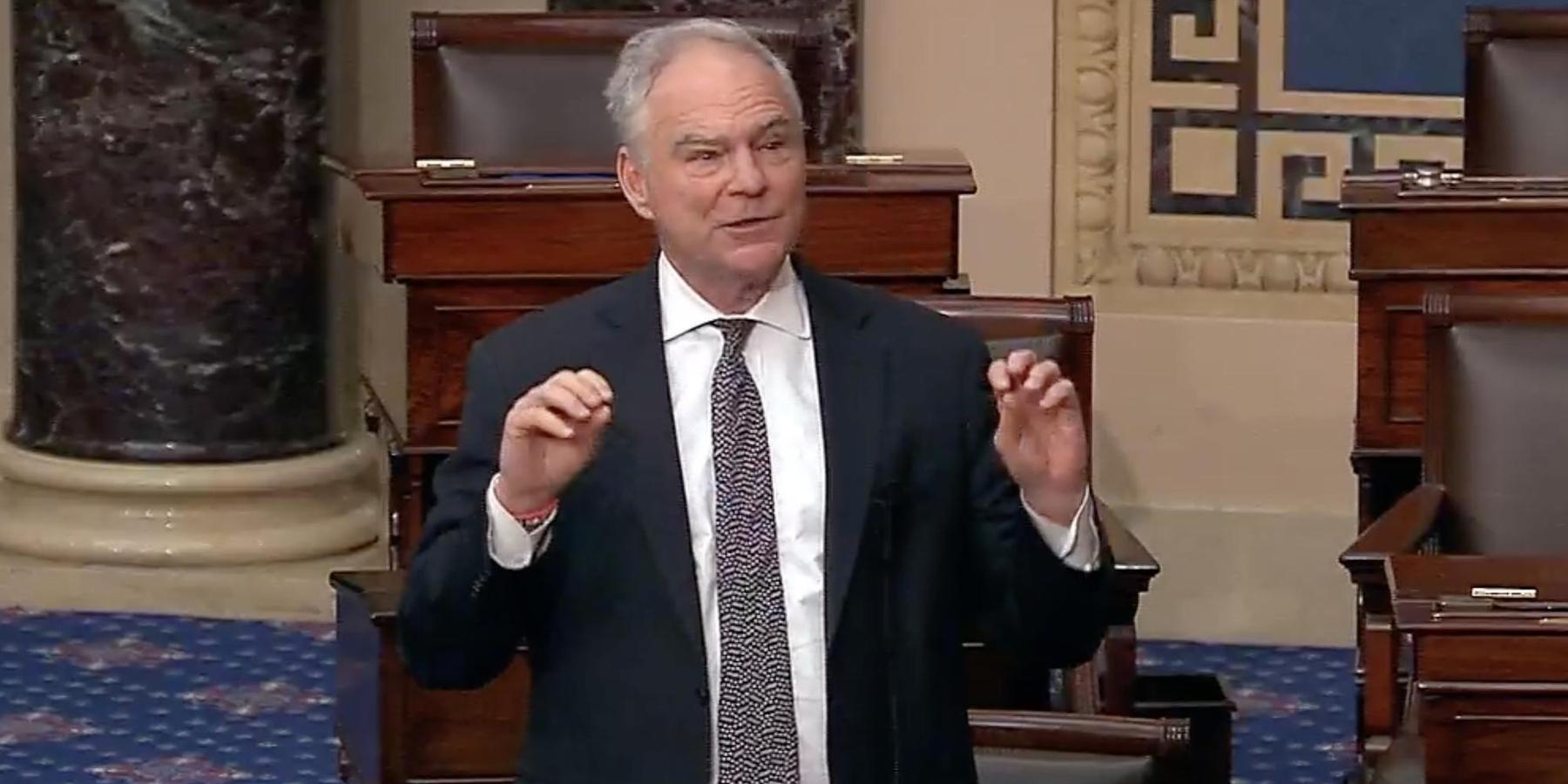
Today, the Senate narrowly blocked a war powers resolution, which would have halted ongoing and unauthorized U.S. military hostilities against Iran.
The resolution, sponsored by Sen. Tim Kaine (D-Va.), and co-sponsored by 26 other Senators, failed to advance in a 47-53 vote, where most Democrats have voted for the legislation, and Republicans largely voted against it. (The vote, originally 47-52, was held briefly to wait for Sen. John Cornyn (R-Texas) to return from a trip from Texas to vote. He then voted against the resolution.)
The exception among the Democrats was Sen. John Fetterman (D-Pa.), who voted against the resolution, as he said he would. Among Republicans, the lone exception was Sen. Rand Paul (R-Ky.).
A war powers resolution in January aimed at halting hostilities with Venezuela garnered a number of Republicans, including — Sens. Josh Hawley (R-Mo.), Todd Young (R-Ind.), Lisa Murkowski (R-Alaska), and Susan Collins (R-Maine), but none of them voted for today’s resolution.
On the floor leading up to the vote, resolution supporters stressed the human costs of the conflict with Iran, and asserted that Congress must be able to decide when the U.S. goes to war.
“This resolution is about stopping that war, but it is also about reasserting Congress's vital role as a check on the executive and the abuse of the authority to bring a nation to war,” Sen. Adam Schiff (D-Calif.) said. “This is about whether the American people, through their elected representatives, will have a say when their sons and daughters are put in harm's way. When the resources of this country are diverted away from their communities, and towards the building of bombs and weapons and engagement in another, potentially endless foreign war.”
“In Iran, hundreds have died, including more than 100 school girls — children. They are blameless. Hospitals have been bombed, shopping malls and homes have been hit,” Sen. Patty Murray (D-Wash.) said. “If Trump will not rule out boots on the ground, then this Congress needs to. We have a constitutional responsibility when it comes to war.”
“There is no congressional authorization on the books that would authorize this military action, and, as my colleagues have amply demonstrated, the administration and their shifting set of rationales — and even in a classified setting, could produce no evidence, none that the U.S. was under an imminent threat of attack from Iran,” Sen. Kaine said.
“We can't afford to hide under a desk and let any president, Democrat or Republican, send our best and brightest — our own kids — into war to risk their lives, unless we have debated it, we have determined it's in the national interest, we have voted, and thereby put our signature and our thumbprint, on the notion that it's worth sending our best and brightest to risk their lives," he said.
The House of Representatives will vote on a war powers resolution tomorrow, introduced by Reps. Khanna (D-Calif.) and Massie (R-Ky.), to remove the U.S. from unauthorized hostilities “in the Islamic Republic of Iran” before the U.S. can attack it again.
But an alternative House war powers resolution, introduced earlier this week by Rep. Josh Gottheimer (D-N.J.), and drafted by several Democratic representatives, stands to counter the Khanna-Massie legislation. Aimed at preventing a hasty withdrawal from hostilities amid ongoing military operations, it proposes that Trump end hostilities with Iran within 30 days unless Congress authorizes the war. It would also allow the U.S. to maintain “a troop presence in the region for defensive purposes.”
It is unclear how much support Rep. Gottheimer’s resolution will receive in the House. It is likely the Khanna-Massie resolution will fail.
The U.S. announced “Operation Epic Fury” after it and Israel attacked Iran over the weekend, killing Iran’s leader, Ayatollah Khamenei, in the process — without consulting the entire Congress. Iran retaliated with attacks on Israel and myriad U.S. bases in the Middle East, and the conflict has expanded since.
- Did the US only attack Iran because of Israel? ›
- What if today's Iran is resigned to a long, hellish war with the US? ›
- On Iran, Spain's Sanchez rises above the bowed heads of Europe | Responsible Statecraft ›
- After sinking Iranian ship, did the US military commit a war crime? | Responsible Statecraft ›
- Will Democrats pop Trump's $50 billion trial balloon for war? ›