

The rise of right-wing governments in Latin America has reshaped the region's political landscape. As a new wave of conservative leaders takes office, the region is moving closer to Washington to a degree not seen in decades. Nowhere is this shift more evident than in the changing political approach to Venezuela.
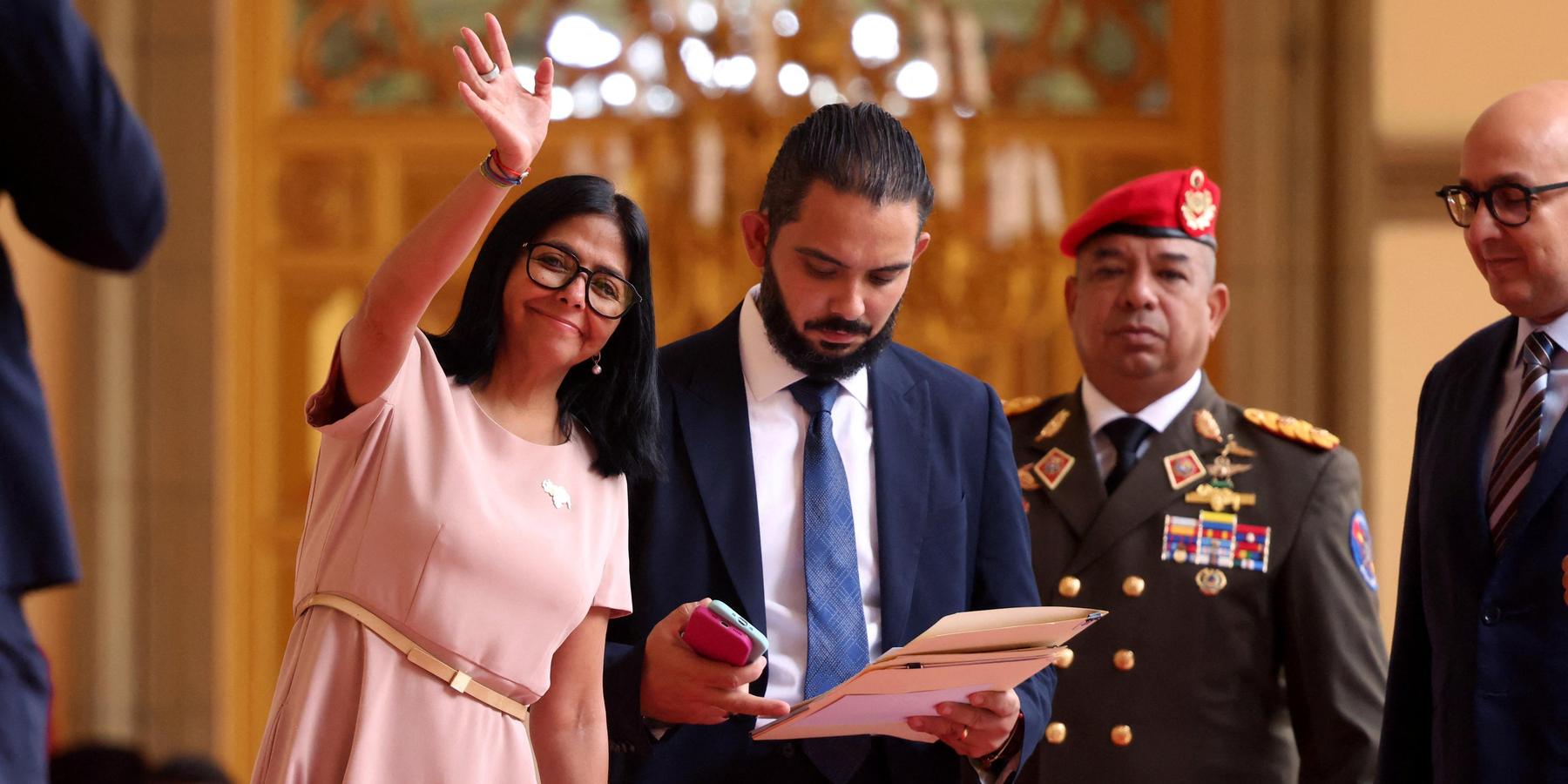
Just a year ago, governments across the region were condemning Nicolás Maduro's authoritarianism, questioning the legitimacy of his electoral victories and supporting international pressure on Caracas. Today, many engage directly with Delcy Rodríguez, Maduro's former vice president and Venezuela's interim president. The region has moved from demanding democratic change in Caracas to normalizing relations with the very political establishment it once sought to isolate.
Looking back at the previous decade makes this contrast clearer. With few exceptions, Latin America had adopted an increasingly firm stance against Maduro's authoritarian rule. In 2017, after Maduro stripped the opposition-controlled National Assembly of its powers, the founding members of the Southern Common Market, or Mercosur, suspended Venezuela indefinitely under the democracy provisions of the Ushuaia Protocol.
A few days later, a coalition of mostly center-right governments, including Argentina, Brazil, Chile, Colombia, Paraguay and Peru, established the Lima Group to coordinate pressure on Caracas. In 2018, five of its members joined Canada in referring the situation in Venezuela to the International Criminal Court. The group rejected Maduro's reelection the same year, later supported Juan Guaidó's claim to the interim presidency, and pressed for sanctions. By 2019, Maduro had become largely isolated in his own region.
Venezuela's neighbors adopted a similar position after the 2024 election. The National Electoral Council declared Maduro the winner without publishing polling station-level results, while opposition tallies showed Edmundo González winning by a substantial margin. Governments across the political spectrum, from Gabriel Boric's left-wing Chile to Javier Milei's right-wing Argentina, rejected the official outcome. Maduro's government expelled diplomats from several countries in response. Caracas severed diplomatic relations after President Santiago Peña recognized González as the president-elect.
These political efforts undermined Maduro’s international legitimacy and signaled that Venezuela's crisis was not merely an internal matter. This isolation helped shape the political context for the U.S. military operation that resulted in Maduro's capture on Jan. 3.
Following Washington's lead
The events that followed Maduro's capture caught the region's right-wing governments off guard. Instead of bringing González and his political ally María Corina Machado to power, the Trump administration chose to work with Rodríguez, one of the regime's leading figures. Rodríguez continues to govern with Washington's backing.
This decision left the region's right-wing governments in a difficult position. For years, they had argued that the regime in Venezuela lacked democratic legitimacy. Yet when Washington chose to replace its leader without dismantling the regime, these governments remained largely silent. As the Trump administration deepened its relationship with Rodríguez, most of the region followed suit.
Now, leaders who placed democratic legitimacy at the center of their foreign policies are now cooperating with a different face of the same Chavista system.
Paraguay is one of the clearest examples. Peña lost diplomatic relations with Caracas after recognizing González as the winner of the 2024 election. Yet on Sept. 19, he became the second foreign head of state to visit Venezuela since Maduro's removal. As Julieta Heduvan, a Paraguayan foreign policy analyst, argued, the gesture toward Venezuela "must be read in light of Asunción's realignment with Washington." The result, she concluded, is "a foreign policy that sacrifices doctrinal coherence without obtaining in return either bilateral progress or democratic guarantees."
Chile's president, José Antonio Kast, has followed a similar path. In December 2025, as president-elect, he called for an end to Venezuela's dictatorship, and he later welcomed the U.S. operation against Maduro. Yet on Sept. 23, one day after Trump met with Rodríguez, Kast sat down with her at the U.N. to discuss restoring bilateral relations.
The Dominican Republic offers yet another example of this emerging trend. In 2024, Caracas expelled Dominican diplomats and suspended flights between the two countries after President Luis Abinader joined governments questioning Maduro's reelection. This month, Abinader met Rodríguez on the sidelines of the World Food Forum in Rome, where they discussed Dominican purchases of Venezuelan fuel and gas.
It is no coincidence that Paraguay, Chile and the Dominican Republic all belong to the Shield of the Americas, the security coalition Trump launched in March, which Christopher Sabatini of Chatham House called a "Trumpista-only" alliance. Frank Mora, a former U.S. ambassador to the Organization of American States, told me that Paraguay, Chile and other right-wing governments are adjusting their Venezuela approach to align with Washington. Visiting Caracas, sitting down with Rodríguez and improving relations is a proactive way to win Washington's favor. Rather than risk repercussions by pressing for more democracy in Venezuela, they line up behind the U.S. position and make that alignment visible.
Practical concerns, including migration, trade and consular services, also play a role. Caracas has reestablished consular relations with Chile, Ecuador, Peru and the Dominican Republic. These governments are under domestic pressure to send Venezuelan migrants home, as voters across the region increasingly blame them for rising crime. In Chile, for example, Kast campaigned on linking immigration to organized crime and has pledged to expel more than 300,000 undocumented migrants, which will require diplomatic relations with Venezuela.
These states also have a clear economic incentive. With Washington’s recent engagement in Venezuela, Mora said there is a "gold rush," and these governments are creating a political space for their investors to share in the benefits.
The region's principled stance that guided its policy toward Venezuela before Jan. 3 has largely evaporated. As Venezuelan analyst Andrés Cañizález put it, "what was once handled through bombastic declarations, diplomatic ruptures, and multilateral pressure has turned into a pragmatism that prioritizes rebuilding bilateral ties, managing migration flows, and economic cooperation, always within the boundaries set by Washington."
As countries across the region deepen their ties with this new version of Chavismo, remarkably little has changed in Venezuela to justify the rapprochement. Diosdado Cabello, a longtime Chavista figure associated with years of human rights abuses, remains interior minister. Rodríguez's brother, Jorge, heads the National Assembly. The new defense minister previously led the intelligence service and has been sanctioned by the United States, Canada and the European Union over repression under his command.
The human rights group Foro Penal still counted 344 political prisoners in September, and there is still no established timetable for elections. Ten months after the U.S. operation to capture Maduro, the main obstacle to democratization is now the political and institutional system that has survived him.
The cost of selective democracy
What makes this shift even more ironic is that the governments now getting closer to Rodríguez spent years criticizing Brazil and Mexico for failing to exert sufficient pressure on Maduro. They accused those countries of enabling authoritarianism because they refused to join the Lima Group or support sanctions.
Today, those critics are doing the same, and not because Venezuela has become any more democratic. The decisive factor is Washington’s change of course. For many governments in Latin America, democratic principles and electoral legitimacy are becoming secondary considerations, defended mostly when they align with Washington’s preferences.
Yet a democratic and prosperous Venezuela is in the interests of both Latin America and the United States. Diplomatic engagement with Caracas can be used to demand political reforms, press for the release of political prisoners and secure a credible timetable for elections. Rodríguez’s pledge at the United Nations that Venezuela would hold elections, and the U.S.-backed negotiations now underway, give regional governments an opening to secure concrete commitments.
Latin American countries do not have to choose between aligning themselves with Washington and losing their voice. The region can regain its influence as an independent political actor in shaping Venezuela’s future. But doing so will require more than restoring diplomatic ties; it will require using these ties to achieve tangible progress toward democratization.
- Trump plan to control Venezuelan oil has more holes than Swiss cheese ›
- Maria Machado hiring DC lobbyists for access to Venezuela's future ›