

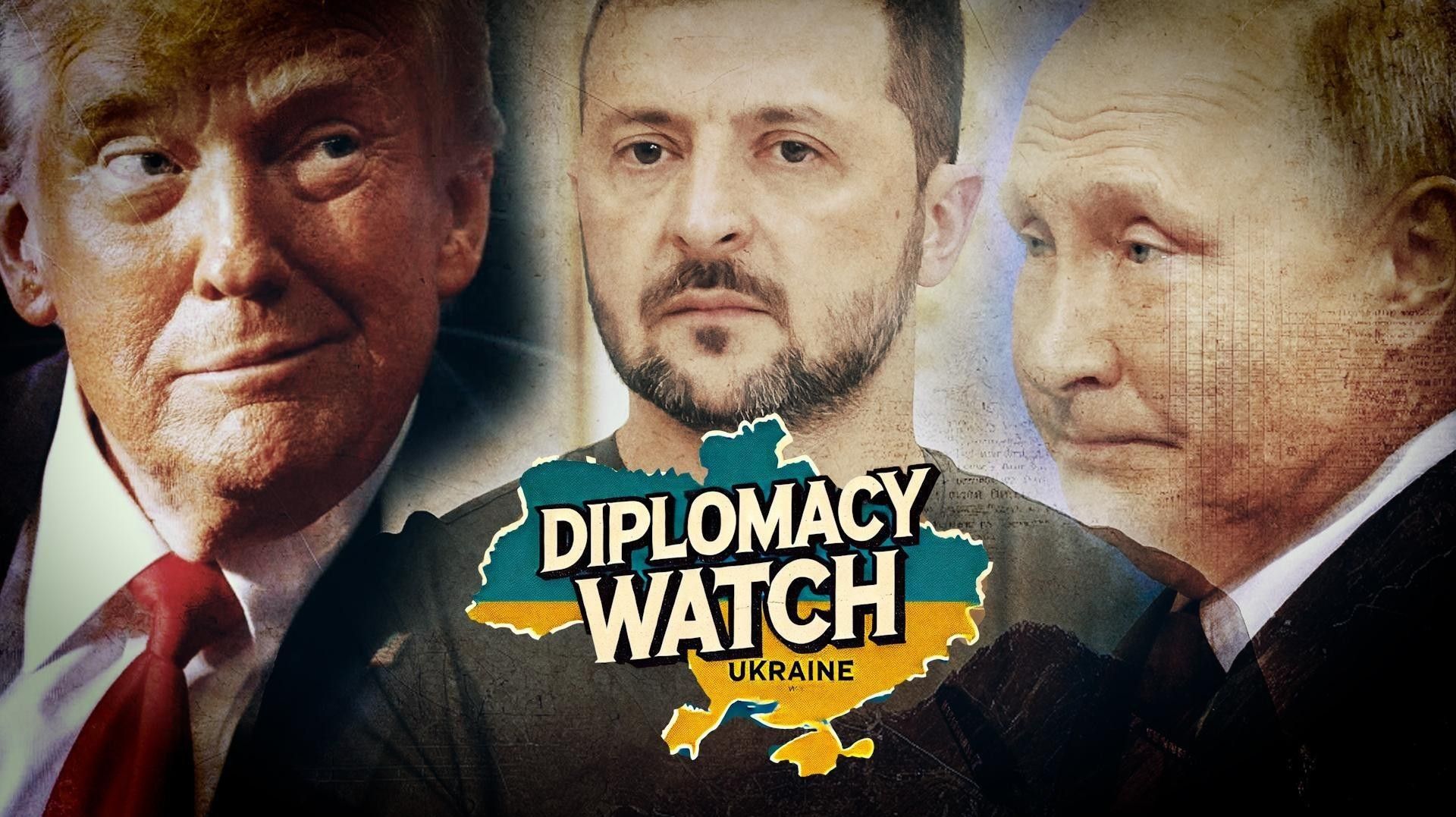
President Trump shocked geopolitical observers this week when he issued a statement saying that “Ukraine, with the support of the European Union, is in a position to fight and WIN all of Ukraine back in its original form.”
“Russia has been fighting aimlessly for three and a half years [in] a War that should have taken a Real Military Power less than a week to win,” Trump wrote on Truth Social. “Putin and Russia are in BIG Economic trouble, and this is the time for Ukraine to act.”
The statement marks a significant rhetorical shift for Trump, who has long argued that Ukraine must swallow significant territorial losses in order to bring the war to an end. In the days since the statement’s release, officials and pundits alike have struggled to figure out whether this means that Trump is ready to go all-in on supporting Ukraine on the battlefield.
Among Russia hawks, the most optimistic takes came from Eastern European officials and Republicans in Congress. Trump “hinted that Russia is defeatable,” Estonian Foreign Minister Margus Tsahkna told Politico, adding that Trump’s comments were “good to hear.” Sen. Mitch McConnell (R-Ky.), for his part, lauded Trump for identifying “Russia as the aggressor” and accused Defense Department officials of undermining Trump’s efforts to end the war militarily.
But where some saw a real change in policy, others saw a mere shift in framing. “The reversal is one of analysis and not policy,” argued Richard Fontaine of the Center for a New American Security. “There is no new call for a cease-fire or peace agreement, no new sanctions, no new deadlines and no new military support for Ukraine, beyond the weapons NATO buys from the United States.”
It is unclear what led Trump to alter his analysis of the situation on the ground, which appears to be getting worse as the fourth year of the war drags on. The Economist, a long-time supporter of Ukraine’s war effort, wrote this week that a “Trump-imposed compromise may be the best Ukraine can hope for,” citing deteriorating economic and political crises in the country.
Trump’s seeming shift is likely an effort to jumpstart negotiations by giving Europe, Russia and Ukraine “a glimpse of what the alternative to a peace deal will mean,” said George Beebe, the director of grand strategy at the Quincy Institute, which publishes Responsible Statecraft. “It’s a gamble,” Beebe added. “The question is how will each of these parties respond? Because U.S. disengagement would be bad for all of them in different ways.” (A senior White House official told the Washington Post that the rhetorical shift was a “negotiating tactic,” lending credence to this theory.)
Despite the confusion, Trump did make one significant policy announcement. Asked whether he thought NATO countries should shoot down Russian aircraft that enter their airspace, Trump said simply, “yes, I do.” The comment represents a significant show of support for NATO allies in Eastern Europe, including Poland and Lithuania, both of which have promised to attack any Russian planes that enter their territory.
But it remains unclear what, exactly, Trump means when he says that he supports such a policy. When a reporter followed up on that point, the president said he would only “back up” NATO allies that shoot down Russian planes under certain circumstances, without elaborating further.
As Trump’s positions on Russia grew more hawkish, senior officials in his administration took a different tack. Secretary of State Marco Rubio said last week that Russian drone incursions into Polish airspace represented further evidence for why the war must end as soon as possible. “Wars generally will escalate,” Rubio told reporters. “It’s one of the reasons why the president has said he wants this war to end.”
Then, following a meeting with Russian Foreign Minister Sergey Lavrov, Rubio released a readout saying he “reiterated President Trump’s call for the killing to stop” and called on Moscow to “take meaningful steps toward a durable resolution of the Russia-Ukraine war.”
So it is that, after months of failed negotiations, the Trump administration appears to have decided to try out a good cop-bad cop routine with Russia. What remains to be seen is whether this approach will finally be the tactic that persuades Moscow to lay down arms and come to the table.
In other news related to the war in Ukraine:
—Putin said Russia would extend a major nuclear weapons agreement for one year if the U.S. agrees to do the same, which would give policymakers from each country until 2027 to negotiate a successor to New START, the last remaining treaty limiting the size of Russia and America’s nuclear arsenals. The Russian leader said the goal of the offer is to “avoid provoking a further strategic arms race,” the New York Times reported. Trump has yet to directly respond to Putin’s offer, though he has said in the past that an end to New START would be “a big problem for the world.”
—In a speech at the United Nations General Assembly, Trump said he is “working relentlessly to stop the killing” in Ukraine. “The only question now is how many more lives will be needlessly lost on both sides,” he added. Meanwhile, Ukrainian President Volodymyr Zelensky warned the U.N. that the war in Ukraine is contributing to a “global arms race” that could “end in catastrophe for all of us.” Putin “wants to continue this war by expanding it,” Zelensky said. “No one can feel safe right now.”
U.S. State Department news:
The State Department did not hold a press briefing this week.