

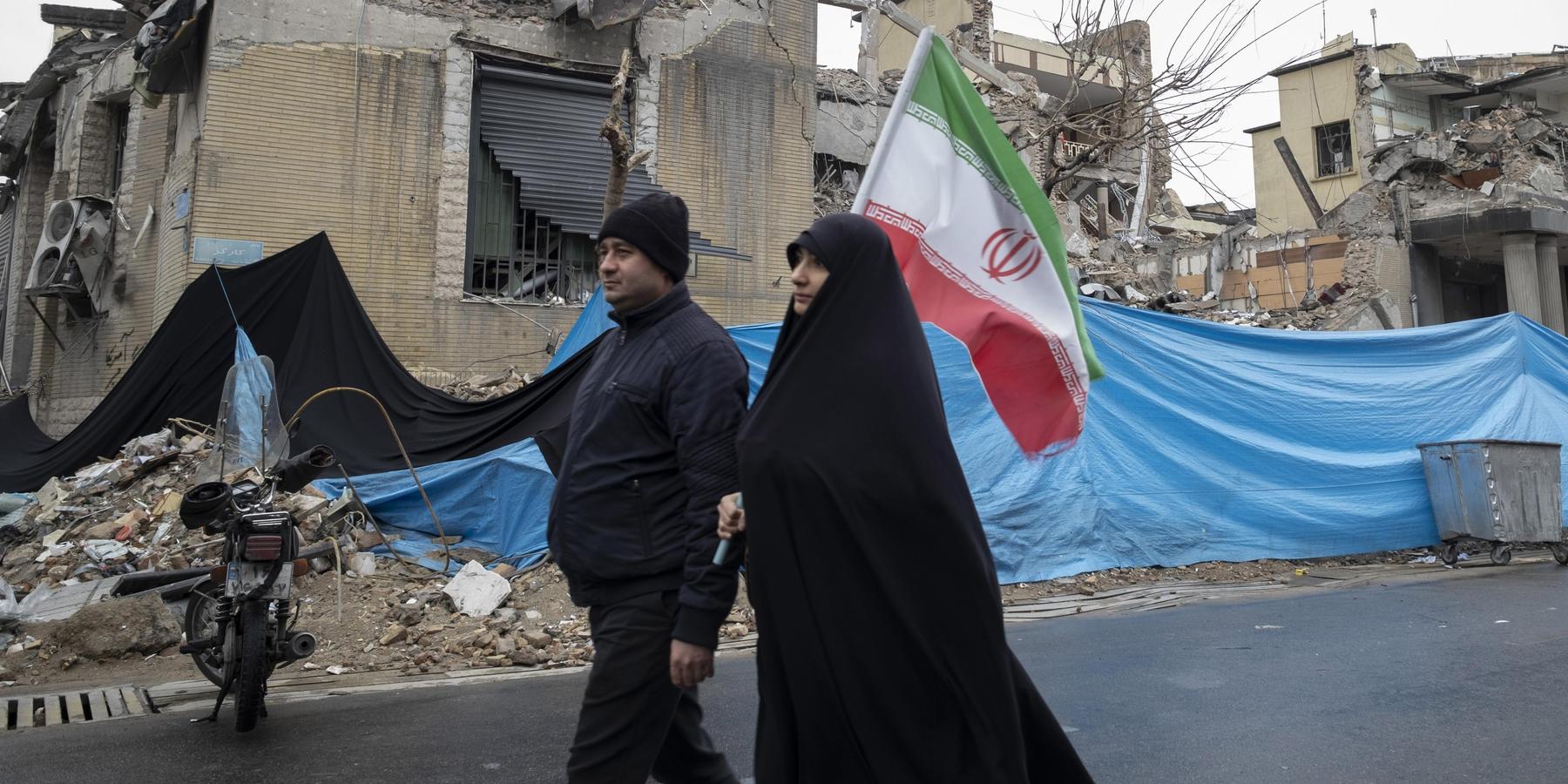
Two weeks into the Iran War, the Trump Administration remains mired in a conflict without a clear casus belli and without an articulated end state. President Donald Trump’s latest extra-constitutional use of military force is but the latest in an alarming trend: the Trump administration believes it has solved the “forever war” trap by attempting to divorce war from discrete political objectives.
Trump and his allies appear to have decided that, by blowing things up without a clear political end state in mind, they can advance U.S. geopolitical interests while avoiding a quagmire. In practice, this is little more than a global version of Israel’s “mowing the grass” strategy, in which periodic military campaigns substitute for political strategy. Now, this notion of war without politics is dragging the U.S. even deeper into the messy business of Middle Eastern affairs.
Coming out of the Global War on Terror, the Trump administration seems to have arrived at the conclusion that the U.S. military failed in its objectives because the nation’s martial prowess was politically restrained. Administration officials, principally “Department of War” Secretary Pete Hegseth, assert that the rules of engagement throughout the various theaters of the Global War on Terror constrained the military’s combat prowess and thereby prevented victory.
Similarly, the Trump Administration has come to claim that the surge of “wokeness” eroded competency and therefore mission success in the Global War on Terror. Finally, a perennial complaint of conservative Republicans returned: the previous Democratic presidents “gutted” the military and kept their budgets woefully low.
In his second administration, President Trump’s solution to the “forever war” problem was to wage war, often under the narrative cover of euphemism, without clear, achievable political end states in mind. While Trump is far from the first president to initiate hostilities without explicit authorization from Congress, nor the first to vigorously employ airpower, he has repurposed these tools for open-ended geopolitical coercion.
From Yemen to Iran, Venezuela, and then Iran again, Trump sees military force as a tool of first use rather than last resort. In all these cases, his administration has initiated military force without clear end states in mind. As one clever X user quipped during the start of the latest war against Iran, “Other presidents have ‘forever’ wars. Donald Trump has wars ‘forever.’”
In this latest and biggest war, Trump is once again waging a war without a clearly articulated and achievable political end state. In the war’s opening days, he and his cabinet have floated everything from regime change to regime capitulation, continued negotiations to unconditional surrender. Similarly, supporters of this war from the president on down have assured us that the threat emanating from Iran was both imminent and enduring.
In a blatant example of real-life double speak, the President asserts that by starting a war with Iran, he is in fact ending one, a “47-year-long” conflict. The absurdity of this is compounded by the fact that the 2024 Republican “pro-peace ticket” did not seem to care much about it on the campaign trail.
In light of this absurdity, the administration and its supporters have fallen back on the U.S. military’s success as evidence of the war’s necessity. In addition to its amorphous political agenda, the administration also insists its mission is limited to destroying Iran’s naval and missile forces and, once again, “obliterating” its nuclear program. As proof of their success, officials cite the destruction of Iranian military assets.
While the images of exploding Iranian vessels, buildings, and missile transporter-erector-launchers (TEL) may impress, they provide fodder for the same fallacy that bedeviled past administrations — that tactical successes add up to strategic success. But destroying military assets is not a strategy; it is a tactic. What remains undefined is the political end state these strikes are meant to secure.
The result is that the Trump Administration has committed the United States to a condition of endless war. Not only is such a policy an affront to Trump’s campaign promises, it is materially and morally unsound — and unnecessary for securing America’s national interests. During his first term, the president declared that “great nations do not fight endless wars.” He was right. He should remember that now.
- How does this war with Iran end? Or does it? ›
- Trump's war on Iran is already losing the home front ›
- Tulsi Gabbard: US and Israeli war goals are not identical ›