

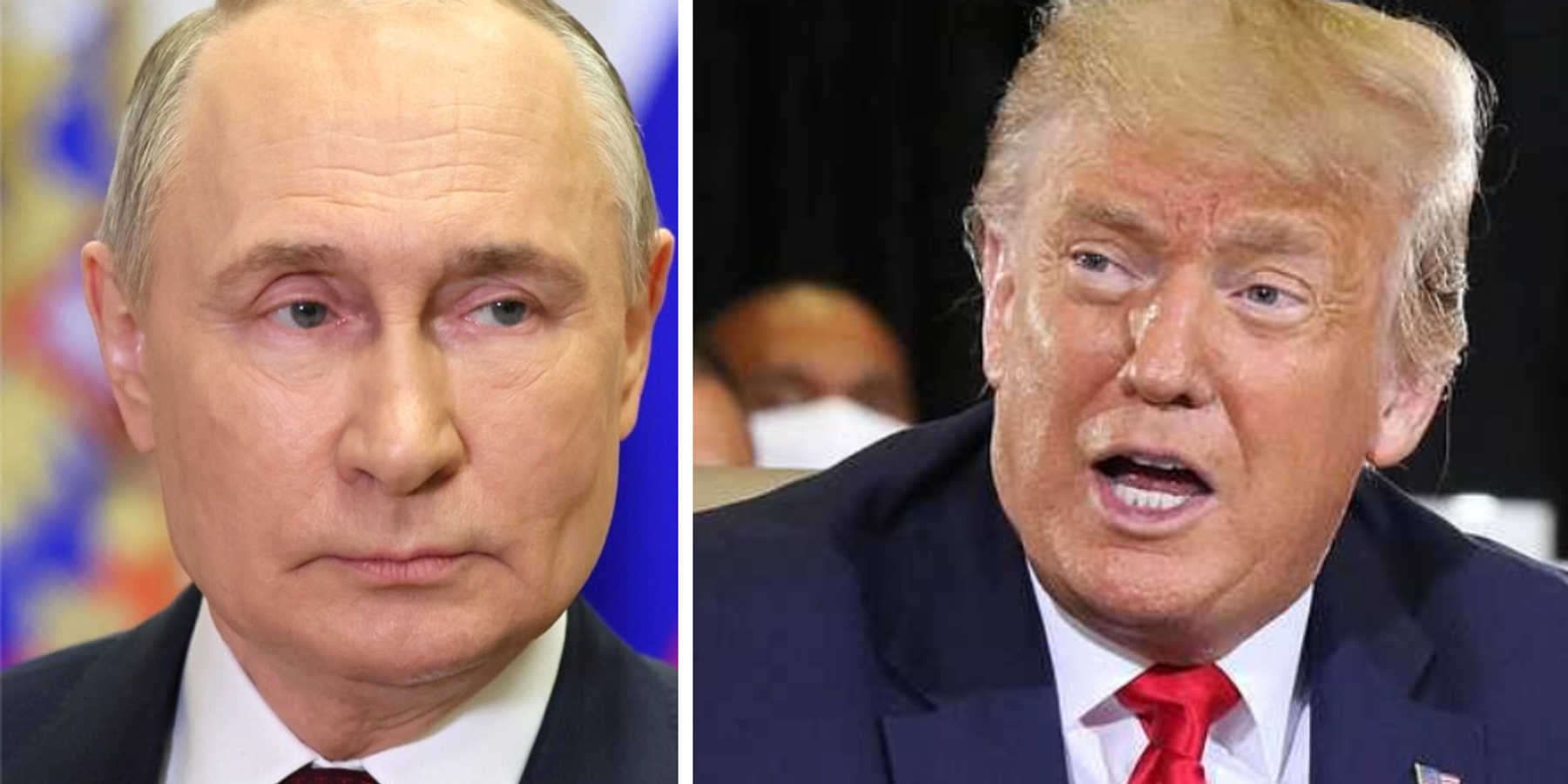
In the first six months of his second term, President Donald Trump has demonstrated his love for three things: deals, tariffs, and ultimatums.
He got to combine these passions during his Oval Office meeting with NATO Secretary General Mark Rutte on Monday. Only moments after the two leaders announced a new plan to get military aid to Ukraine, Trump issued an ominous 50-day deadline for Russian President Vladimir Putin to agree to a ceasefire. “We're going to be doing secondary tariffs if we don't have a deal within 50 days,” Trump told the assembled reporters.
The threat is unlikely to change Putin’s calculus, however, or bring the conflict to a near-term conclusion. Instead, Trump’s deadline is likely to make his own life more difficult, limiting his future flexibility, putting the settlement he craves farther out of reach, and forcing him to take steps that harm rather than advance U.S. interests.
Trump’s intention to impose “secondary tariffs” on Russia if Putin does not meet his deadline was not well-explained in his press conference with Rutte. Nor was it immediately clear if the planned punishment for Putin’s continued intransigence would include tariffs on Russian trade with the United States or “secondary sanctions” on Russia’s trading partners — or some combination of the two.
Whatever the details, however, looming economic consequences are unlikely to intimidate Putin or convince him to accept an early ceasefire. For starters, if Trump is indeed talking about tariffs on Russian trade with the United States, then his threat is an empty one. The United States imported only about $3 billion in goods from Russia in 2024, meaning that U.S. tariffs will impose little, if any, new costs on Moscow.
If Trump was instead warning that he would impose secondary sanctions or economic penalties on countries like China, the European Union, and India which purchase Russian oil and other goods, then the potential consequences for Russia are higher — if Trump follows through. A U.S. decision to impose economic penalties on Russia’s trading partners would place at risk the income Moscow relies on to finance its war machine, but it would also create political and economic complications for Washington that undermine the credibility of Trump’s threat and its effectiveness as a tool of coercion.
Not only would such a policy disrupt and set back ongoing U.S. negotiations with important U.S. trade partners and put pressure on the U.S. economy, but in the case of India and Europe, it would force Trump to impose painful economic punishments on crucial security partners. Because of these concerns, the United States has historically enforced secondary sanctions only sporadically and selectively, often targeting adversaries but not allies. The same would likely be true in this case.
Moreover, there is no guarantee that even secondary sanctions would cut off Russian revenues, as Moscow has become skilled as using black market transfers and its “shadow fleet” to circumvent U.S. and European economic pressure.
Most importantly, Putin and the Russian economy have shown tremendous resilience to the economic weapons that the United States and its allies have unleashed so far, and there is no reason to expect this time to be different. In fact, the Russian stock market rose almost three percent after Trump’s announcement, suggesting Russian investors share this assessment. As a result, Putin is unlikely to be fearful of Trump’s economic intimidation or sensitive to even the moderate costs additional U.S. economic warfare might impose.
If Trump’s ability to force Putin to the table using economic sticks is limited, then his military leverage is even smaller. Putin has a clear advantage on the battlefield, and the new aid arrangement in which Europe will buy U.S. weapons to send to Ukraine is unlikely to change this.
What weapons Europe can send quickly — purchased from the United States or taken from their own stocks — will be small in number and limited in type. After over three years of war, neither the United States nor Europe have deep reserves of munitions or other kinds of weapons to provide. More weapons can be purchased off production lines, but they won’t arrive for some time and so won’t do anything to help Ukraine’s soldiers in the near-term.
Moreover, defensive weapons like Patriot systems and interceptors — the focus of much fanfare during today’s big announcement — will help protect Ukrainian civilians but do little to reinforce Ukraine’s already strained front lines.
Putin’s continued strikes on Ukrainian cities and decision to press forward with a summer offensive are evidence of his confidence in Russia’s ability to persist militarily for the foreseeable future. It is unlikely the meager military aid package announced on Monday will change his mind on this score.
Ultimately, Trump’s newest deadline, like those that he has issued before, is unlikely to factor into Putin’s decision-making or to change the trajectory of the war. Putin has staked far too much on the outcome of the conflict in Ukraine to stop fighting before achieving his basic objectives or to settle for an unsatisfactory deal in response to an artificial and U.S.-imposed deadline while he still has the military advantage.
In this way, Russia is like any other wartime combatant, unwilling to sue for peace until it is clear that there are no more benefits to be gained from continued fighting.
Rather than bringing peace closer by forcing Putin the negotiating table, Trump’s threats may make near-term resolution less likely, both by hardening Putin’s resolve and by placing at risk newly opened channels of communication between the United States and Russia. The ultimatum also compromises Trump’s effectiveness as a mediator and constrains the flexibility he will need to successfully broker a deal between Russia and Ukraine.
When 50 days is up and Putin has not agreed to a ceasefire Trump will have an unenviable choice to make: demonstrate fecklessness by backing down or take economic actions that will inflict harm on the United States, alienate close partners, and almost certainly push a near-term end to the war beyond his grasp.
There is one glimmer of hope that Trump and others hoping for peace can hang on to, however. Fifty days is a long time, and will arrive in the early fall, as Russia’s summer offensive winds down and the winter approaches. There could be an appetite for another round of negotiations at this point, especially if Putin feels he has achieved enough militarily and prefers a deal that meets most of his war aims to continued fighting.
This shift would be unrelated to Trump’s new deadline, but U.S. national security officials should be preparing the ground to take advantage of the opportunity all the same. This includes pushing hard for bilateral meetings between the United States and Russia at least at the working level and encouraging more direct negotiations between Russia and Ukraine.
Reaching an end to the war in Ukraine will be a lot harder than issuing ultimatums, but openings for peace could still emerge organically soon. Washington should be ready when they do.
- Blob exploiting Trump's anger with Putin, risking return to Biden's war ›
- Russia sanctions & new weapons, is Trump stuck in Groundhog Day? ›
- Trump is squeezing himself with his own Russia deadline | Responsible Statecraft ›
- What can we expect from a Trump-Putin meeting? | Responsible Statecraft ›
- Why Trump's Ukraine negotiation efforts fail | Responsible Statecraft ›