

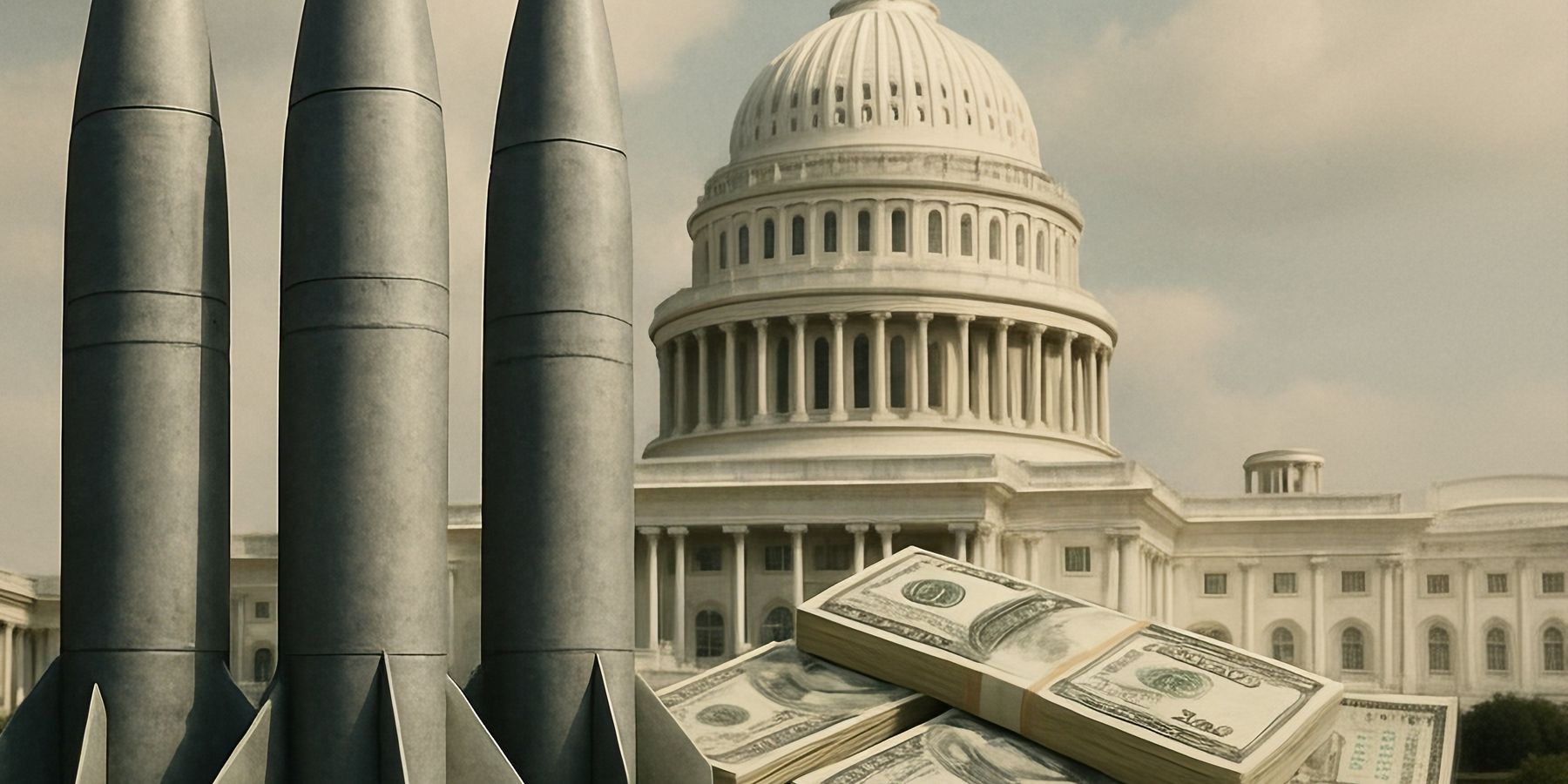
The House of Representatives on Wednesday passed the National Defense Authorization Act (NDAA), paving the way for upwards of $848 billion in Pentagon spending. This, combined with additional funding contained in the so-called “Big, Beautiful Bill,” would push the Defense Department budget past $1 trillion for the first time.
That’s far more, adjusted for inflation, than peak levels reached at the height of the Cold War or the War in Vietnam.
And if the NDAA authorizations are turned into actual appropriations, huge sums of money will be wasted — on dysfunctional or obsolete systems like F-35s and $13 billion aircraft carriers that are increasingly vulnerable to high tech missiles. And the potentially most wasteful program of all would be President Trump’s “Golden Dome,” a costly pipe dream that most scientists who are not on the payroll of the Pentagon or the arms industry will tell you can never work.
Despite being a policy bill, the NDAA passed by the House is also silent about our misguided, dangerous “cover the globe” military strategy, which is more likely to draw us into unnecessary wars than it is to defend U.S. residents or anyone else.
House Armed Services Committee Chair Mike Rogers (R-Ala.) marketed the NDAA under the tired old slogan of “Peace Through Strength.” As research by the Costs of War Project at Brown University has demonstrated, America’s wars (and record Pentagon budgets) of this century have brought neither peace nor strength. Instead, they have cost at least $8 trillion, hundreds of thousands killed and displaced on all sides, and a devastating impact on veterans, including a huge number of physical and psychological injuries.
Activities that the bill amply funds include keeping troops in the U.S.-Mexico border. It also gives lip service to “cutting red tape” in the purchase of weapons, but that may include weakening the Pentagon’s independent testing office, one of the few sources of trustworthy analysis of the cost and performance of major arms systems. The House NDAA also endorses increased military cooperation with Israel, and replenishing war reserves that have been used to fuel Israel’s ongoing civilian slaughter and destruction of Gaza and attacks on Iran and Qatar.
The appropriations committees occasionally trim back the NDAA’s spending recommendations, but doing that in the prevailing climate in Washington would be an uphill climb.
- Pentagon can't account for 63% of nearly $4 trillion in assets ›
- Why does peace cost a trillion dollars? ›
- Congress challenges Trump on US troops in Europe | Responsible Statecraft ›
- Cutting this much red tape, Santa comes early to defense industry | Responsible Statecraft ›