

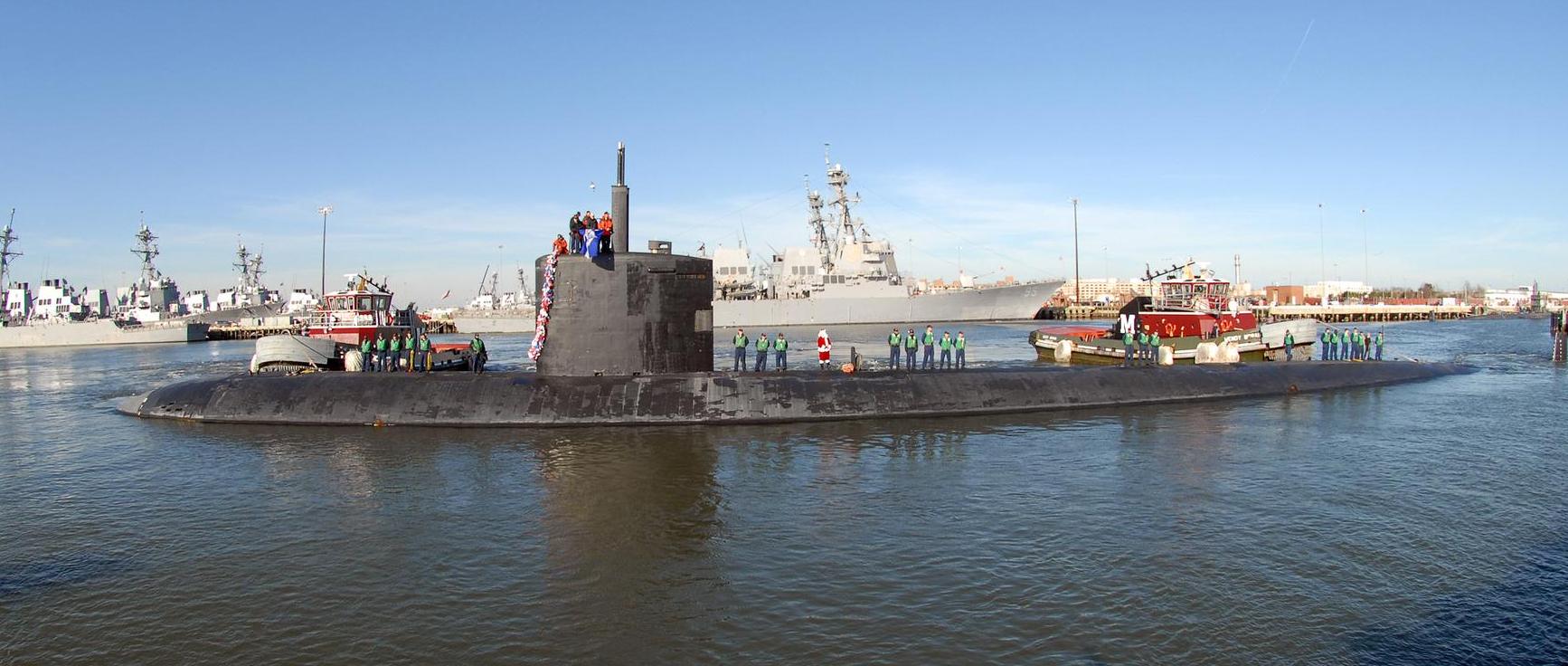
The Navy inactivated the USS Boise attack submarine earlier this month, canceling its overhaul after spending $800 million to complete less than 25% of the vessel’s needed repairs. The cost of the full overhaul had ballooned from $1.2 billion to roughly $3 billion — nearly the cost of a new submarine altogether.
That pricey, nail-in-coffin decision capped off maintenance delays that had sidelined the Boise for over a decade — more than one-third of its career.
Experts tell RS the USS Boise is a poster child for the problems plaguing submarine repairs and naval procurement in general.
Severe maintenance delays leave submarines idle
Originally slated for an overhaul after its last patrol in 2015, the USS Boise was left at pierside for years because shipyards — bogged down by maintenance backlogs — were unavailable to repair it. Towed between shipyards in search of assistance, the submarine lost its dive certification in 2017 because it could not receive service. Despite the toil, the overhaul effort that materialized many years later ultimately proved prohibitive.
The Boise’s untimely demise is emblematic of the chronic submarine maintenance delays and backlogs that have rendered nearly 40% of U.S. attack submarines unable to deploy.
Simply put, the resources and facilities needed to fix submarines often aren’t available. As Michael Vlahos, military history expert and senior fellow at the Institute for Peace and Diplomacy, tells RS: “The Navy yards that were once capable of doing [building and maintenance] work, aren't really functioning.”
As Vlahos tells RS, the total number of active shipyards has nearly halved since the 1980s. Persistent sailor shortages often mean adequate personnel aren’t available to repair submarines in a timely manner.
The Congressional Budget Office warned in 2021 that the Navy submarine fleet’s size will surpass American shipyards’ capacity to maintain it “in 25 of the next 30 years."
Such issues stall submarines across the Navy’s fleet. Similar to the USS Boise, the USS Columbus’ overhaul has taken over eight years. The USS Connecticut remains in dry dock after a collision in the South China Sea all the way back in October 2021. And in 2025, the USS Helena was decommissioned following more than six years of stop-start repairs — and after a young sailor was electrocuted and died in 2024, after accidentally touching an electrical source on the vessel that repair workers had left uncovered.
These problems aren’t cheap. In March, the Government Accountability Office (GAO) reported that the Navy has spent roughly $4.2 billion over the last decade on idle submarines — funding crews and support vessels for submarines that are not ready to deploy.
A broader procurement crisis
As experts tell RS, the Navy often pursues new, cutting-edge projects over functionality and fixing what it has.
Scrapping the Boise submarine — a 34 year old program near the end of its lifespan — makes practical sense. But Mark Thompson, a long-time military reporter and national security analyst at the Project On Government Oversight, tells RS the move could fuel more Pentagon waste.
“A lot of the money the Navy would have spent on the Boise will now be spent on shiny new Virginia- and Columbia-class subs,” Thompson said. “Once again, past failures fund future procurement.”
To Thompson’s point, the newly operational Virginia-class submarines are projected to run $17 billion past their planned budget through 2030. Similarly, the prospective Columbia-class submarine program — which sports a $348 billion price tag — already faces cost overruns about six times higher than contractors’ initial estimates.
Zooming out, the USS Boise fiasco underscores a broader procurement crisis, which can also undercut Naval maintenance capacities.
We’ve seen the “fumbled Navy procurements of the Littoral Combat Ships, the Zumwalt-class destroyers, and the Constellation-class frigates,” Mark Thompson told RS, referring to major Naval programs plagued by cost-overruns, production delays, and performance issues. “It’s money-sucking programs like these that bleed maintenance accounts dry and led to the scuttling of the Boise.”
To Vlahos, a deeper issue persists: “The whole process of procuring a ship and getting a contract out, and then getting that ship expeditiously built, has broken down.”
“It isn’t just that there aren't sufficient resources and sufficiently modern, extensive shipyards capable of building the ships that need to be built, and then repairing those that need to be repaired,” Vlahos said. Rather, “the U.S. has tried to build new classes of warships for the last 20 years. It's failed consistently. And it's a real scandal.”
- Do we need tactical nukes on US submarines? ›
- Russia's 'shadow fleet' makes mockery of UK naval power ›
- The Zumwalt-class destroyer is an ever-growing boondoggle | Responsible Statecraft ›