

Marco Rubio may be Secretary of State, but the role of top diplomat for Ukraine, Iran and even Gaza was bestowed on two real estate investors, Steve Witkoff and Jared Kushner. And while they manage the diplomacy portfolio, the Treasury Department is waging war.
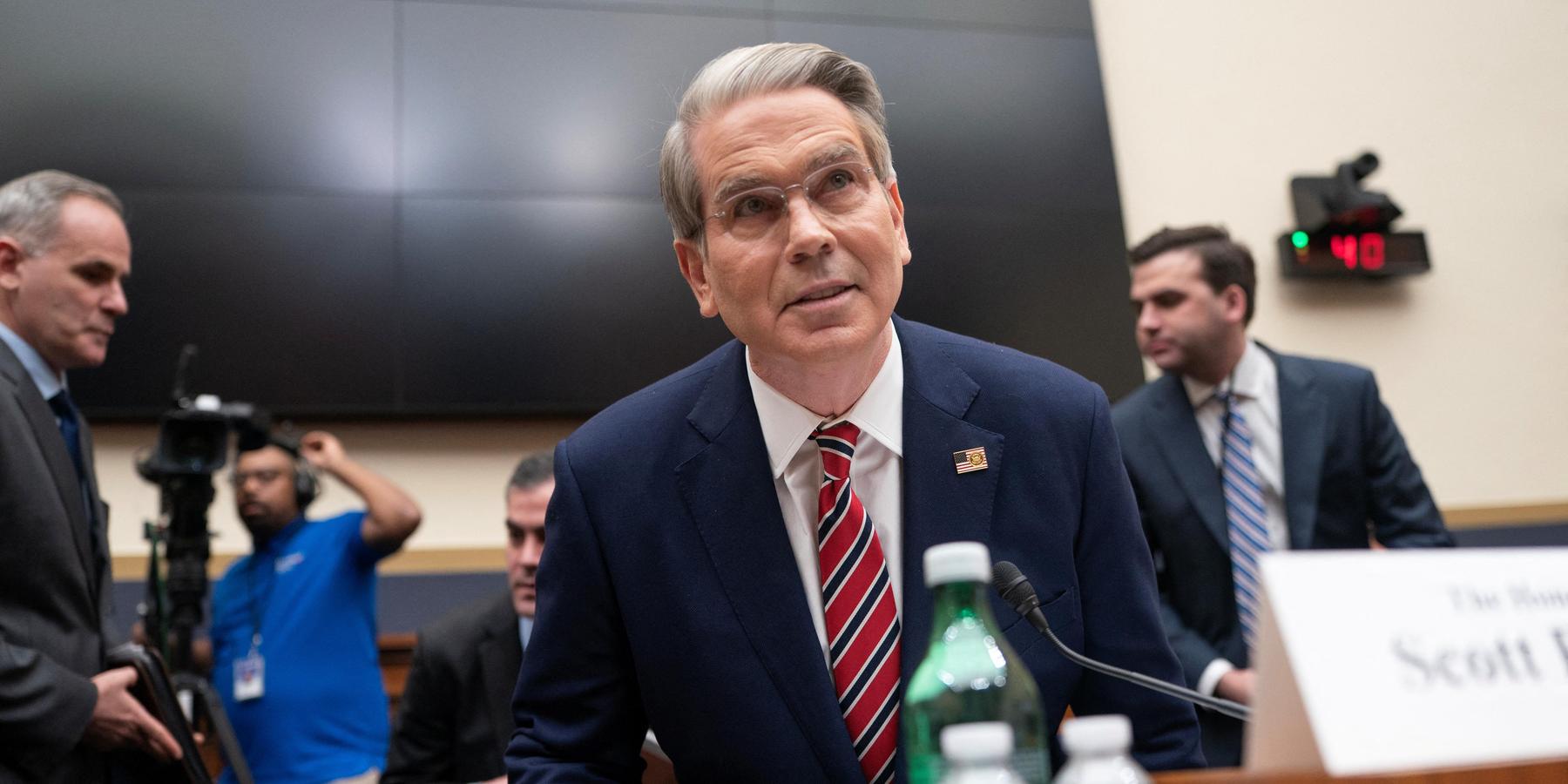
At Treasury’s helm is former Wall Street investor and hedge fund manager Scott Bessent. Now the warrior banker, he uses tariffs as threats and sanctions as bombs.
The Trump administration has repeatedly threatened Canada with talk of becoming the 51st state. Handing the file to Bessent, Trump announced that the U.S. would use “economic force” to “get rid of that artificially drawn line” between Canada and the United States.
When the Canadian province of Alberta held a referendum on whether they wanted a future referendum on independence, Bessent intervened, saying Alberta would make a perfect partner for the United States. He said Ottawa is frustrating Alberta and its “wealth of natural resources” by not letting it “build a pipeline to the Pacific.” As a solution, he suggested that “we should let them come down into the U.S…. Alberta is a natural partner for the U.S. They have great resources. The Albertans are very independent people." The preliminary referendum was overwhelmingly defeated.
Not wanting boots on the ground in Cuba, Trump turned the Cuba file over to Treasury before the Pentagon. The economic strangulation of Cuba has not toppled the Cuban government, but it has devastated its people. The island is in darkness, and water, food, and medicine are scarce. Tens of thousands of surgeries have been canceled. According to U.N. human rights chief Volker Türk, “children are dying because doctors lack access to essential medical supplies and medicines.”
Employing a strategy of “carrot and stick,” Bessent said sanctions can go up or down depending on the behavior of the Cuban government. The U.N. says Washington’s sanctions are “incompatible with basic principles of international human rights law.” Bessent’s evaluation is that they are working: “It is working in Cuba right now… we are going to bring this regime down.”
Bessent says that, as the strategy is working in Cuba, so it will work in Iran. "Operation Economic Outcast" was supposed to land the killer blow on Iran (and anyone doing business with Iran). And, according to Bessent’s metrics, it did. Even before the war Bessent said, “President Trump ordered… maximum pressure on Iran. And it worked, because in December, their economy collapsed... and this is why the people took to the street.” Bessent told the Senate Banking Committee that “what we have done is created a dollar shortage in the country… The Iranian currency went into free fall, inflation exploded, and hence we have seen the Iranian people out on the street.”
Fast forward to Sunday, Bessant said that the projected 25% contraction of the Iranian economy is “one of the fastest collapses in history” and boasted that “everything I’m doing is working.”
The force of Bessent’s economic war machine received validation from the State Department on November 10, when Rubio assessed that the military war on Iran was no longer necessary because economic war was working better. "The economic pain that is being inflicted on Iran right now is extraordinary,” Rubio told G7 leaders. "We don't need to conduct military strikes if we're achieving the same objective through economic means and economic pressure.” Bessent had been lobbying Trump to take that route.
Of course the Iranians, who after eight months of are still hitting tankers in the Strait of Hormuz and attacking neighbors in the Gulf, like Bahrain, in retaliation for U.S. strikes, might have a word or two to say about that. "Despite all these pressures, the Iranian economy has demonstrated very good resilience, and the claim that Iran’s economy is collapsing is nothing more than an illusion,” Central Bank chief Abdolnaser Hemmati said in October.
The leader of the campaign to negotiate with Iran, meanwhile, has been Vice President JD Vance, who was recently speaking almost every day to Qatari and Pakistani mediators. At the end of October, Vance sent a letter to the secretary of Iran’s Supreme National Security Council, exploring the possibility of direct talks to stave off the resumption of intense attacks by the U.S.
But two days after Rubio’s endorsement of economic warfare, Trump signed off on it, pulling Vance off the file. Relying on Bessent’s economic approach, Trump said, “we don’t need a deal with Iran. Those days have long since passed. We’ve got their money, Hundreds of Billions of Dollars, and we’ve got their Strait!”
American foreign policy evolution has in the last 25 years favored the Pentagon and the CIA over the State Department. During the two Trump administrations, as Washington has fully appreciated the power of its dollar dominance and control of trade networks and payment systems, the Treasury has risen to join the two predominant agencies, with Bessent at its helm.
But that doesn’t mean a kinder, gentler form of foreign policy. A landmark study published in The Lancet by Francisco Rodríguez, Silvio Rendón, and Mark Weisbrot found that unilateral U.S. sanctions are associated with death tolls similar to armed conflict. The prevailing weapons may have changed, but the results are all about punishment with very little room for diplomacy or progress toward peace.
- How Iran has staved off economic collapse despite the US-Israeli war ›
- Why 'D-Day' was destined to be a dud ›
- Trump's war and tariffs are having a nasty effect on interest rates ›