

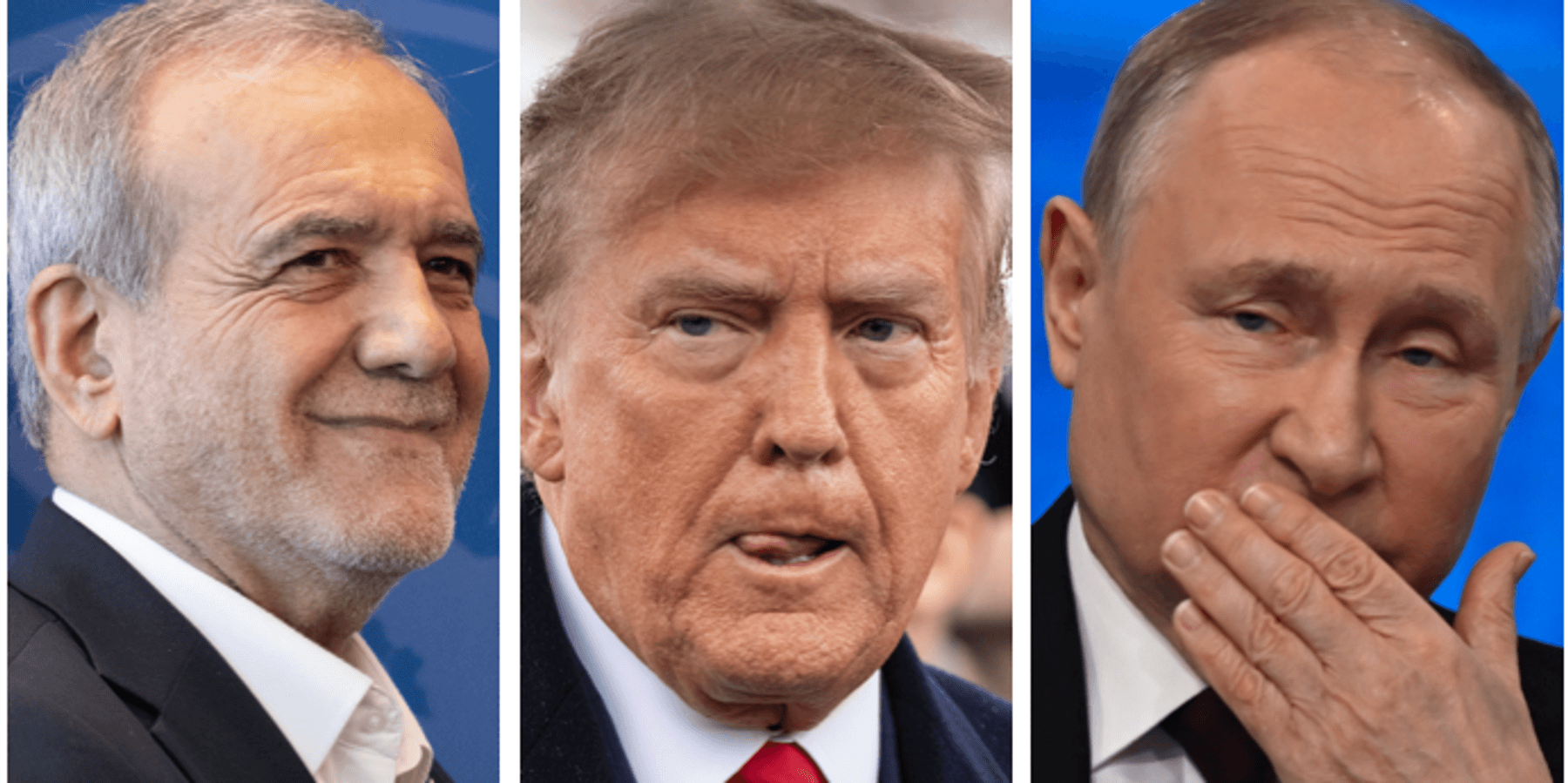
Both Russia and Iran illustrate that wars with oil-rich countries cause oil prices to surge. By using actual warfare alongside economic warfare, the Trump Administration has increased Iran’s economic advantages at America’s expense.
With Steve Witkoff and Jared Kushner no-showing in Islamabad for peace talks, Iran’s Foreign Minister Abbas Araghchi continued his shuttle diplomacy to Oman and Moscow on Monday. It is without question that Iran and Russia are two countries who have in many ways shocked the world community with their resilience in the face of sanctions and embargoes. They have plenty to talk about as the U.S. remains more committed than ever to shutting their “shadow fleets down.”
Both have as a source of their strength considerable natural resources from which they can generate cash flow to sustain themselves during stand-offs with the West. Russia and Iran have over many years run consistent current account surpluses by virtue of selling their natural resources and importing fewer goods in return.
As I have pointed out countless times, Russia saw bumper export earnings in the first year of the Ukraine war, with a record current account surplus. Likewise, Iran is now “making a mint” from the current war. Indeed, the energy squeeze unleashed by the war has been so harsh that U.S. Treasury Secretary Scott Bessent was forced early on to issue a sanctions general license to allow the sale of Iranian oil already loaded on vessels, to help ease global supply concerns. That was before Iran announced the tollbooth system it wants to put in place to charge tankers for Hormuz transit.
Despite all of that, both Russia and Iran have already secured a significant financial advantage. Iran describes its approach as a “resistance economy” which has leaned heavily on oil revenue in the face of stiff challenges, such as rampant inflation, and has built up gold and currency reserves to manage short-term shocks. Clearly, the more recent U.S. move to counter-blockade the Strait of Hormuz, including seizing Iranian vessels, is an attempt to choke the revenue spigot. It will have an effect, but it is not clear how much Iran has in reserves, and for how long it can hold out during a dramatic revenue drop.
Likewise, Russia’s “fortress economy” model has endured 12 years of sanctions, leaning on surpluses from oil sales which are used to meet fiscal needs without a significant requirement to grow debt, which still stands at less than 20% of GDP. And as I pointed out recently, clamping down on oil shipping delivers mixed results, at best.
Iran has now been subject to economic sanctions for 47 years, and yet has been able to record economic growth in the years since COVID. That’s not to say the country is in great shape. Its economic headaches are far more acute than those faced by Russia, without a doubt. Iranians are getting poorer and the financial system is in zombie territory, in a more extreme version of the dysfunction that now characterizes Ukraine’s financial system.
But as mentioned before, there are reserves and more importantly, rather than the war producing the hoped-for coup d’etat and regime change, many Iranians have rallied around the flag on the back of an upsurge in nationalist sentiment.
As with Russia, the Western mainstream media continually reports on the likely implosion of Iran’s economy as sanctions and global isolation intensify as a way to legitimize the war’s continuance. But, if Iran wasn’t going to buckle economically in the years before the war when its oil exports and earnings were sagging, it isn’t going to do so now, with the oil market booming in its favor.
Inevitably, the calculus in Tehran, as it has been in Moscow, will be that they have a higher pain threshold on the back of decades of hardship, and that they can inflict greater pain on their Western opponents.
In any economic warfare, the attacker has to be prepared to accept economic pain to secure ultimate victory. Speaking from personal experience, one of the reasons Europeans sanctions against Russia were never as tough as they could have been was a reluctance among EU member states to accept the domestic economic pain of a more hardline approach.
Americans have now seen prices surge since the war started, with gas prices rising by 30% in the space of a month and other household necessities costing more. Some are questioning the impact of the Iran war for Republicans in the mid-term elections in November. Neither Iran nor Russia face the same democratic crunch point.
Moreover, Iran does not face the same debt servicing pressure as America as its official national external debt stands at a mere 27% of GDP, having been cut off of the western financial system for so long. Instead, it can keep printing money, borrowing from domestic banksm and living with the inflationary consequences at a time of war. Iran’s economy has been cauterised from exposure to the global economy, meaning that any new sanctions will have limited effect.
None of this is wizardry. Any country hit by sanctions seeks every possible means to circumvent them, including smuggling, trans-shipment, the use of intermediaries, and alternative currencies. New methods of evading sanctions crop up all the time in Iran, not the least the receipt of payments in crypto-currencies.
Herein we see the danger of comparing like for like. Manifestly, America has nominally, the largest economy in the world; the Pentagon alone spends at least three times more each year than Iran’s total yearly economic output. So, slamming Iran with US missiles and sanctions, not to mention assassinating its leaders should, in theory at least, bring the country to its knees and precipitate revolution. And yet it still hasn’t.
As in real warfare, in the economic battlespace, if President Donald Trump wanted to defeat Iran, he needed to go in a lot harder and a lot faster than he did. That he didn’t suggests his gamble has already failed.
- Good, bad and ugly: Impact of US Iran strikes on Russia war talks ›
- Are US sanctions against Iran & Russia backfiring in dangerous ways? ›
- America’s hate-hate affair with Iran: A collision course for the ages | Responsible Statecraft ›
- Is the petrodollar a war casualty or death greatly exaggerated? | Responsible Statecraft ›