

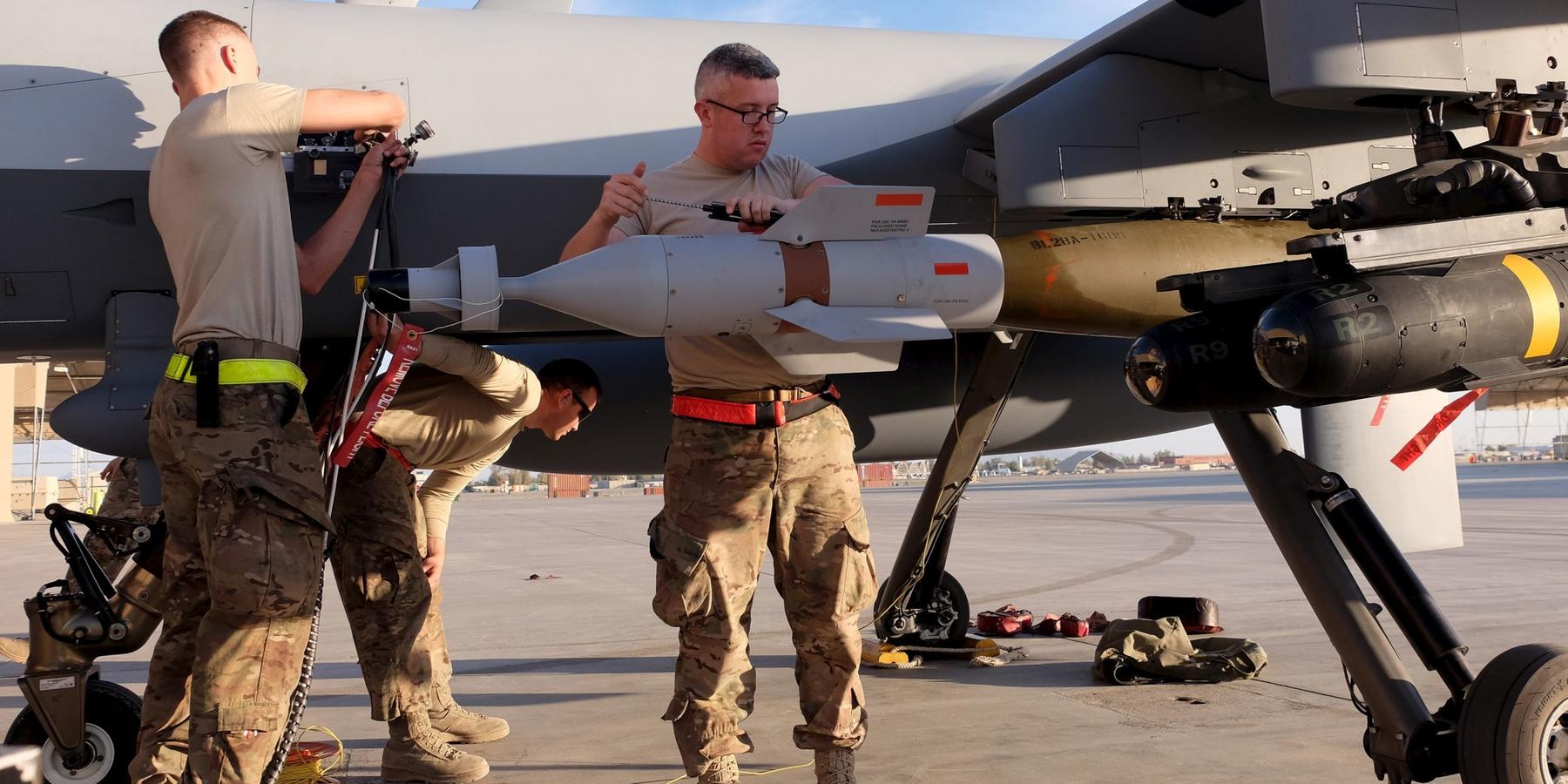
Pentagon leadership was on Capitol Hill last week defending the Trump administration’s massive $1.5 trillion dollar defense budget request. A major focal point was the dismal state of America’s munitions arsenal, which has been drained significantly to arm Ukraine and prosecute the ongoing war in Iran.
The administration is requesting $70.5 billion for the most critical, high-value munitions, representing a 188% increase from last year’s budget.
In the hearings, we heard much concern expressed from members of Congress on both sides of the aisle. Concern about the rapid depletion of munitions for an unauthorized war in Iran. Concern about the fallout of draining our stockpiles to arm Ukraine. Concern about the decrepit state of the defense industrial base and its inability to respond nimbly to strategic demand.
All of these concerns are valid, but none are at the root of the problem. The United States is in a munitions crisis because both the executive and the legislative branches, regardless of which political party is in power, failed to exercise restraint in protecting the U.S. war chest.
As budget discussions heat up over the next few months, Congress shouldn’t blindly grant the gargantuan increase in funding for and production of critical munitions. Doing so would amount to an expensive band-aid. Instead, lawmakers should ensure reforms to protect America’s stockpiles from strategic folly are reflected in an appropriations package considered by Congress.
We must acknowledge where this problem started. Following Russia’s invasion of Ukraine in 2021, Congress and the Biden administration collectively supported the unprecedented use of a tool called Presidential Drawdown Authority (PDA) to expeditiously provide weapons to Ukraine from U.S. weapons stockpiles.
But PDA, by law, was intended to be used narrowly in cases of “unforeseen emergency” to provide support to a foreign country in order to protect the U.S. national interest. Even in such circumstances, the law does not allow unfettered access or a blank check to U.S. weapons. Prior to 2021, Congress maintained an annual cap on the authority at $100 million worth of weapons. Congress, in a series of decisions that reflected a severe lack of judgement, authorized three separate increases to the cap in supplemental appropriations bills for Ukraine. This dramatically expanded the authority, allowing up to $14.5 billion in drawdowns for Ukraine.
Congress and the Biden administration together dug a huge hole in the U.S. weapons arsenal by providing weapons support to Ukraine in this manner. And they did so with little regard for the long-term consequences, namely, how such rapid depletion without rapid replenishment would limit America’s readiness and ability to respond to conflict elsewhere in the world.
The Trump administration inherited U.S. weapons stockpiles at a deficit. The president himself acknowledged the significance of Biden’s massive strategic error. But he committed a serious error of his own in starting a war with Iran despite knowing the demand it would place on U.S. weapons stocks while still being in the hole from Ukraine.
The numbers from the Iran war thus far are staggering. A recent report from the Center for Strategic and International Studies (CSIS) estimates the expenditure of some of our most high-value weapons — like Tomahawk, JASSM, and Patriot missiles — to be in the thousands. The report notes this is likely a depletion of “more than half of pre-war inventory” for some of these weapons.
Such estimates help explain why the Trump administration’s budget includes such massive increases in quantities requested. Take Tomahawk missiles, for example. Last year the Navy procured a mere 55 Tomahawks. This year, the new target for procurement is 785, an increase of more than 1,000%. (It is worth noting that, even if the Trump administration were granted its budget request in full, it would take at least three to five years for these high-value munitions to be delivered.)
Pulling the thread on how we got into this munitions crisis tells us that we have a foresight problem. American leaders are happy to arm a foreign nation in need or to jump into a war, but they fail to see around the corner and consider what the United States is trading off or how we are limiting ourselves strategically.
Congress has the opportunity this budget cycle to learn from past mistakes. Congress can condition munitions funding on receiving a strategy and timeline from the administration on the war in Iran; impose limits on how many high-value munitions must be maintained and preserved for U.S. readiness at all times; and even proactively reform PDA to prevent it from ever again being used at a reckless scale, as it was in Ukraine.
The unfortunate reality is that political appetite for such needed reforms is extremely low in Congress. Despite the growing influence of America First foreign policy, it is still anathema in Washington to put sound defense strategy above political risk, defense lobbyists, and foreign influence.
This apathy could prove disastrous. Amid a munitions shortfall, the U.S. is balancing a hot war in Iran, a military campaign in the Western Hemisphere, a proxy war in Ukraine, and the looming threat of a war with China in the Indo-Pacific.
The United States is not invincible, and it cannot fight nor manage multiple conflicts at a time successfully. There is no quick fix that can make the U.S. munitions arsenal immune from scarcity, tradeoffs, and mathematical reality.
The budget request no doubt prioritizes critical munitions in quantity and dollars. However, unless Congress can reckon with the strategic failures that created and worsened the stockpile deficit and pass the necessary reforms to protect the war chest going forward, we will circle back to the same problem on the same balance sheet again soon.