

Jordan’s relationship with the United States is a tale of two cities.
On the one hand, security cooperation between the two countries is excellent. Thousands of U.S. troops are deployed in the Hashemite Kingdom, with King Abdullah II rebuffing Iranian demands to expel U.S. military installations from the country. Shortly before the Iran war began last February 28 and during its first weeks, the United States transferred many of its soldiers from Arab Gulf countries to perceived safer areas in Jordan.
In September, as Jordanian soldiers conducted a large training exercise with U.S. forces, CENTCOM commander Adm. Brad Cooper touted U.S.-Jordan military ties as being “stronger than ever.” Later that month, after the Trump administration withdrew its forces from Iraq, Washington transferred the headquarters of the anti-ISIS military coalition to neighboring Jordan.
Even as President Donald Trump cut foreign aid packages worldwide as part of his “America First” agenda, Washington has increased its assistance to Jordan, a small country with a population of roughly 11.5 million. Congress allocated over $2 billion to the Hashemite Kingdom this year, the third-highest amount across the globe. Since 1951, the United States has provided Jordan approximately $35.5 billion in aid critical to Amman, given its spiraling debt and struggling economy.
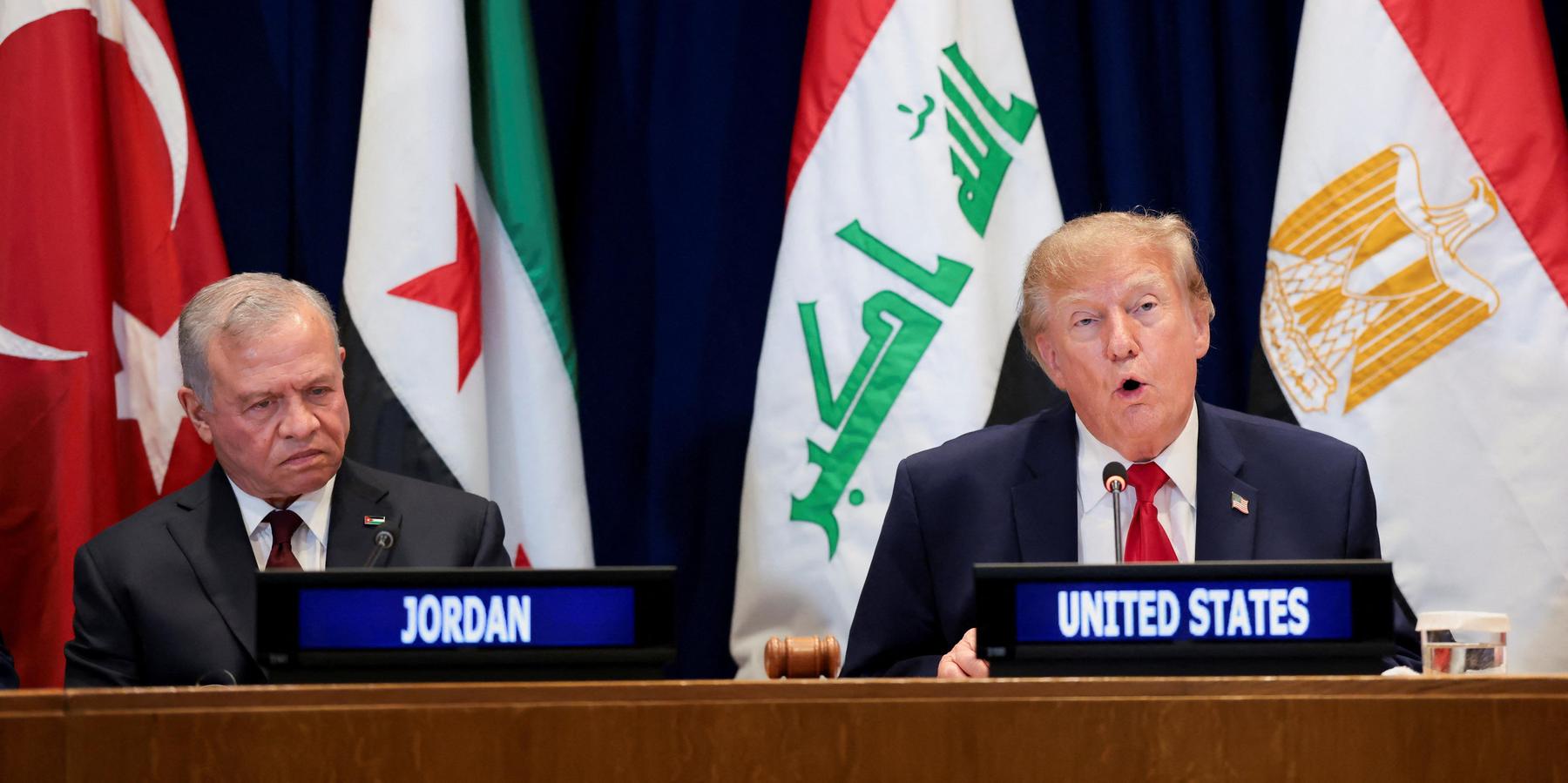
The billions in U.S. aid, however, have not translated into a close relationship between Trump and Abdullah. During the Hashemite ruler’s nearly five-week visit to the United States this summer, Abdullah did not get a meeting with the president. Three U.S. soldiers were killed during a July Iranian strike on Muwaffaq Salti Air Base in Jordan, but Trump failed to call the king. Instead, he appeared to criticize Jordan’s military for not intercepting the Iranian missiles. “They did slip something through in Jordan, and if we had other operators, you know, [it] would have not happened,” Trump complained.
The relationship between Trump and Abdullah lacks “chemistry,” Daoud Kuttab, founder of the Amman-based Balad Radio told RS. Trump respects the Qatari and Turkish leaders because of their countries’ wealth and powerful regional roles, Kuttab said. But Abdullah, as the ruler of a poor country, lacks the resources to impress Trump with, for example, a $400 million gifted plane or a massive oil deal.
Dr. Anis Khasawneh, a former vice president at Yarmouk University, told RS that Abdullah fared far better with former President Joe Biden. In contrast to Trump, Biden imposed some sanctions on Israeli settlers in the West Bank, whose fate is of keen interest to Abdullah, according to Khasawneh, a key Jordanian concern given its borders with the West Bank and desire for stability there. Palestinians, including some two million refugees, make up roughly half of Jordan’s population. (Trump immediately lifted all of Biden’s settler sanctions on his return to office last year.)
During Trump’s first term, the president ignored Abdullah’s appeals not to move the U.S. embassy in Israel to Jerusalem; their last bilateral meeting in the first term took place in July 2018, and no meeting was held until after Trump initially left office in 2021. And in his second term, Trump has pressed Abdullah on particularly sensitive issues, urging the king to absorb displaced Gazans.
While the United States planned with Israel extensively for its attack against Iran, there is no media reporting that Trump alerted Abdullah beforehand even though the war sparked barrages of Iranian missiles targeting Jordan. “There is a growing feeling in Jordan that Washington, particularly under President Trump, is underestimating Jordan’s regional role and no longer attaches the same political importance to the country, as it did in previous decades,” former Jordanian minister Mohammad Abu-Rumman told RS.
Jennifer Sutton, a spokesperson for the U.S. Embassy in Amman, declined an interview request with Amb. James Holtsnider.
In addition to the mistrust between the two leaders, Jordanian public opinion is increasingly critical of U.S. policies in the region. According to an Arab Barometer poll, only 12% of Jordanians view Trump’s foreign policy favorably.
Saad Hattar, an Amman-based political analyst, contended that Jordanians believe “the United States has always been the cause of misery and hardship for the people in the region, especially the Palestinians.” Given that about half of Jordan’s population is of Palestinian origin, the Trump administration’s support for Israeli actions in the West Bank and Gaza angered Jordanians, added Hattar.
Trump’s war against Iran only heightened Jordanians’ alienation. Led by former minister Amjad al-Majali, hundreds of Jordanians signed a July letter calling for the expulsion of U.S. troops from the Hashemite Kingdom. “We maintain that their presence exposes Jordan to security, political, and economic risks that serve no interest and increase the likelihood of our country being dragged into a regional conflict to which it is not a party,” the letter stated.
Before this year, the U.S. military presence in Jordan posed virtually no risks to the country. But this quickly changed after Trump ordered the assault against Tehran, and the Islamic Republic responded by launching missiles and drones at U.S. forces in Jordan.
Since Jordanian public opinion remains hostile to Washington and Trump’s relationship with Abdullah lacks warmth, to say the least, why does the United States continue to provide billions in aid to Amman?
The king has prioritized outreach to Capitol Hill — both Democrats and Republicans — since ascending to the throne in 1999. Such congressional coordination, along with deep ties with the U.S. military and CIA, has ensured that key voices in the U.S. government continue to advocate for Jordan, even with reduced White House support. In addition, the Iran war has further highlighted Jordan’s strategic value to the U.S. security establishment as the Hashemite kingdom continues to host additional U.S. troops despite the risks of further attacks by Tehran and militias allied with it in Iraq. (No polls have been released on U.S. public attitudes regarding aid to Amman.)
“The paradox is that King Abdullah remains one of Washington’s most reliable regional allies,” Abu-Rumman explained. “Yet he may feel more politically distant from the current American president than from many of his predecessors.”
- The collapse of national sovereignty in the Middle East ›
- After Iran, US signals major security shift in the Middle East ›
- Jordanians wonder if it's time to kick out US troops ›