

On February 20, the New York Times reported that over 60 U.S. military aircraft were stationed at a base in central Jordan, around triple the usual number parked at the site. Satellite imagery revealed an increase in U.S. F-35 jets and drones at the base in the Hashemite Kingdom.
Eight days later, the United States and Israel bombed Iran, instigating a new regional war.
During the opening days of the conflict, the Wall Street Journal noted that an Iranian drone damaged a Thaad radar in Jordan, forcing Washington to replace the key military system. Later in March, Iranian Ambassador to the United Nations Amir Saeid Iravani issued a “strong and categorical protest” against Amman for allowing the usage of its territory in attacks against Tehran.
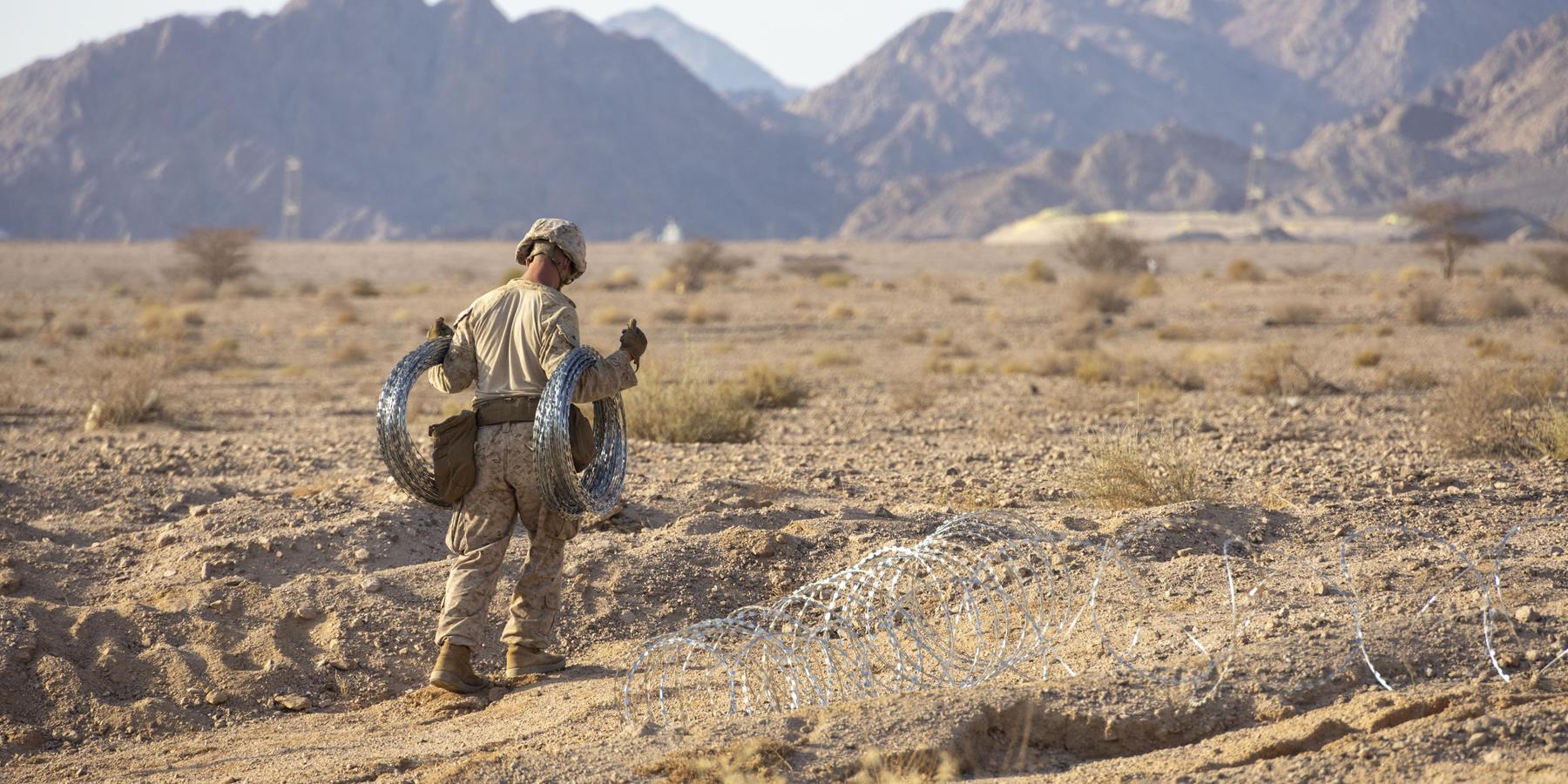
The Iran war has caused some Jordanians to reconsider the value of Jordan hosting around 4,000 U.S. soldiers in the kingdom. The U.S. military bases were originally established in Jordan and across the Gulf to defend the host countries, as Dr. Hasan al-Dajah, a professor of strategic studies at Al-Hussein Bin Talal University, explained in an interview. But in practice, these bases were not even able to protect themselves from the Iranian attacks.
“Questions were raised during the recent war and the 12-day war between Israel and Iran — why are we turning Jordan into a ‘battleground’?” Mohammad Ersan, editor-in-chief of AmmanNet, noted in an interview. “The American presence has made military installations inside Jordan legitimate targets in the eyes of Iran and its proxies, effectively making Jordan a direct party to this conflict.”
During the latest war, Iran fired over 250 missiles and drones at the Hashemite Kingdom. The conflict severely damaged Jordan’s tourism industry, with 100% of March bookings canceled in Petra, according to the Jordan Times.
Also driving frustration is the widely held belief that the U.S. military, operating in Jordanian airspace, intercepted numerous Iranian missiles headed toward Israel, said Dr. Anes Khasawneh, a former vice president of Yarmouk University, in an interview. Some Jordanians were dissatisfied with the American downing of Iranian drones fired at Israel, Khasawneh asserted, given the high Palestinian death toll in the Gaza war.
Frustration with Washington led veteran Jordanian lawmaker Saleh al-Armouti to demand in a fiery parliamentary address late last year that the Hashemite Kingdom expel U.S. military bases, which he said constitute an “intelligence and security threat to the homeland.”
The Royal Court media director, Reem Jazi, declined an interview request. Jordanian authorities have refused to clarify how many Iranian attacks struck U.S. military sites in the Hashemite Kingdom throughout the war. No poll has revealed the percentage of Jordanians who support the presence of thousands of U.S. troops since the conflict erupted, as the Jordanian government often restricts surveys on sensitive subjects. There is no evidence that the Jordanian government has altered its policy about hosting large numbers of U.S. troops.
While the New York Times and PBS Newshour discussed U.S. military bases in Jordan, Jordanian Foreign Minister Ayman insisted on March 25 that no foreign military bases exist in the Hashemite Kingdom. A month earlier, Safadi pledged that Jordan would not be a “launching pad” for attacks against Iran.
Khasawneh said the Jordanian government is seeking to downplay the U.S. military role in Jordan during the Iran war because it understands the anti-American sentiment among Jordan’s population and wants to avoid galvanizing domestic protests. A recent Arab Barometer poll showed that only 12% of Jordanians view U.S. President Donald Trump’s foreign policy favorably. Khasawneh further lamented that Jordanian officials bypassed parliament to approve a 2021 defense agreement with Washington, which gives U.S. troops broad authority to “freely enter and exit Jordanian territory” and transport weapons throughout the country.
At the same time, some Jordanians continue to see the benefits of the U.S. troops deployed to Jordan. “The American presence acts as a buffer preventing regional conflicts from spilling directly into Jordanian territory, and contributes to securing the northern and eastern borders against Iran-aligned armed factions — particularly those operating from Iraq that have targeted Jordan, such as Saraya Awliya al-Dam,” Ersan noted.
Even before the 2026 Iran war, U.S. troops faced attacks inside the Hashemite Kingdom. In 2024, an Iran-backed militia fired a drone in northeastern Jordan, killing three U.S. soldiers and injuring more than 40 others.
Sheikh Mohammed Khalaf Hadid, a Jordanian tribal leader, looked to the 1991 Gulf War as an example of how to better deal with a regional conflict. At the time, King Hussein refused to join the U.S.-led coalition against Saddam Hussein of Iraq, a fellow Muslim state, insisting that Washington’s goal was “foreign hegemony.” With the killing of Iranian Supreme Leader Ali Khamenei, Hadid said it would have been better for King Abdullah II to adopt a similar policy and refuse U.S. military infrastructure in the Hashemite Kingdom. “The presence of U.S. forces is not in Jordan’s interests,” Hadid said.