

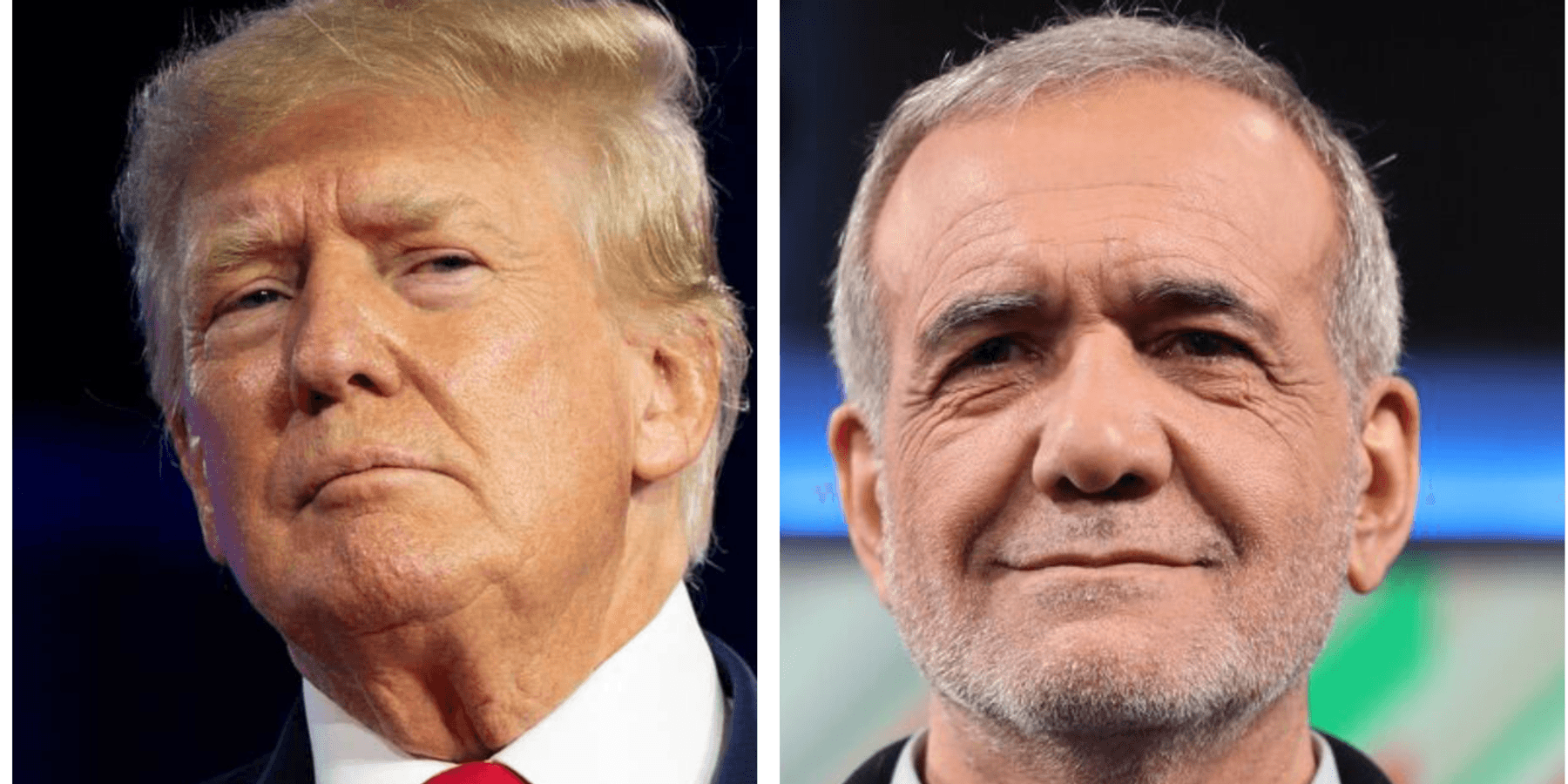
Is a grand bargain in the air?
One might not think so after Washington announced a naval blockade of Iranian ports on Monday, a move that immediately complicated any path to a durable settlement and sent oil markets surging past $115 a barrel.
But two wars, a ceasefire, and now a blockade — and Iran still controls maritime traffic in the Strait of Hormuz. That is not the portrait of a defeated country. It is the portrait of a country that has converted military punishment into strategic leverage and is waiting to see whether Washington will negotiate or escalate further. There is a right way (ensuring regional stability) and a wrong way (continuing the cycle of violence) to go about this.
Understanding how we got here requires an honest accounting of the strategic illusions that drove Washington and Tel Aviv to this point. Their Iran strategy has always relied on the belief that they were looking at a brittle state on the verge of collapse. They were wrong.
Under maximum pressure from 2018 onward, Iran’s enriched uranium stockpile grew from roughly 300 kg to an estimated 3,000 kg by mid-2025. The policy designed to eliminate the nuclear threat measurably accelerated it. And the institutional knowledge to reconstitute the program endures in the minds of Iranian scientists; it cannot be destroyed from the air.
The IRGC is not a conventional military that collapses when its chain of command is decapitated. It is a parallel state with its own economy, intelligence apparatus, and ideological foundation. Killing Ayatollah Khamenei did not hollow it out. It produced a more belligerent successor, Mojtaba Khamenei, with the Guard’s full backing, within days.
Iran did not simply close the strait. It began administering it. Ships from Pakistan, India, China, and Russia were quietly allowed through after vetting by IRGC intermediaries and, in documented cases, payment of tolls in yuan. Iran was choosing who passes, who pays, and who waits. This is the behavior of a state establishing facts on the ground it intends to bring to a negotiating table.
The ceasefire of April 8 reflects this dynamic: the U.S. and Israel achieved most of what they set out to achieve militarily, and yet the Trump administration is issuing ultimatums on the strait because Iran, from the rubble, was the entity with its hand on the valve.
The blockade announced Monday adds a new layer of complexity. Washington may calculate that cutting off Iranian port revenues will accelerate Tehran’s willingness to negotiate. The risk is the opposite: a blockade gives Iranian hardliners a nationalist argument against any settlement and could push Tehran to tighten its grip on Hormuz rather than loosen it. Two parties now each claim leverage over the other’s economic lifeline.
That is precisely the kind of symmetrical deadlock that historically resolves through negotiation, not further coercion.
So what might a settlement look like? A bilateral Iran-Oman maritime transit authority, denominated in dollars, with transparent fee structures and robust verification mechanisms, would convert Iran’s coercive leverage into a legitimate economic stake in the system’s continuity. For such an arrangement to survive a U.S. blockade regime, it would need explicit American endorsement. Washington would have to agree to lift blockade measures in exchange for Iranian compliance with the transit framework.
The Panama Canal treaty of 1977 is the relevant precedent: Washington ceded formal control, secured permanent transit rights, and brought decades of regional stability. Iran’s refineries, petrochemical plants, and port facilities sustained catastrophic damage across two wars. A dedicated reconstruction fund, capitalized through a portion of Hormuz transit revenues, would give Tehran a concrete economic stake in keeping the strait open and tie Iranian compliance to tangible financial benefit.
The same fund would allocate a portion of proceeds toward repairing damage Iran inflicted on Gulf Arab energy infrastructure, ensuring Saudi Arabia, the UAE, Kuwait, and Bahrain have a direct stake in the arrangement’s success. The model need not be framed as reparations but as a joint infrastructure investment, with international auditing and disbursement tied to verifiable compliance benchmarks.
On the nuclear side, what remains is the political architecture to prevent reconstitution: a permanent agreement with more intrusive inspection provisions than the JCPOA and no sunset clauses. For Israel, the ask is a formal Iranian commitment, binding under international law, not to support military action aimed at the destruction of the Jewish state. This stops short of recognition, which no Iranian government could accept and survive domestically, but it establishes a legal and political threshold that changes the strategic landscape.
Iranian hardliners could accept this framing because it requires Tehran to refrain from actively funding Israel’s destruction, not to endorse its existence; a distinction that matters enormously inside the Islamic Republic’s domestic politics.
In Lebanon, a parallel understanding is achievable: in exchange for a binding Israeli commitment to respect Lebanese sovereignty and forgo future military incursions, Iran would commit to supporting the integration of Hezbollah into the Lebanese Armed Forces, ending its function as an independent militia outside state command. A diplomatic framework that removes both incentives is worth more to Israel than any number of airstrikes.
In exchange, Iran gets phased sanctions relief tied to verifiable benchmarks, a formal U.S. non-interference commitment, and the institutional role at Hormuz it has just demonstrated it can claim by force anyway. The deal does not give Iran what it could not otherwise obtain. It gives Iran a legitimate path to what it has already shown it can take through coercion which is why it is strategically rational to offer it.
The Islamabad talks are the first real diplomatic opening since the Omani-mediated negotiations in February which collapsed after Trump said he was “not thrilled” with the terms, just days before the bombing started. Iran was willing to make nuclear concessions then. The war that followed has killed thousands, triggered the largest oil shock in history, and produced a ceasefire in which Iran controls maritime traffic in the Persian Gulf.
Now a blockade threatens to deepen confrontation further. The cost of walking away from the February table is fully visible. The question is whether the same mistake gets made in Islamabad.
A grand bargain is not a reward for Iranian aggression. It is a recognition of a strategic reality that two wars and a blockade have now made undeniable. Iran cannot be destroyed from the air, and its geography gives it leverage over the global energy system that military force can temporarily suppress but not permanently eliminate.
The choice is not between a compliant Iran and a contained Iran. It is between a negotiated framework that converts Iranian leverage into a stake in regional stability, and a cycle of war, ceasefire, and escalation that will repeat itself at harrowing cost. The Islamabad talks offer an opportunity to turn the page on 47 years of bellicosity. Both sides have a vested interest in seeing it succeed.
- Hormuz is not a tool to end the war but how Iran wins the aftermath ›
- Is Israel already sabotaging Iran ceasefire? ›
- Hosting US-Iran talks, Pakistan angles to become the new Oslo ›
- Iran to Israel: You hit Lebanon, and we'll hit the UAE | Responsible Statecraft ›
- Should Trump just end the Iran War without a deal? | Responsible Statecraft ›
- A grand bargain is in sight, you just need a 'golden bridge' to get there | Responsible Statecraft ›