

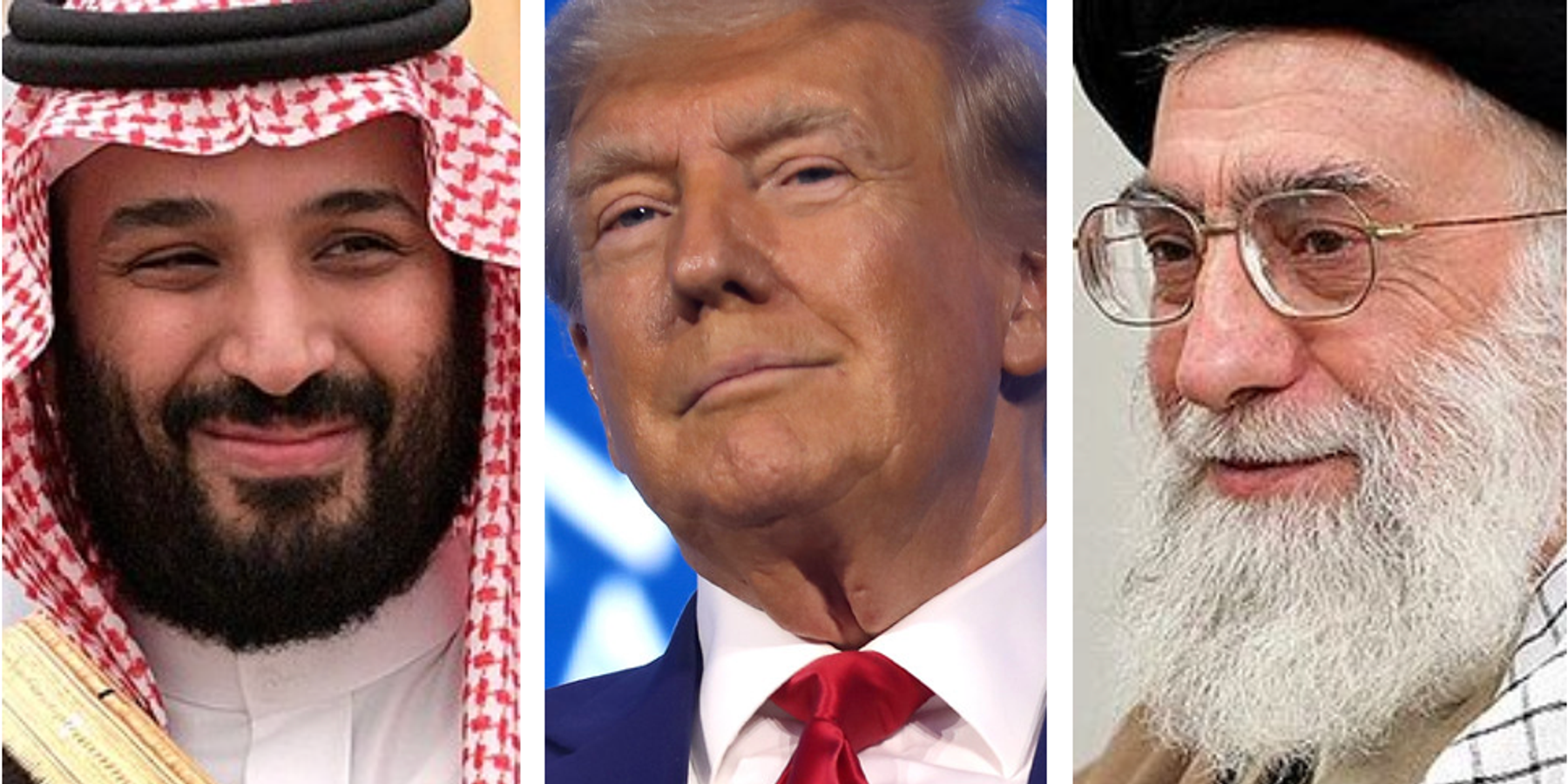
The recent conflict, a direct confrontation that pitted Iran against Israel and drew in U.S. B-2 bombers, has likely rendered the previous diplomatic playbook for Tehran's nuclear program obsolete.
The zero-sum debates concerning uranium enrichment that once defined that framework now represent an increasingly unworkable approach.
Although a regional nuclear consortium had been previously advanced as a theoretical alternative, the collapse of talks as a result of military action against Iran now positions it as the most compelling path forward for all parties.
Before the war, Iran was already suggesting a joint uranium enrichment facility with Saudi Arabia and the United Arab Emirates (UAE) on Iranian soil. For Iran, this framework could achieve its primary goal: the preservation of a domestic nuclear program and, crucially, its demand to maintain some enrichment on its own territory. The added benefit is that it embeds Iran within a regional security architecture that provides a buffer against unilateral attack.
For Gulf actors, it offers unprecedented transparency and a degree of control over their rival-turned-friend’s nuclear activities, a far better outcome than a possible covert Iranian breakout. For a Trump administration focused on deals, it offers a tangible, multilateral framework that can be sold as a blueprint for regional stability.
To understand why this proposal is now the most logical, we must appreciate the depth of the diplomatic collapse.
Just before Israeli bombs rained down on Tehran killing numerous nuclear scientists and senior military commanders, U.S. and Iranian negotiators were deep in Oman-mediated talks, with President Trump reportedly considering the consortium proposal, accepting time-bound, limited enrichment on Iranian soil, with the understanding that precise details would be ironed out in subsequent negotiations.
Then, the strikes began. This sequence confirmed Tehran’s deeply held suspicion: diplomacy is a prelude to ambush, and international agreements are worthless without hard power to back them.
Iran’s recent legislative move to suspend cooperation with the International Atomic Energy Agency (IAEA) is a direct response. It is a declaration that in a world governed by "might is right," Iran will pursue its own might in the dark. This is the new, dangerous reality. The old paradigm of constraining Iran through sanctions and inspections in exchange for easing its isolation will be difficult to resuscitate.
Practically, the consortium could allow enrichment to continue at Iranian facilities but would cap purity at 3.67%, the level established in the 2015 nuclear deal known as the JCPOA. This would reverse the recent trend of enrichment at 60% purity, which is a short technical step from the 90% needed for weapons-grade.
In this framework, the U.S. proposed to help construct nuclear power reactors for Iran, with Iran able to maintain enrichment capped at 3.67% pending a final deal on the long-term location and construction of regional enrichment facilities. Sanctions would also be removed, although the question of whether removal would be piecemeal or comprehensive would be the subject of additional negotiation. Gulf partners, namely, Saudi Arabia and the UAE, would have a financial stake as shareholders. Their presence, potentially including on-site engineers, would create an extra layer of transparency and assurance that the enrichment program remains entirely peaceful, reducing reliance on IAEA inspectors alone.
Forcing "zero enrichment" is, and always has been, a diplomatic non-starter for Iran that only led to an impasse at the negotiating table and ultimately to military escalation. The consortium idea bypasses this dead end. It could allow for Iran to keep enriching, thus satisfying its core demand and providing a face-saving "win" to present to the public, showcasing the preservation of its nuclear program as a successful defense of its sovereignty.
For the U.S., particularly the Trump administration, the consortium is a perfect fit for its transactional foreign policy. The president can claim he used a demonstration of “peace through strength” to force Iran into a landmark regional deal. It is a “win” that is easily packaged: Trump could claim that he brought the region's rivals together and put a lock on Iran's potential development of a nuclear weapon.
For the Arab Gulf states, the consortium model addresses some of their most pressing needs: immediate security and future energy. First, it transforms them from sitting ducks in a future U.S.-Iran-Israel standoff into deal guarantors.
Second, it provides a powerful engine for their own nuclear ambitions. To diversify their energy mixes and free up additional barrels for export, Saudi Arabia and the UAE require civilian nuclear power. The consortium elegantly solves this by creating a shared, multinational fuel cycle.
Creative proposals suggest a division of labor: Iran, for instance, could maintain its prized technological capacity by manufacturing the centrifuges, while the enrichment itself could occur in a neutral country or on an Iranian island separate from the mainland. This would provide fuel for all members while allowing each side to claim a strategic victory.
The crucial benefit for Gulf states is securing a stable and transparent fuel supply chain. This sidesteps the immense political and technical challenges of developing an independent enrichment capability from scratch, a stated goal for Saudi Arabia. For the UAE, with its operational Barakah Nuclear Energy Plant, the consortium offers a more resilient, regionally integrated fuel source, reducing reliance on international markets for uranium procurement and enrichment services.
Previously, Saudi Arabia, focused on its own ambitious nuclear energy plans with U.S. support, saw little reason to join a consortium where Iran held the upper hand. However, the recent war has likely made it more amenable to such an arrangement. Iran’s willingness to retaliate, even symbolically against U.S. bases on the other side of the Gulf, demonstrates its capacity to draw regional players into the conflict. For Riyadh therefore, the risk of being caught in the crossfire of another war could now outweigh the risk of cooptation by Tehran.
In a recent phone call, Iranian President Masoud Pezeshkian signaled to Saudi Crown Prince Mohammed bin Salman and UAE President President Mohammed bin Zayed Al Nahyan his readiness to resume negotiations with Washington, but picked his words carefully: Iran seeks a "fair and reasonable" agreement that respects its "rightful entitlements." This language appears to affirm that while Iran is open to resuming talks, its core demand for enrichment remains unchanged.
Crucially, Pezeshkian also welcomed the support of "friendly and brotherly nations" in the process, a clear invitation for the very regional involvement a consortium embodies.
However, for all its potential, the consortium model is fraught with risk. It requires the Trump administration to navigate its own policy evolution, from an initial willingness to accept enrichment provided there was no weaponization, to the maximalist “zero enrichment” stance it later adopted. Reverting to that earlier pragmatism would mean managing a guaranteed diplomatic crisis with Israel that will demand immense political capital to navigate.
Pursuing a consortium framework also requires a high level of diplomatic ingenuity, as integrating Saudi Arabia and the UAE will involve complex negotiations to secure their buy-in before tackling the nitty-gritty of the consortium's operational structure, from its location to its day-to-day governance.
Furthermore, the risk of proliferation persists. The story of Abdul Qadeer Khan — the Pakistani scientist who stole centrifuge designs from the European Urenco consortium to jumpstart Pakistan's nuclear weapons program and run a global nuclear black market — is a cautionary tale of how know-how and critical material can escape even supposedly secure multinational environments.
The choice is no longer between a perfect deal and a flawed one, but between a pragmatic, albeit risky proposal and the catastrophic certainty of war. The consortium, for all its dangers, is perhaps the only workable idea on the table.
- What exactly is 'shared uranium enrichment' anyway? ›
- How the US could use Iran's uranium enrichment to its own advantage ›