

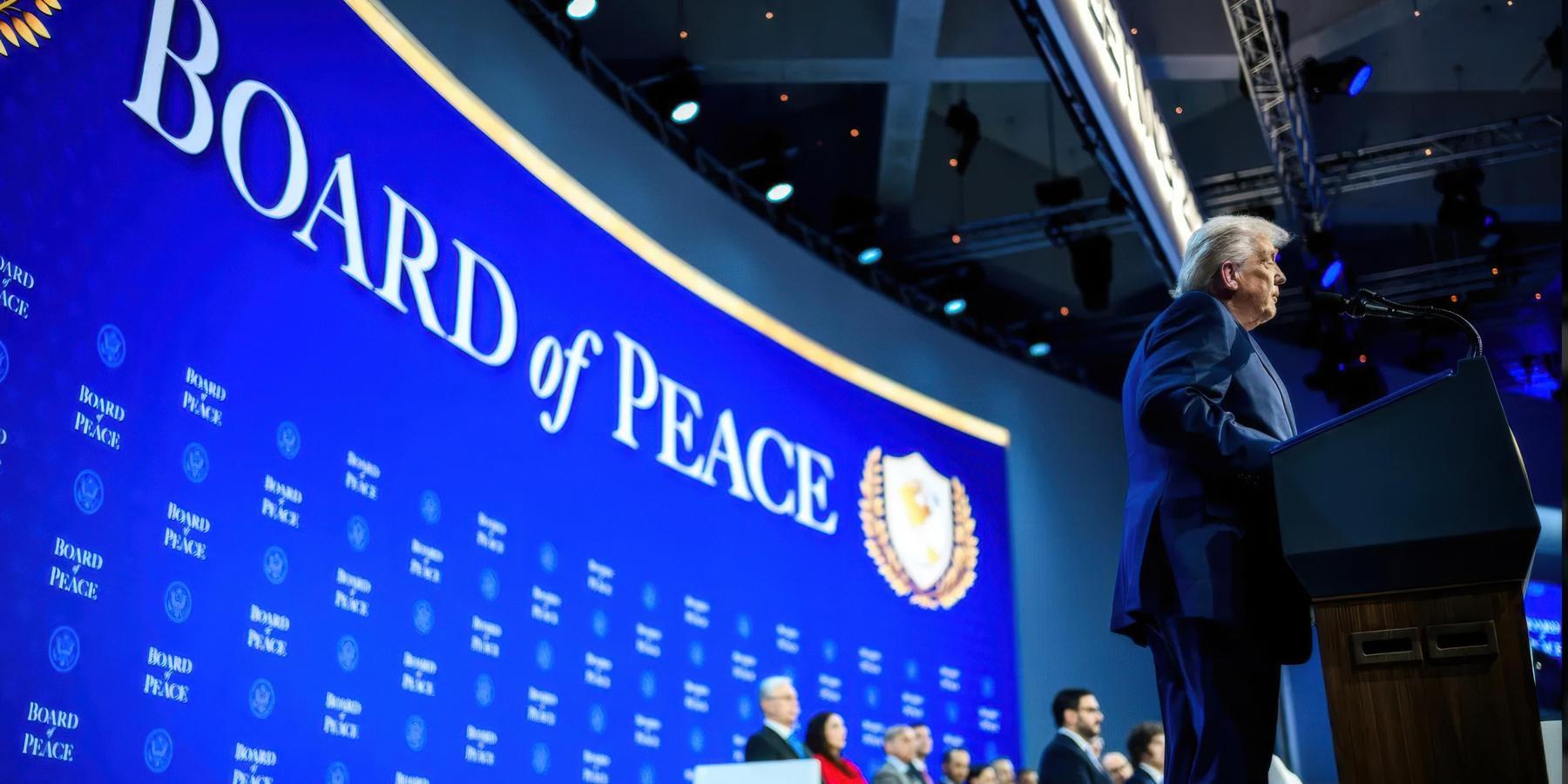
As President Donald Trump's "Board of Peace" gears up to launch its ambitious initiatives in Gaza, a worrying pattern is reemerging: the recruitment of U.S. private security contractors to manage humanitarian operations.
UG Solutions, which previously guarded aid distribution sites in the besieged enclave, is now actively seeking new business opportunities under Trump's controversial plan, according to the Financial Times. As a long-time contractor told the Guardian late last year, “everybody and their brother is trying to get a piece” of the profits from Trump’s privatized aid operations. “People are treating this like another Iraq or Afghanistan.”
This development signals an escalation of a model that has already proven devastating for Gaza's civilian population.
As global attention shifts to the American-Israeli war on Iran, the humanitarian crisis in Gaza continues to deteriorate. Insecurity regarding water, food, fuel, shelter and medical supplies has been dire for several years, as co-author Dr. Mimi Syed saw while working there in December 2024. As regional hostilities intensified, UNRWA reported deepening humanitarian needs in Gaza, worsening security conditions, severe supply bottlenecks, and shortages of medicines and other essentials. Further aggravating the problem are Israel’s bans on UNRWA and other humanitarian agencies.
The Board of Peace initiative, ostensibly designed to alleviate these problems, now risks making them worse. The program bears an unsettling resemblance to its predecessor, the Gaza Humanitarian Foundation (GHF), which functioned primarily as a mechanism for military control and financial gain. The foundation was conceived not by seasoned aid agencies but by military planners and profiteers; its mission to establish a "secure" channel for life-saving supplies was fundamentally compromised by its architecture of militarization and profit motives.
This rush for profit comes against a backdrop of Israeli actions that United Nations experts have characterized as genocide. The systematic dismantling of traditional humanitarian operations has occurred concurrently with the elevation of militarized, unaccountable actors, transforming humanitarian assistance from a system designed to alleviate suffering into one that manages, restricts, and, at times, exploits it.
The GHF model, which the Board of Peace appears poised to replicate, operated on a premise that violated the core principles of humanitarian action. By establishing militarily managed supply lines that bypassed traditional overland routes, it placed control not in the hands of neutral humanitarian organizations but with security officials, mercenaries, and military commanders.
Under this framework, private contractors funded by U.S. taxpayers operated aid systems that reported to Israeli military authorities rather than independent humanitarian bodies. Reports from the field indicated that private security personnel, including individuals with links to an anti-Islamic biker gang and other armed groups, were deployed to secure distribution sites, blurring the line between humanitarian assistance and military operations.
The consequences of this approach were catastrophic. The principle of impartiality — the mandate to provide aid based solely on need — was systematically abandoned. Rather than going where hunger was greatest, aid went to only four locations, all south of Gaza city. This created a devastating geography of need, effectively starving northern Gaza of humanitarian assistance. Civilians were forced to trek dangerous miles to reach aid sites, where they competed for meager supplies while risking being shot at by the Israel Defense Forces.
The medical evidence from Gaza presents a horrifying portrait of systematic deprivation. Working as an American doctor in Gaza, Syed encountered patients who were severely malnourished, with muscle wasting and sunken eyes. Each child she examined showed signs of malnutrition, with impaired healing attributed to protein deficiency. Wounds sustained several months earlier retained a fresh appearance, a condition atypical under normal nutritional circumstances. In Gaza's current market environment, sourcing protein has become extremely difficult, creating conditions that prevent proper wound healing.
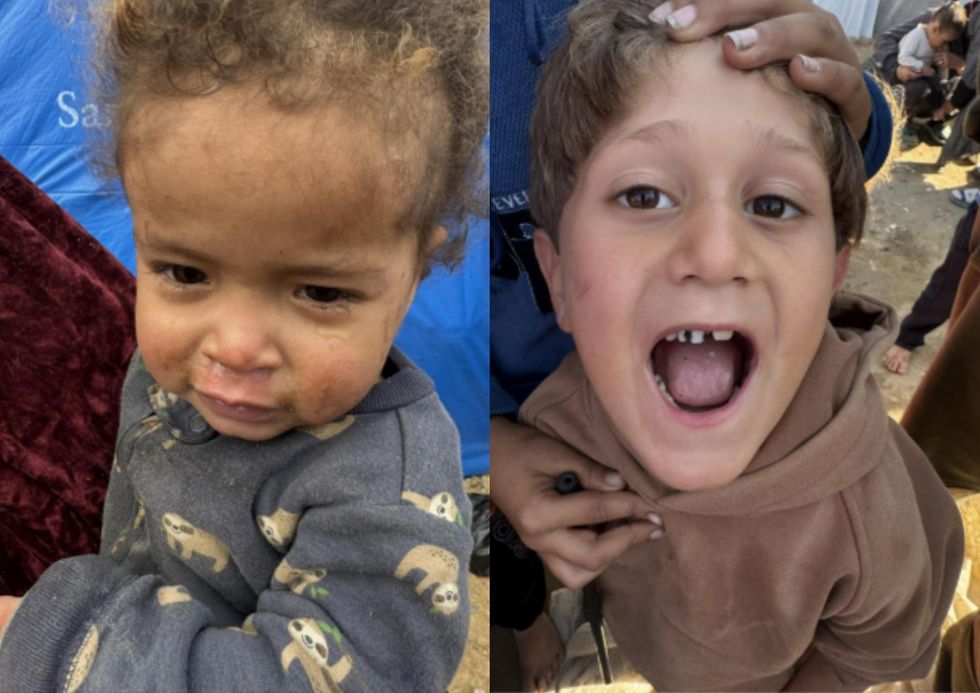 On the left, a Palestinian child shows signs of malnourishment such as hair loss and skin discoloration in December 2024. On the right, a Gazan child shows rotten baby teeth, a sign of severe calcium deficiency. (Photos by Mahmooda "Mimi" Syed)
The collapse of Gaza's public health infrastructure extends far beyond hospital walls. Syed encountered numerous mothers who were unable to breastfeed due to their own malnutrition, while infant formula was unavailable in the market. Consequently, newborns were admitted to the hospital suffering from severe dehydration and failure to thrive. Children exhibit discolored skin, hair loss, and rotten teeth, conditions observed ubiquitously even outside clinical settings.
One particularly damning case involved an otherwise healthy child who contracted hepatitis A from contaminated water and died after being denied medical evacuation by the Israeli government. As Syed personally observed, children were collecting unfiltered water in areas surrounded by open waste, the direct result of restrictions on fuel, equipment, and materials necessary for water purification and sanitation systems.
Healthcare providers have been forced into implementing extreme crisis standards of care that violate fundamental medical ethics. Syed and her colleagues report performing amputations without anesthesia and making triage decisions that involve physically stepping over critically injured children in order to reach those with better chances of survival. These are not the natural consequences of conflict; rather, they are the foreseeable outcomes of systematic deprivation.
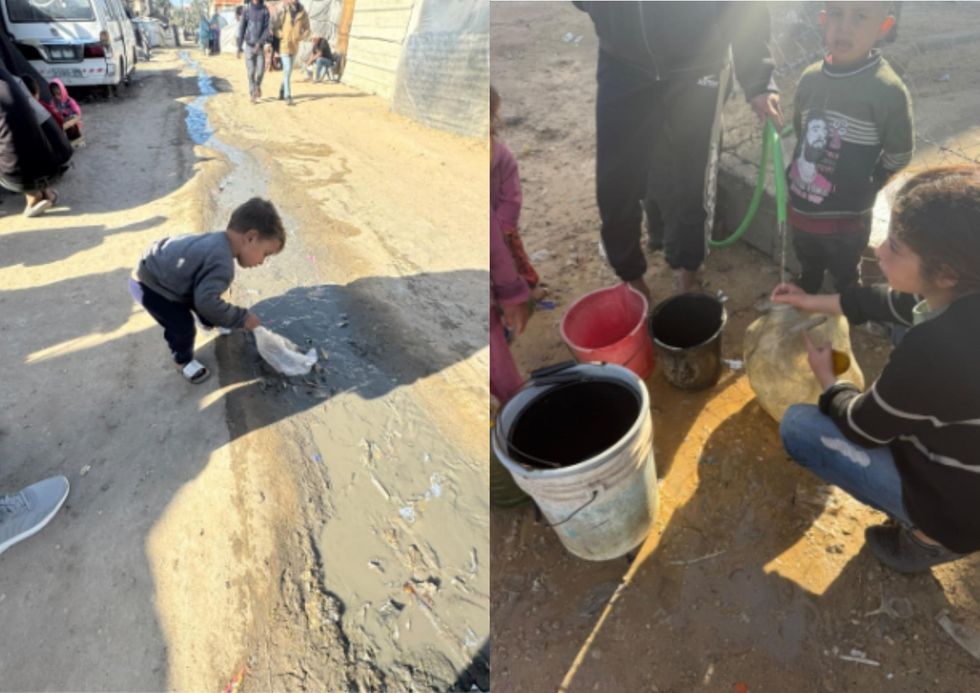 On the left, a child plays in open waste following the destruction of Gaza's sewage system, in December 2024. On the right, Palestinian children fill water containers above open waste. (Photos by Mahmooda "Mimi" Syed)
International law has long prohibited the deliberate infliction of conditions of life that threaten civilian survival. The Genocide Convention includes "the imposition of conditions calculated to bring about physical destruction" in its definition of genocide. The Fourth Geneva Convention requires occupying powers to ensure access to food and medical care, while the Rome Statute, which underlies the International Criminal Court, proscribes starvation and deprivation of essential resources.
Since January 2024, the International Court of Justice has reinforced this framework through multiple legally binding orders called Provisional Measures, mandating that Israel take immediate and effective measures to prevent acts of genocide, including by ensuring the full and unhindered provision of humanitarian assistance at scale.
Yet the regulatory environment has moved in precisely the opposite direction. In January 2026, Israel banned 37 NGOs that had operated in Gaza for decades under new rules that condition access to Gaza on compliance with political restrictions and the provision of sensitive staff data. This regulatory framework systematically undermines neutrality, exposes personnel to risk, and facilitates the replacement of experienced humanitarian actors with militarized, less accountable systems.
The United States has played a central role in advancing this troubling model through its reliance on private contractors and support for militarized aid structures. This approach reinforces a system in which accountability is diffuse, and incentives are fundamentally misaligned with humanitarian principles. The proposed Board of Peace represents not a solution to Gaza's humanitarian crisis but its escalation into a more permanent, profitable enterprise for private security firms.
As UG Solutions and other contractors position themselves to capitalize on the next phase of Gaza's reconstruction, the international community faces a critical test. The only viable path forward requires a complete paradigm shift — not a more efficient militarized system, but an immediate, unconditional, and massive influx of aid through all available entry points. Aid delivery must be decoupled from military control and returned to neutral, independent humanitarian actors. Obligations under international humanitarian law must be enforced with real consequences.
What is unfolding in Gaza is not simply a humanitarian crisis but a litmus test for the international system's commitment to upholding the legal and moral framework it claims to defend. The legacy of the Gaza Humanitarian Foundation serves as a warning: when aid is militarized and profited from, it ceases to be humanitarian and becomes simply another tool of war.
The Trump administration could have tried to learn from this failure. Instead, it is now poised to repeat it.
- Phase farce: No way 'Board of Peace' replaces reality in Gaza ›
- Board of Peace will be a bonanza for wealthy board members ›
- How Trump's Board of Peace is set up for a multibillion dollar fail ›