

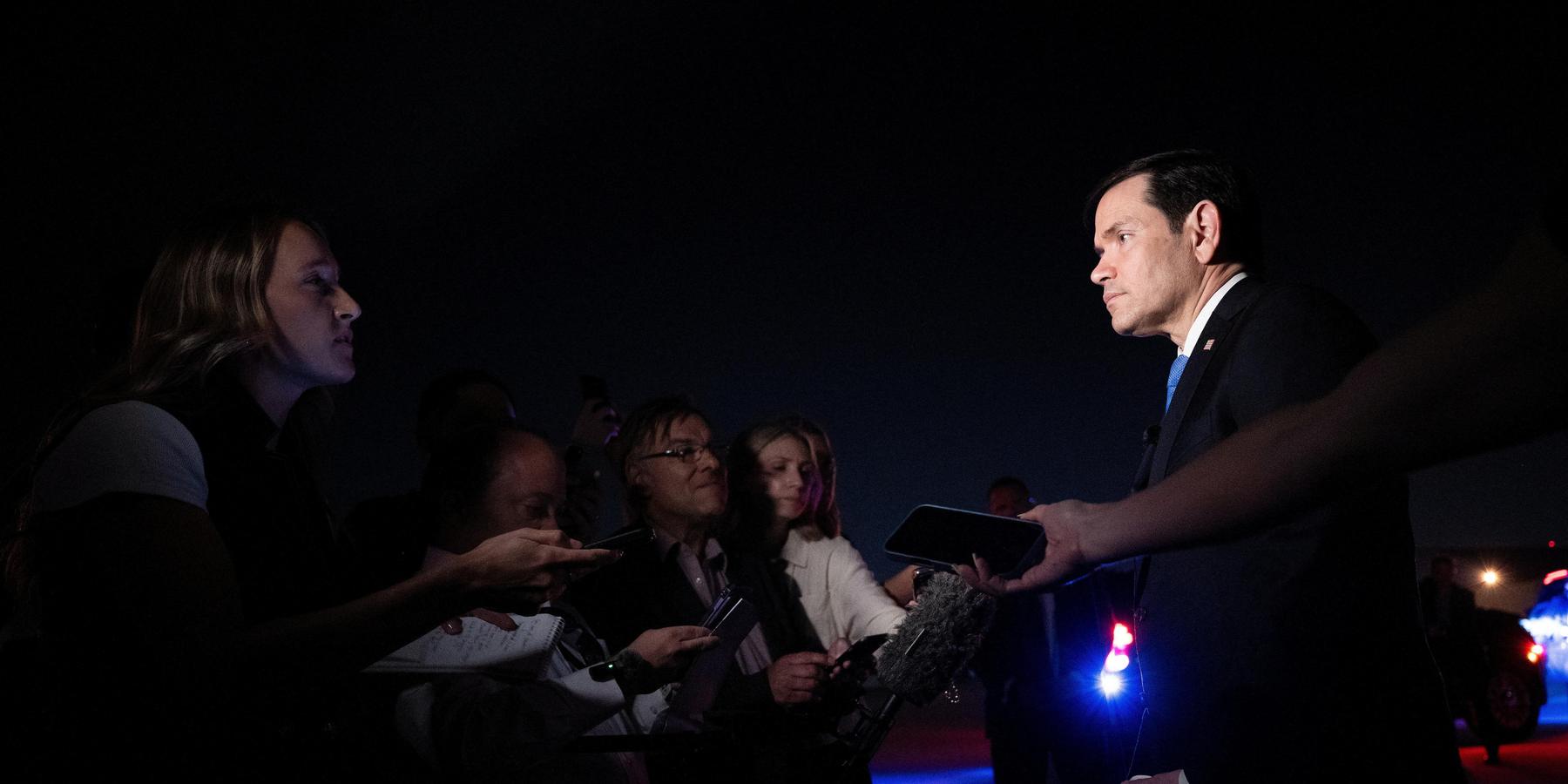
The South China Sea’s waters turned choppy again just as U.S. Secretary of State Marco Rubio arrived in Manila to attend an ASEAN summit.
On Monday, a new maritime clash between China and the Philippines sparked mutual recriminations between Beijing and Manila and a mutual summoning of ambassadors. Washington too weighed in with tough remarks, denouncing Beijing’s “troubling pattern of provocation” in the South China Sea.
If China indeed provoked this incident, its timing was poor. The gathering of so many diplomatic dignitaries in Manila at the annual ASEAN Foreign Ministers’ meeting gave the clash extra attention. Indeed, Chinese Foreign Minister Wang Yi was also there, and his meeting with Rubio was apparently constructive. The maritime incident was discussed, with Rubio speaking of the need to manage the bilateral relationship between the two great powers. Since the Trump-Xi summit in May of this year, there is a deeper level of engagement between the United States and China, even as sharp differences remain.
The maritime clash was significant for two other reasons. First, a Philippine naval crew member had to be hospitalized with a serious injury to his head after a Chinese sailor reportedly struck him with a baton. Serious injuries are rare in the recurring maritime incidents in the South China Sea; the last major one was in December 2025 near Sabina Shoal.
Second, the brawl took place at Second Thomas Shoal, the site of a long-berthed Philippine naval ship that serves as an outpost for a handful of Manila’s marines stationed there. Second Thomas Shoal used to be the biggest flashpoint between Beijing and Manila. However, a bilateral agreement signed by Beijing and Manila almost two years ago greatly eased tensions over Philippine resupply missions to the aging ship and reduced Chinese coercive activity at the location. The agreement, limited as it is, was a victory for diplomacy. It is more than notable that it has held up for this long.
Since the July 2024 agreement, other locations in the South China Sea, notably Scarborough Shoal, have been sites of clashes. The return of Second Thomas Shoal as a flashpoint would be bad news for the Philippines and Southeast Asia. The United States, which has a mutual defense pact with the Philippines, has an enduring interest in using its influence over both sides to shore up the rare diplomatic win and do its part in stabilizing the region. Rubio’s remaining day in Manila is an opportunity to both support an outgunned ally and find ways to lower temperatures in the South China Sea.
- Philippine Sailor Injured in Violent Clash with China Coast Guard off Second Thomas Shoal - USNI News ›
- China and Philippines trade accusations after sailor injured at sea | Border Disputes News | Al Jazeera ›
- Philippines and China blame each other after row that injured sailor in disputed waters | AP News ›