

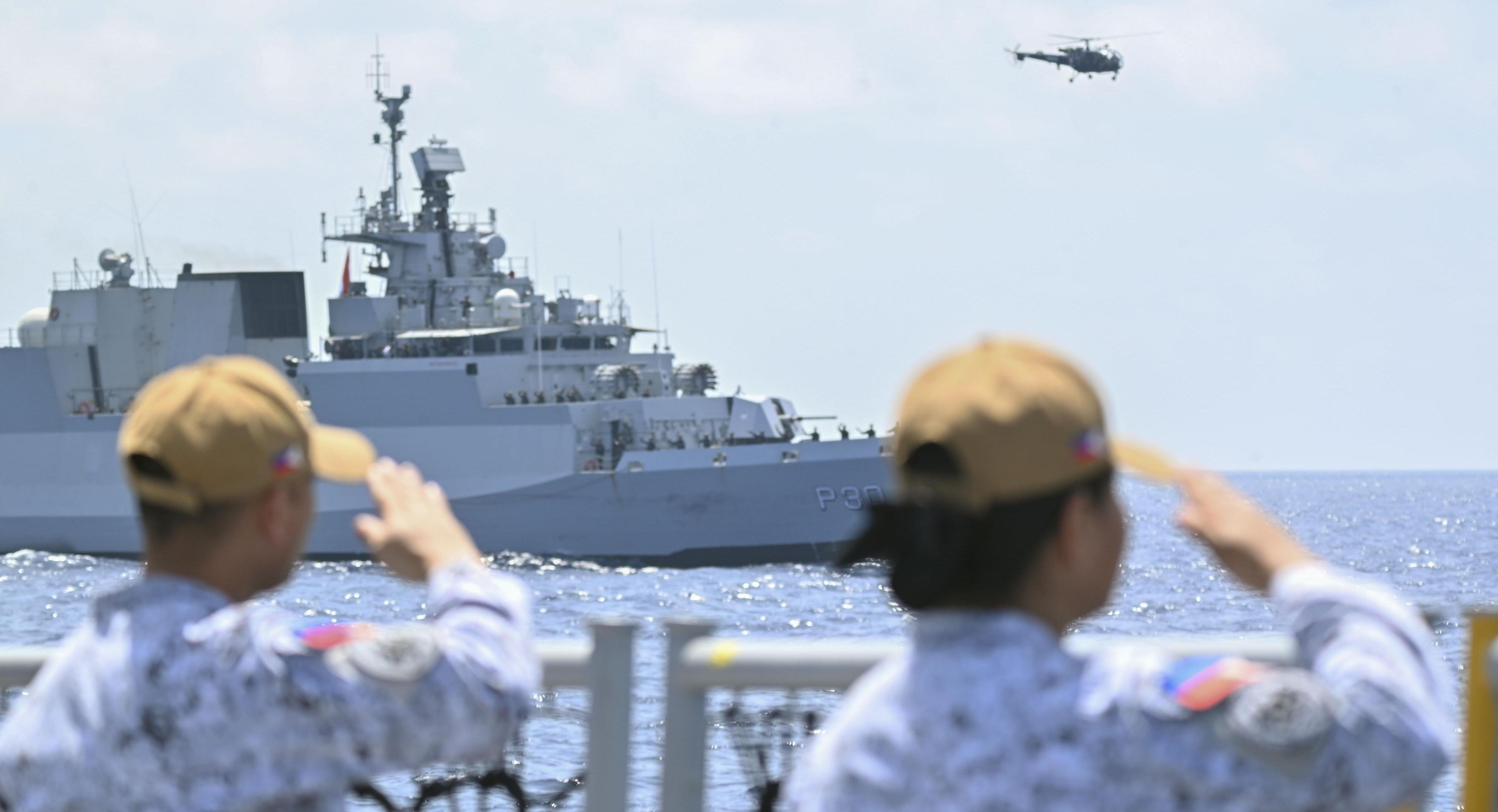
Sunday marked a decade since an Arbitral Tribunal at The Hague handed a near total victory to the Philippines, a U.S. treaty ally, in its maritime dispute with China. Despite the ruling, the dispute has escalated in recent years with standoffs, collisions, and other dangerous encounters at sea.
Over the weekend, the United States, along with 13 other countries, issued a joint statement commemorating the 10th anniversary of the award. The statement, citing the United Nations Convention on the Law of the Sea (UNCLOS), also expressed “strong opposition to any destabilizing or unilateral actions including by force or coercion that threaten peace and stability in the region,” and, as has been routine in past U.S. pronouncements, upheld “freedom of navigation and overflight.” Notably, the Philippines was the only Southeast Asian country to endorse the statement.
In 2016, the tribunal, constituted under Annex VII of the UNCLOS, invalidated China’s claim of “historic rights” to large swathes of the South China Sea, which is embodied by its “9-dash line” through the waterway; adjudicated the legal nature of various maritime features in the contested seas; and declared China’s reclamation and artificial island construction as having violated the Philippines’ sovereign rights. The award also contained important environmental strictures and upheld Philippine fishers’ traditional fishing rights at the disputed Scarborough Shoal.
The 2016 award was a major step forward in international law. It applied UNCLOS’ provisions to a complex case and provided key guidance on how maritime entitlements, historical claims, and environmental obligations apply to all nations, not just those bordering the South China Sea.
However, the coalition that the United States helped forge for the joint statement was mainly composed of European and Western countries. South Korea, a core U.S. ally in Asia, stayed away. Most notably, Southeast Asian states (apart from the Philippines) did not sign up – not even Vietnam, which has its own sharp maritime dispute with China, and should be a logical partner. Hanoi chose to reiterate its support for the award in a separate statement.
The inability of Washington and Manila to convince regional states to join in is a sign of the gap that still needs to be covered in U.S. diplomacy. Almost all Southeast Asian states reject China’s expansive 9-dash line and are opposed to or uneasy with Beijing’s intrusive and aggressive actions. However, they also have important economic and other ties with China that they do not want to risk.
If a broader regional coalition is to be built to counter China’s excessive behavior in the region, the U.S.-Philippines alliance will need to work harder at forging a compromise path forward that is appealing to the wider region. This includes adopting smarter language. But there’s also a need to add elements of reassurance, along with the deterrence already present. The right mix of both can help achieve the sort of strategic stability that is in the best interests of the United States and the region.
- Major US-Philippine military drills kick off amid tensions with China ›
- China just got one step closer to its own nuclear triad ›
- Thrilla in Manila: Rubio arrives as China-Philippines tensions spike ›