

Former German Chancellor Angela Merkel sparked controversy in Europe this week when she appeared to blame eastern European states for helping to instigate the Russian invasion of Ukraine.
Merkel claimed in an interview with Hungarian media that, in June of 2021, she began to feel that Russian President Vladimir Putin “was no longer taking the Minsk Agreement seriously,” referencing a series of treaties that aimed to end the war between Russia and Ukraine in the Donbas. “That’s why I wanted a new format where we could speak directly with Putin as the European Union,” she said.
But that proposal stalled due to opposition from the Baltic states and Poland, who “feared we would not be able to develop a common policy towards Russia,” according to Merkel. “Then I left office and Putin’s war began,” she said.
The comments provide rare, new insights into the deterioration in Western relations with Russia that reached a crescendo in February 2022, when Putin launched his full-scale invasion of Ukraine. Merkel’s account adds credence to arguments that the West failed to pursue all diplomatic avenues to prevent the war, which has now turned into a protracted conflict.
Eastern European leaders responded to the interview with indignation, arguing that efforts to negotiate with Putin were in fact to blame for the war. “I consistently told her that you cannot deal with Putin ‘in good faith,’ but she believed that the Baltic states were wrong,” said former Latvian Prime Minister Krisjanis Karins, who served in that role from 2019 to 2023. “Putin acts the way he acts, and the only options for the West are either to submit or to resist.”
“Russia’s war against Ukraine is driven by one thing and one thing only: its refusal to accept the Soviet Union’s collapse and its unrelenting imperialist ambitions,” said Estonian Foreign Minister Margus Tsahkna. “Russia alone is to blame for this aggression.”
Notably, Merkel didn’t place all of the blame on eastern Europe. The former chancellor also cited the pandemic as an aggravating factor in the deterioration of Western ties with Russia. “If you cannot meet, if you cannot discuss differences face to face, you won’t find new compromises,” she said.
Merkel appeared less hopeful about the possibility of diplomacy with Russia today, after more than three years of war in Ukraine. “Times have changed now, and we need to think about what position will best help us achieve peace,” she said. In Merkel’s view, that means that Europe will have to act “as a real deterrent” to Russia by strengthening its military position and supporting Ukraine.
In other news related to the war in Ukraine:
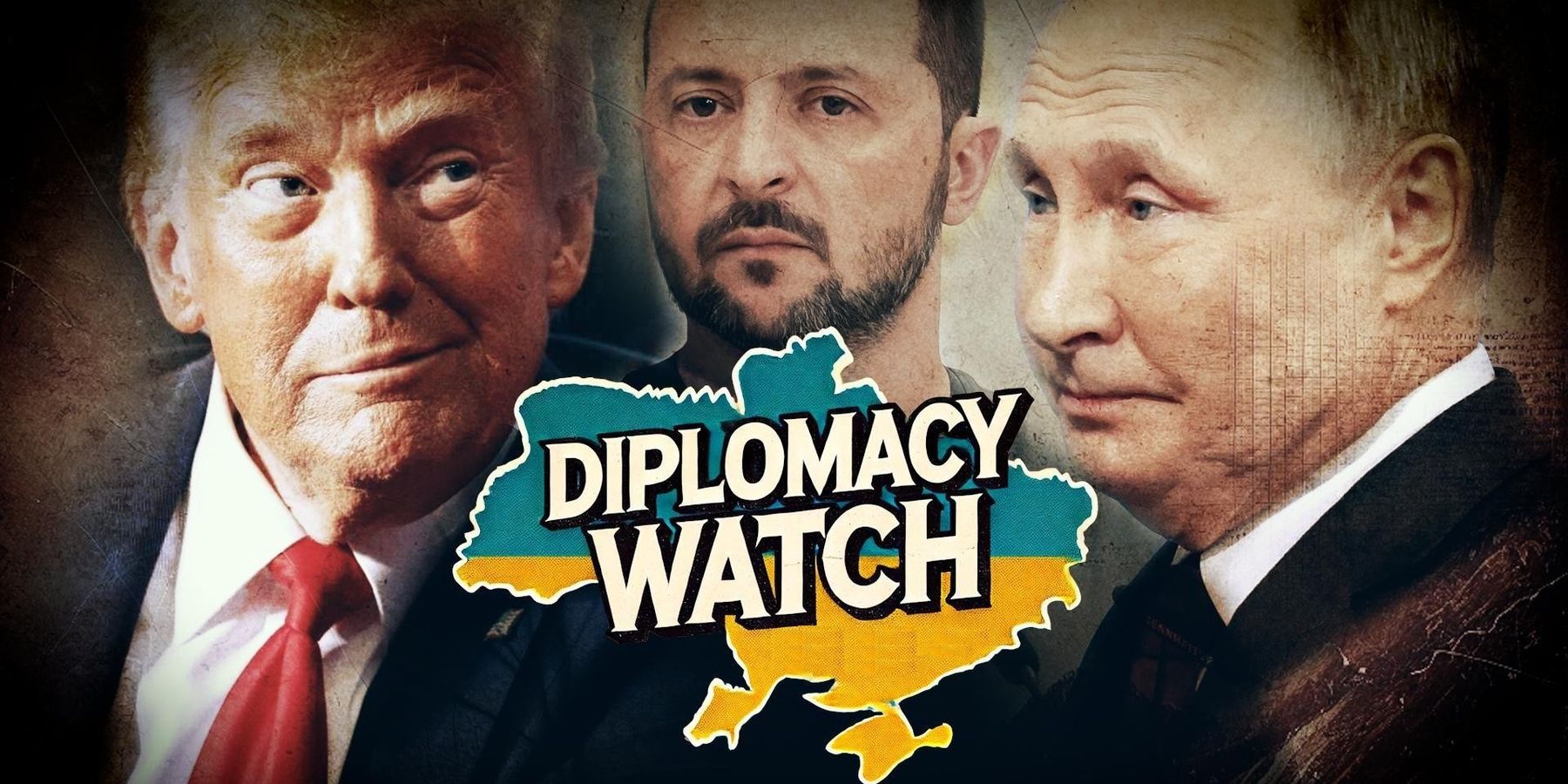
— President Donald Trump publicly waffled over whether to give long-range Tomahawk missiles to Ukraine, saying he would want to “find out what they're doing with them” before making a final decision, according to Reuters. “I'm not looking to escalate that war,” Trump said. Ukrainian President Volodymyr Zelensky has been urging Trump to provide the missiles, which have a range of more than 1,500 miles, so that his military can strike targets deep inside Russia. Putin, for his part, claimed that such a move would represent a “qualitatively new stage of escalation” in the conflict because Ukraine couldn’t fire Tomahawks without help from U.S. personnel.
— European states are pushing to provide Ukraine with a €140 billion loan using frozen Russian assets after the Trump administration expressed support for such a move last month, according to the Financial Times. The primary hurdle to the plan is now Belgium, which fears taking on liability for a legally dubious effort that would use Russian assets held in a Brussels-based European bank. In Responsible Statecraft, Mark Episkopos of the Quincy Institute argued against the plan, writing that it would “undermine the credibility of European financial institutions” and reduce potential leverage in peace negotiations.
— Putin said Tuesday that Russian forces have captured roughly 5,000 square km of Ukrainian territory so far this year, leaving Russia in control of roughly 20% of Ukraine’s pre-war land, according to France 24. Public reporting appears to back up much of Putin’s claims, with one popular tracker indicating that Russia has taken roughly 4,000 square km of Ukrainian territory since January. Zelensky, for his part, has claimed that Ukraine is making gains in strategically important areas of the Donetsk region.
U.S. State Department news:
The State Department did not hold a press briefing this week.
- Can 'Finlandization' Help Ukraine Stave Off Conflict with Russia? ›
- Blame game erupts in Europe as Ukraine strategy falters | Responsible Statecraft ›