

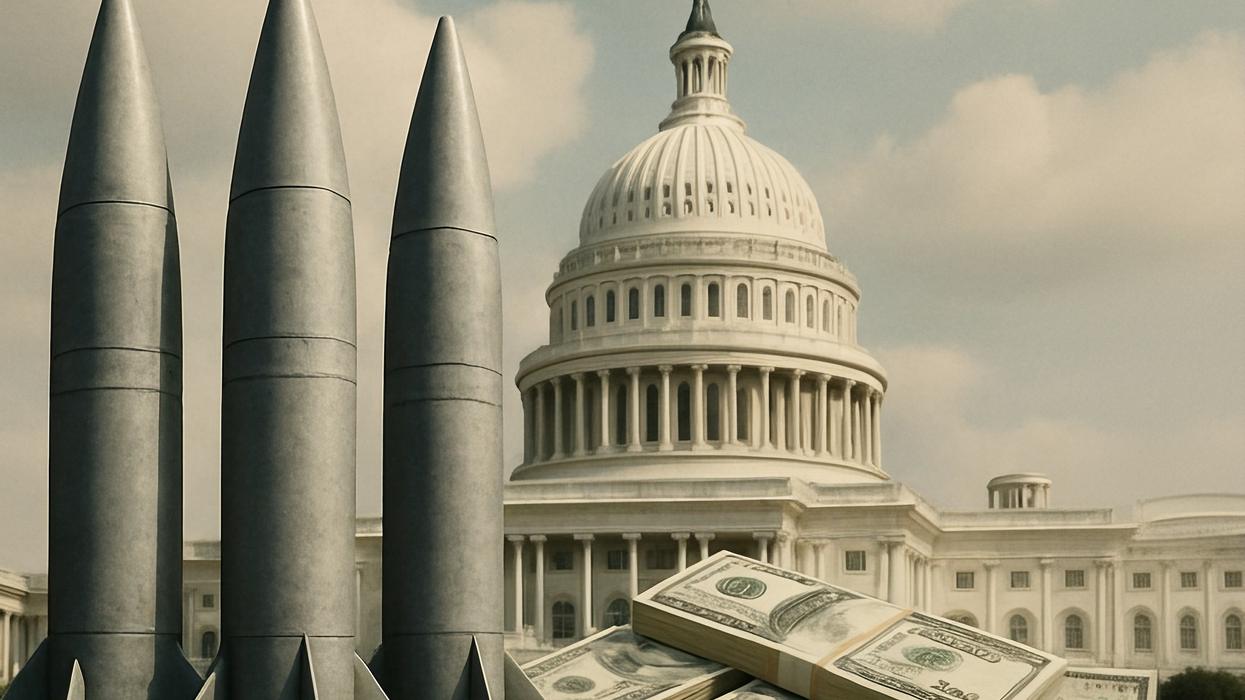
Today the White House unveiled its much anticipated yet highly unprecedented $1.5 trillion Pentagon budget request for FY 2027.
The $1.5 trillion — a whopping 50% higher than the Pentagon’s current, already staggering $1 trillion budget — would include $1.15 trillion in the base request, where the White House Office of Management and Budget requests the remaining $350 billion be taken up separately through a reconciliation package later this year.
The proposal includes $17.5 billion for the prospective Golden Dome missile defense system. It requests 85 F-35 fighter jets, 32 of which would be funded through the base budget, and 53 via reconciliation — nearly doubling FY2026’s request of 47 F-35s. It also puts nearly $66 billion toward shipbuilding — including a Golden Fleet Navy modernization program, where some funds will go toward the Trump-class battleship and other next generation frigates.
In addition to this $1.5 trillion, the Pentagon has requested a $200 billion supplemental package to sustain the ongoing U.S.-Israeli war on Iran. In order to bypass the Senate’s 60-vote threshold, that too could be taken up as part of a reconciliation package.
But experts say this massive spending is unnecessary, that it’s just propping up initiatives that waste taxpayers’ money, while doing little for U.S. defense needs.
"Throwing more money at the Pentagon is not a national security strategy,” said Gabe Murphy, a policy analyst at Taxpayers for Common Sense. “On the contrary, enacting this reckless proposal would make America less safe by fueling runaway debt and wasteful spending on an armada of ill-advised, gold-plated boondoggles like Golden Fleet and Golden Dome.”
“On top of this nearly 50 percent boost, the Pentagon is reportedly seeking $200 billion for its unauthorized war on Iran,” Murphy added. “If both are approved, Congress will have doubled the Pentagon budget in just two years. Congress should vehemently oppose any increase for the Pentagon, along with any funding for unauthorized war."
Reconciliation's uphill battle
However, observers tell RS that this floated reconciliation package — which the White House requests include $350 billion toward the total $1.5 trillion defense budget, and will likely include an additional $200 billion Iran war supplemental — faces significant obstacles.
President Trump himself has been shaky on whether a reconciliation package — an arduous and exceptional legislative process Congress can use to fast-track certain budget issues — should be pursued this year, following the successful passage of the One Big Beautiful Bill reconciliation package last year. He said in December that another reconciliation package was not necessary; he has since warmed to the idea after sustained GOP interest in one, and is now asking that a new reconciliation bill be brought to his desk for consideration by June 1.
But it likely will not have the votes to pass.
As a senior congressional staffer, who spoke on the condition of anonymity, told RS, the matter is a partisan one. "It's a given that Democrats will not support this. As a general matter, one party never supports the other party's reconciliation," the staffer said. “It would be very strange or rare to see any Democrats crossing the aisle.”
Republicans’ voting margins are also thin, meaning any defections on their end could tank the package.
The Presidential budget request released today is the “skinny budget” — a preliminary summary of the request, which outlines top-line spending priorities for FY2027. The full budget request is slated to come out April 21st.