

The launch of joint U.S.-Israeli strikes on Iran could lead to economic and financial disruptions that ripple across the countries of the Global South with devastating effects. And while a quick end to the war could dampen these effects, Defense Secretary Pete Hegseth has acknowledged that the war could even last up to 8 weeks, and Israel is now reportedly expecting a "weeks-long" war with Iran.
The fundamental issue here seems to be an increasingly expansive vision of American — and particularly Israeli — war aims. These have now gone well beyond Iran’s offer of substantial denuclearization to regime change, and some quarters have even more extreme visions like the potential Balkanization of Iran into multiple statelets. Such mission creep on the part of the U.S. and Israel has in turn changed incentive structures in Iran towards an expansion of the conflict to target both the Gulf States and global oil markets, a dynamic that threatens to broaden the conflict and extend it, with profound impacts on the global economy.
The dominant channel through which these impacts will be felt is of course the price of oil. And here, the issue is less the loss of Iranian production (exports amount to roughly 1.5 million barrels per day) as it is hostilities leading to an effective closure of the Strait of Hormuz, driven by a combination of attacks on ships and disappearance of private insurance coverage for tankers transiting the straits. As of this writing, 8 ships have reportedly been struck by Iran and hundreds more are waiting on either side of the strait. Meanwhile, private marine insurers have canceled coverage, and are likely to renew (if at all) at significantly higher rates.
In response, President Trump said earlier this week that he would order the Development Finance Corporation to provide cheap marine insurance to all merchant shipping traversing the strait and potentially also offer U.S. naval escorts to vessels that requested it. This may alleviate some of the pressure, but is not without its own logistical and political difficulties. The DFC (launched in 2019 and recently reauthorized to be substantially larger with a maximum contingent liability of $205 billion) does indeed provide political risk insurance that covers acts of war, as did a predecessor, the Overseas Private Investment Corporation. But the industry is reportedly skeptical about both the DFC’s financial capacity and the willingness of shippers to undertake voyages given broader uncertainties.
However, in comparable recent instances of such coverage (such as during the Iran-Iraq war of the 1980s), the U.S. was not a full-blown belligerent in the conflict as it is now, which might complicate decisions regarding underwriting and pricing. The agency’s announcement on the subject was relatively thin on details, and the underwriting process would likely involve extensive due diligence over the valuations of hundreds of vessels and the likelihood of adverse incidents. And shippers (and perhaps crews) are also likely to engage in such calculations before voyages in a war zone, particularly given the added risks stemming from recent revolutions in drone warfare.
As if all this were not enough, there might be political issues that stem from the fact the U.S. actually gets practically none of its oil through the Strait of Hormuz — most of it goes to Asia, with China being the single largest importer. Thus it is unclear how quickly White House financial initiatives can restore oil flows as long as the region remains a contested battlefield.
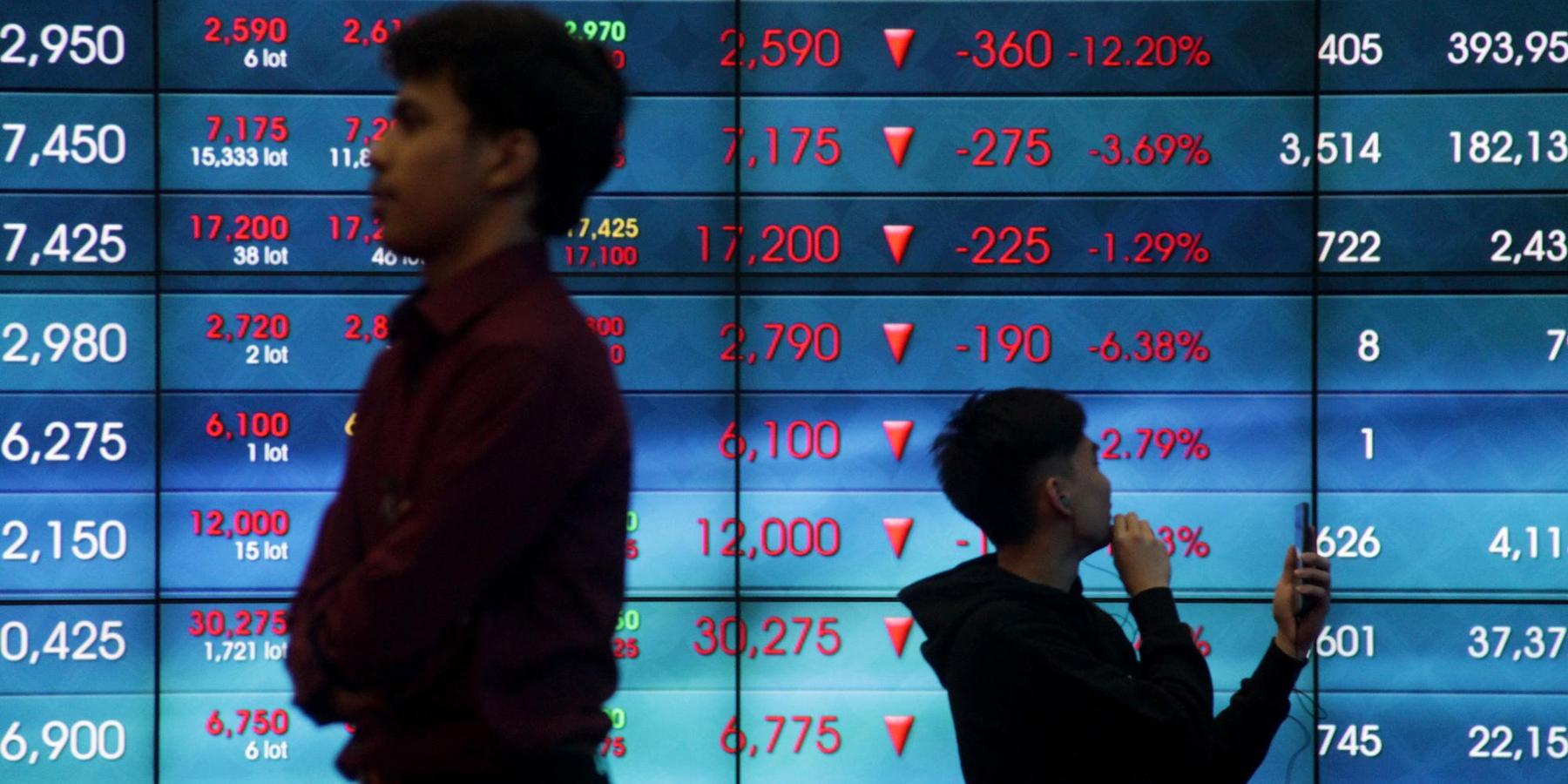
One result has been a very sharp jump in the price of oil, with benchmark Brent Crude topping $80 per barrel, up from $60 in early January, when Nicolas Maduro of Venezuela was overthrown. At the time, it appeared that oil prices were too low for the major oil companies to consider investing in Venezuela’s expensive and difficult oilfields, suggesting that there might be at least one economic winner in the Global South from a prolongation of the conflict.
In fact, if the patterns last seen during the early weeks of the Russian invasion of Ukraine hold, South America as an energy exporting continent could be hit less hard by events in the Middle East than East, Southeast, and South Asia, which account for the bulk of energy imports from the Persian Gulf region. Of the roughly 15 million barrels that flow through the Strait of Hormuz every day, roughly 12.5 million barrels go to Asia.
Among the major economies, India stands out for its high exposure to the Gulf. It is a current account deficit economy with a trade deficit that reflects substantial oil imports. India also has a large population of expatriates in the Gulf who account for roughly $48 billion in remittances every year, helping to cushion the balance of payments.
Similar exposure to the Gulf region was one of the reasons that the Indian economy hit a wall in 1990-91 (due to the first Iraq war), an event that forced the country to seek succor from the IMF and open its economy to the world. One consequence of the subsequent, major market reforms is that India is in better shape to face these travails with roughly $725 billion in reserves, a far cry from its empty cupboards in 1991.
But other small oil importing countries in the Global South with less diversified economies might not be as fortunate. And one of the unfortunate echoes of 2022 here is not just the jump in oil prices (which might come down), but a leap in fertilizer prices just ahead of planting season — exactly what happened in 2022. Natural gas is a key input for nitrogen-based fertilizers and the Persian Gulf region is a key global producer, accounting for roughly 45% of global urea production. A jump in fertilizer prices could hurt millions more than even a jump in oil prices.
Currency markets could be yet another source of pressure. To the surprise of some (but not all) observers, the dollar experienced a broad-based selloff last year in response to White House tariffs, giving countries in the Global South some respite from imported inflation that might have forced their central banks into rate hikes. But thus far at least, the jump in oil prices has bolstered the dollar, reflecting both America’s greater energy independence since the shale revolution and the expectation that a heightened risk of inflation could slow rate cuts by the Federal Reserve.
It should be noted, however, that while higher oil prices might bolster the dollar versus its competitors, they are unlikely to help the U.S. economy overall — America has a lot more people who buy gasoline than it has workers engaging in the oil or shale patch.
These financial and economic pressures that come from higher energy prices are also coupled with trade pressures directed at manufacturing-exporter economies (predominantly in Asia) that have been subjected to one form of tariff or another. China has been an obvious target but so have Japan, South Korea, the ASEAN states, and India, which was just told by a State Department official that the U.S. was not going to repeat the trade mistakes it had made with China. Beyond all this, some of the more extremist plans being mooted for the region, such as the breakup of Iran, could lead to increased instability not just in the Middle East, but also in South Asia via the impact on an economically tottering Pakistan, which would just add to economic burdens.
Thus, the White House seems to have borrowed the Silicon Valley maxim of “move fast and break things” to vast geographic areas, most alarmingly in the highly sensitive Middle East, potentially threatening the economic stability of what has been the world’s fastest growing region for the last 3 decades. In all this, the U.S. may be acting (contra Charles Kindleberger’s precept) as a hegemonic destabilizer rather than stabilizer.
- The cost of Trump's Iran war: $5 billion and counting ›
- Trump's war on Iran is already losing the home front ›
- Won't get fooled again: Kurds have lent arms to US before, at their peril | Responsible Statecraft ›