

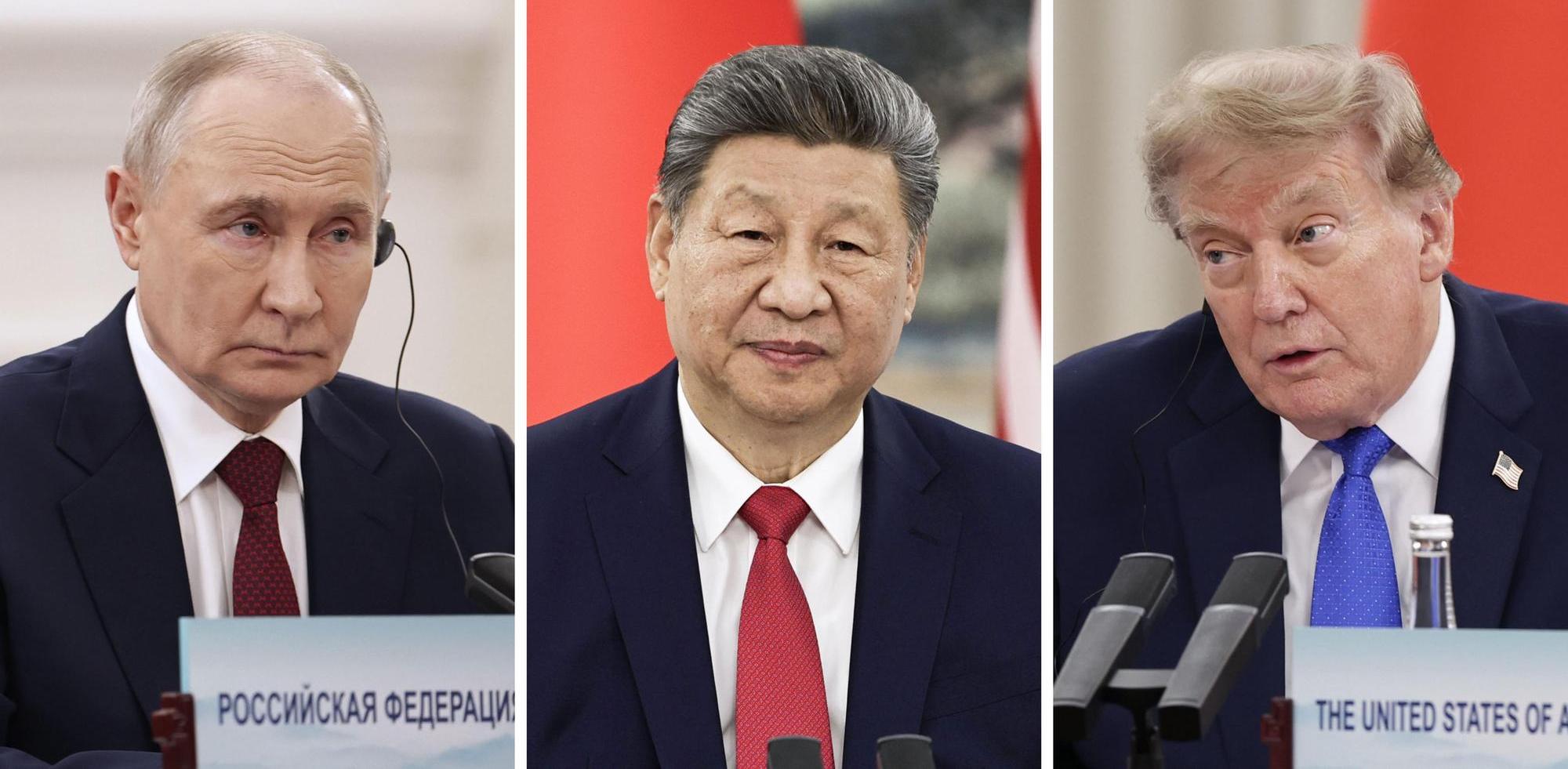
The first trilateral meeting of Presidents Donald Trump, Xi Jinping, and Vladimir Putin, held on November 19 in Shenzhen, was worth holding for one reason above all. The United States has a clear interest in reducing nuclear risks with both China and Russia, and the three leaders agreed to discuss how to do so.
Beyond that, the summit yielded little for Washington. Xi gained the prestige of convening the three powers, while Putin gained stature on the world stage even as Russia continues its brutal war against Ukraine.
The nuclear pledge deserves attention, however. Beijing has long resisted three-way arms-control negotiations, arguing that the United States and Russia should first reduce their much larger arsenals. China has discussed nuclear risks with both countries in the broader five-power process and held bilateral arms-control consultations with Washington in 2023. Beijing suspended further consultations in 2024, citing U.S. arms sales to Taiwan. What Shenzhen adds is Xi’s public commitment to discuss nuclear risk reduction and nonproliferation in a dedicated three-way format. That is a meaningful opening, especially since New START expired in February.
However, the joint declaration sets no timetable or agenda and contains no commitment to negotiate limits on arsenals.
The other results of the summit were thinner. The leaders endorsed U.N. reform and greater supplies of refined petroleum products without specifying what reforms they wanted or how much additional fuel they would supply. Beijing says they discussed Ukraine, the Middle East, and the Korean Peninsula, but the declaration identified no concrete next steps. Its language on immunity for state officials and alleged jurisdictional abuse by the International Criminal Court (ICC) had a clearer political payoff. It aligned with the Trump administration’s position and benefited Putin, who faces an ICC arrest warrant.
Xi also brought a familiar proposal into the three-way meeting by calling for crisis communication and prevention mechanisms. Although the joint declaration contained no agreement to establish them, Washington and Moscow should nevertheless take up the proposal and see whether Beijing will agree to practical steps, such as establishing and regularly testing emergency contacts.
On balance, Shenzhen was long on symbolism and promises and short on results that advance global stability or U.S. interests. That judgment could change if the three governments schedule nuclear talks and agree on measures that reduce the risk of miscalculation. The summit gave them an opening. Whether they use it is another matter. I won’t hold my breath.
- How China and Russia can help us avoid escalation in the Middle East ›
- Trump-Xi-Putin meet could be more important than you think ›