

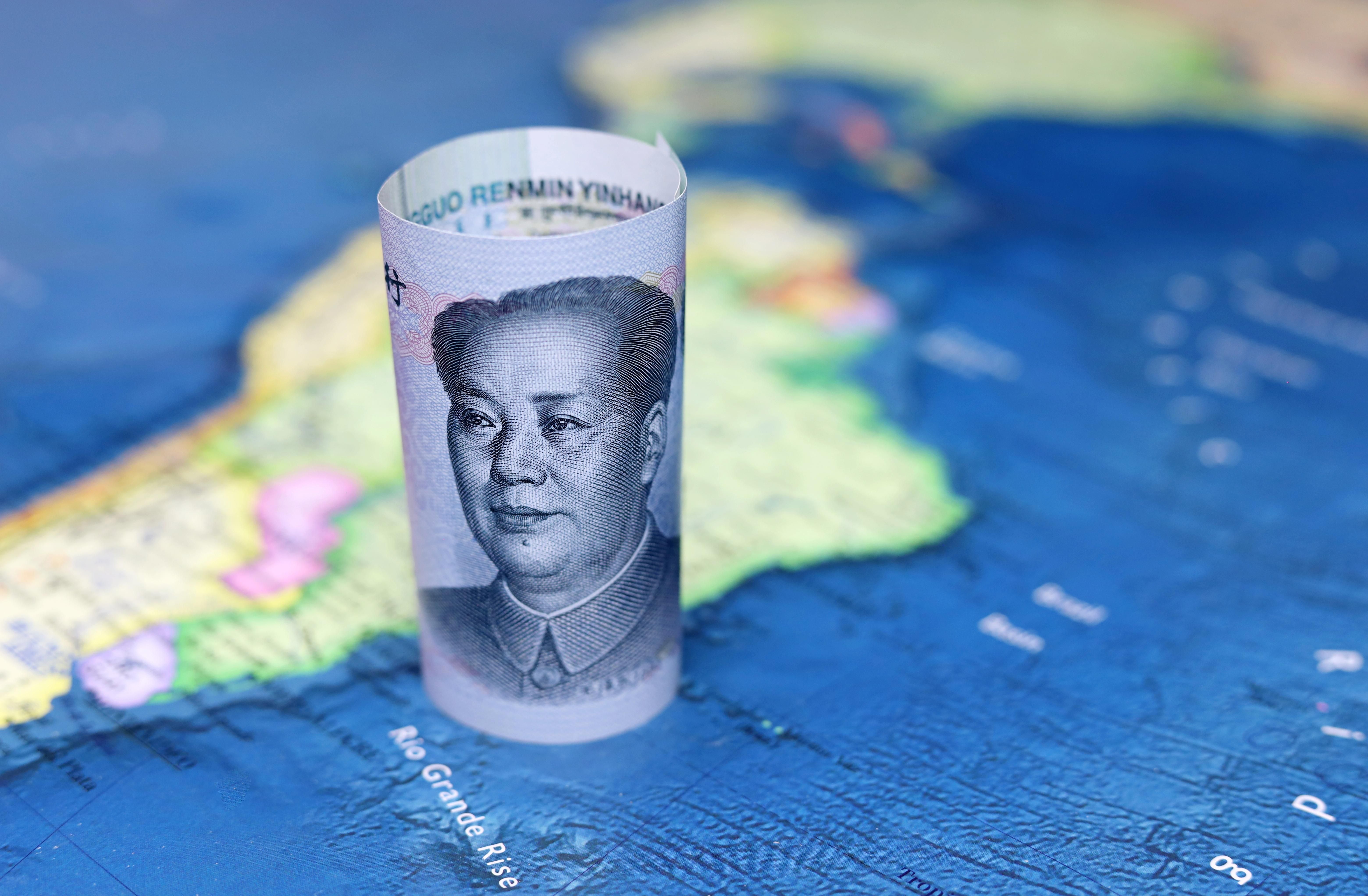
China was recently admitted as an observer to the Andean Community — a political and economic block consisting of Bolivia, Colombia, Ecuador, and Peru and one of the Americas’ numerous organizations and forums.
Getting increasingly nervous about Chinese influence, U.S. policymakers made a concerted effort to limit the CCP's engagement in the Inter-American Development Bank and some even raised concerns about potential — albeit unconfirmed — ties between China and the recently elected secretary general of the Organization of American States. Now, with China starting to engage in another regional organization, analysts already warn it could serve as a conduit for expanding AI and electric vehicle sales into South America.
However, rather than simply seeking to deny China entry into regional affairs, the United States needs to develop policies to better engage with the region. China’s presence in the Andean Community is not an isolated diplomatic gesture — it reflects a deliberate, decades-long strategy to reshape governance norms and economic integration in the Americas. Washington’s failure to understand this strategy — and offer credible alternatives — risks ceding influence in its own hemisphere.
Inter-American organizations with Chinese characteristics
Starting in the 1990s, China has leveraged regional organizations and forums as a key component of its engagement with Latin America and the Caribbean. With the addition of the Andean Community, China is now a member or observer in nine regional organizations, including some without U.S. participation. These include bodies like the Caribbean Development Bank, where China maintains a strong relationship and is deeply involved in development projects.
Chinese engagement in regional organizations serves several objectives. First, it creates important channels for China to engage with countries despite their continued recognition of Taiwan. And second, participation in these bodies lets China promote South-South cooperation, frame its engagement as altruistic, and shape governance norms beyond its own region.
While China is engaging in a variety of different types of hemispheric bodies, many of its activities have focused on economic-focused organizations. China first became an observer in regional organizations in the Americas through the Latin American Integration Association in 1994.
Today, China is also a member or observer of several regional bodies with key economic elements — the Inter-American Development Bank, Caribbean Development Bank, Andean Community, Pacific Alliance, and Instituto Interamericano de Cooperación para la Agricultura. In addition to those where China has a formal presence, there is clear evidence of Chinese engagement within other key economic bodies including the Central American Bank for Economic Integration, the Caribbean Community, the CAF, and Mercosur.
Furthermore, China has expanded its economic engagement with the region through bilateral trade negotiations and now has Free Trade Agreements with Chile, Costa Rica, Ecuador, Nicaragua, and Peru.
Chinese regional engagement has focused on economic organizations. Most importantly, Latin America and the Caribbean are key regions for natural resources and has helped to fuel China’s economic growth. With many strategic resources available, China continues to seek inroads. Additionally, China’s engagement in the development banks has raised concerns as Chinese companies have been particularly active in securing project funding through these bodies.
China’s strategy has been remarkably consistent, but what makes it so effective is how Latin American governments have embraced it.
Finding new economic partners
For their part, many Latin American and Caribbean countries have readily welcomed Chinese engagement in these organizations and sought to expand economic cooperation with the Asian nation. The promise of access to Chinese markets for Latin American exports has been a major driver of growth in the region. To fuel China’s economic miracle, many Latin American countries benefitted from the export of commodities to the Asian nation.
At the same time, China has invested heavily in the region, both through loans and government sponsored investment — often through large state-owned enterprises.
Although this model is shifting, it has deepened economic integration between the Americas and China. Indeed, studies conducted by the World Bank have suggested that after regional economies benefitting from economic tailwinds from a growing China, the Chinese and Latin American economies have become integrated to the point that a slowdown in the Chinese economy would result in a marked slowdown in regional economies as well.
Despite many economic benefits, there are real drawbacks. Many countries have noted that trade relations are often less beneficial for their own manufacturing bases than originally hoped for. This can lead to countries in the region that had hoped to leverage trade with China to escape commodity driven trade and dependency simply by shifting dependency to China.
The deepening ties between China and Latin America did not happen in a vacuum. They reflect not only Beijing’s long-term strategy and the region’s pursuit of new economic horizons, but also Washington’s failure to keep pace with those shifts. As governments across the Americas recalibrate their foreign policy priorities, many see China as an engaged and reliable partner while viewing the United States as reactive, inconsistent, or absent. This dynamic has magnified the consequences of U.S. missteps — turning hesitation, neglect, and rhetoric into strategic openings for Beijing.
Why the US response is counterproductive
Across the U.S. government, officials have sounded the alarm about China’s growing presence in the Americas. However, the approaches taken by successive U.S. administrations have failed to address concerns. Instead of creating a strategy to improve relations with the region, the United States often criticizes engagement with China without offering a viable alternative or makes it appear that U.S. engagement with the region is purely due to countering China rather than being a meaningful partner.
While these problems have been apparent across administrations, the Trump administration’s hardline and unilateral approach will do little to draw Latin America and the Caribbean back into the U.S. orbit. Instead, Trump’s heavy-handed threats have led to increased pushback from key nations, undermined U.S. efforts in these countries, and encouraged countries to look to China as an alternative.
At the same time, the Unted States has threatened to pull back from and cut funding to regional organizations — a move that further opens the door for Chinese engagement in the region.
Nowhere are the consequences clearer than in U.S. trade policy, where reliance on tariffs and threats has deepened regional frustration. Instead of compelling governments to align with U.S. preferences, these measures have driven many of them to diversify partnerships and pursue new trade deals — including with China — to insulate themselves from American unpredictability. This dynamic has become increasingly visible in recent years, underscoring how current tariff strategies are backfiring.
The unintended consequence of Washington’s approach has been a wave of hedging across the region. Even leaders ideologically aligned with U.S. priorities, such as Argentina’s Javier Milei and El Salvador’s Nayib Bukele, have recalibrated their policies to preserve or deepen ties with Beijing.
Milei, despite his vocal support for free markets and his close rhetorical alignment with Washington, has softened his stance on Chinese trade, while Bukele has publicly praised China’s willingness to invest without imposing political conditions. At the same time, regional trade negotiations with actors like the European Union and Canada reflect a broader desire to reduce exposure to U.S. economic and political unpredictability.
If the United States truly seeks to compete with China’s growing influence in the Americas, it must abandon the illusion that tariffs and threats alone can reshape regional loyalties. Influence is built through consistent presence, credible alternatives, and a willingness to treat Latin American and Caribbean nations as strategic partners rather than pawns in a geopolitical contest.
That means reengaging with multilateral institutions, investing in infrastructure and trade frameworks that match the scale of Chinese initiatives, and demonstrating that U.S. engagement is rooted in mutual benefit rather than zero-sum rivalry. Until Washington commits to that shift, every reactive measure will only deepen China’s foothold in the hemisphere — and every missed opportunity will make it harder to reclaim lost ground.
- US general wants 'Marshall Plan' to counter China in LatAm ›
- Trump's Latin American sticks could end up stuck in his spokes ›
- The elusive Chinese boogeyman in Latin America ›
- ‘America First’ meets ‘ASEAN Way’ in Kuala Lumpur | Responsible Statecraft ›
- Face the facts: China isn't leaving Latin America anytime soon | Responsible Statecraft ›