

After licking its wounds after what many call an “unbalanced” trade deal with the U.S., the EU is mulling over its security needs and future altogether as war continues to rage nearby.
For some Europeans, one way forward means buying more weapons for themselves — and for Ukraine.
To that end, many European leaders plan to apply for Security Action For Europe (SAFE) loans, a $150 billion defense-lending scheme agreed upon by European ambassadors back in late May.
EU Defense and Economy Commissioners Andrius Kubilius and Valdis Dombrovskis hope some of the funds the SAFE loans provide to Europe will go toward purchasing weapons from Ukraine: for Europeans, but also for Ukraine, so that Kyiv can continue fighting. They suggest this additional weapons procurement will bolster Europe’s “collective security.”
"We strongly invite you to consider how to involve Ukraine in your plans,” they wrote earlier this month in a letter to EU member states. “Procurement for Ukraine, with Ukraine, in Ukraine, can make a difference for our collective security.”
But for others, the disappointment of the 15% tariff deal means challenging EU leadership outright, on the deal and in general.
"The EU has agreed to a deal that abandons fundamental principles of rules-based global trade. Instead of long-term stability, the agreement creates uncertainty," German Greens politician Sandra Detzer lamented at the Bundestag this week.
Although German Chancellor Friedrich Merz initially hailed the U.S.-EU tariff deal, saying it will help the EU steer clear of larger trade war with its ally, its unpopularity among German politicians, among politicians like Detzer, has led even Merz to instead contend the tariffs are a “considerable burden.”
Ultimately, security needs and concerns, especially those related to Ukraine, played a role in Europe’s agreeing to a deal many call unideal or burdensome. As Maha Rafi Atal, a lecturer at the University of Glasgow’s School of Social and Political Sciences writes in the Conversation: “the urgency of Europe’s security concerns in Ukraine made [recent tariff talks] different from trade negotiations in the first Trump administration, when Europe could afford to be more aggressive.”
“It’s not only about the trade. It’s about security. It’s about Ukraine. It’s about current geopolitical volatility,” EU Trade Commissioner Maroš Šefčovič stressed on Monday along these lines, telling reporters “I cannot go into all the details.”
“The EU is in a difficult situation because we’re very dependent on the U.S. for security,” Niclas Poitiers, research fellow at the Bruegel research institution told AP. “Ukraine is a very big part of that.”
In other Ukraine war news this week
A Ukrainian drone attack on the Russian city of Salsk killed three people and caused damage to over 50 apartment units there on Wednesday, according to Al Jazeera.
CNN reported yesterday that Russia claims it has captured the long-sought after Ukrainian town of Chasiv Yar. If true, Russia controlling the town would give it a high ground in the Donetsk region, near Ukraine’s “fortress belt” of cities it still holds there. The Ukrainian military has denied Russia captured the town.
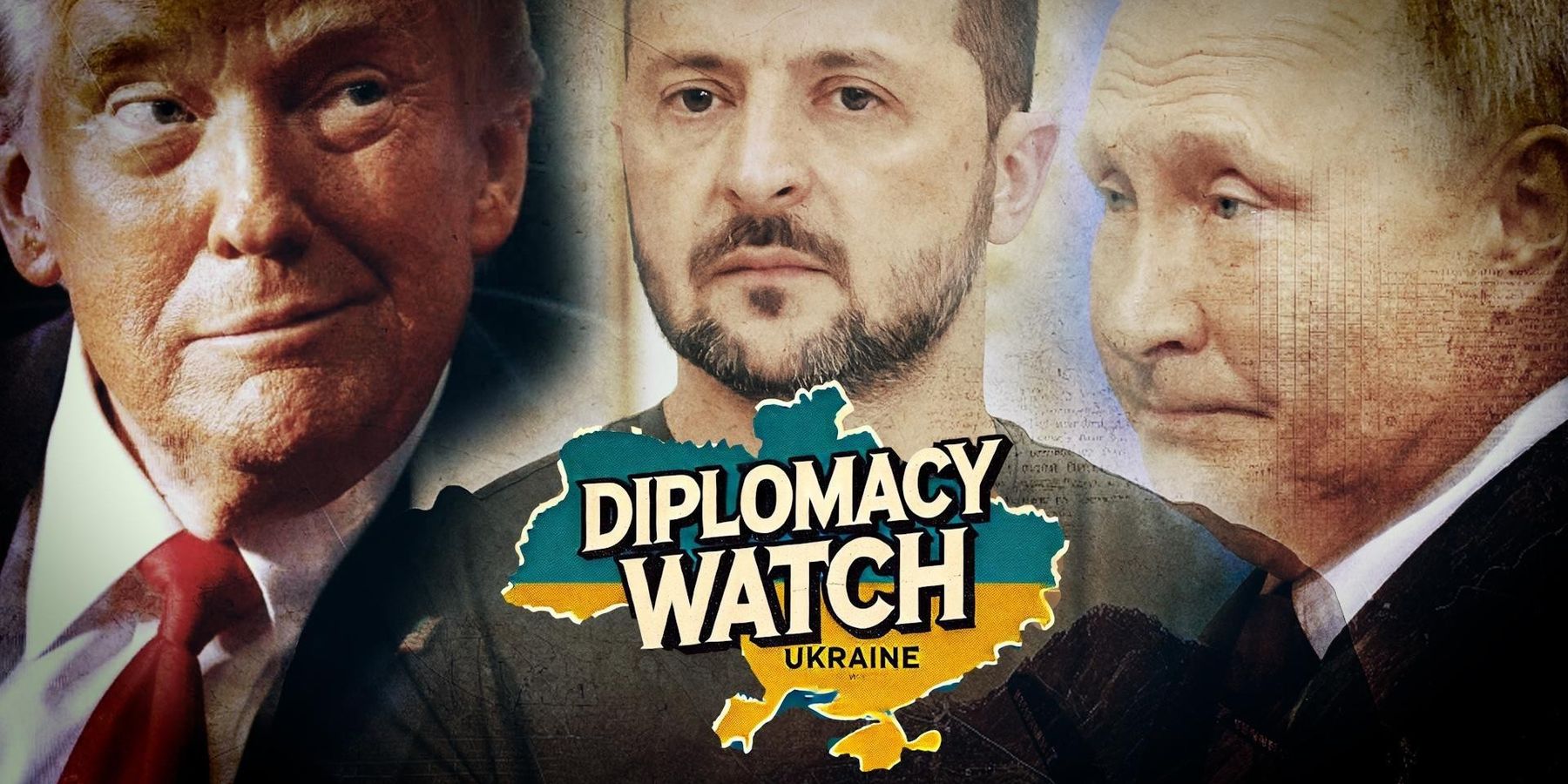
On Monday, Trump shortened his 50-day deadline for Russia to reach peace with Ukraine or face tariffs to ten days, according to Reuters.
"I don't know if it's going to affect Russia, because [Russian President Vladimir Putin] wants to, obviously, probably keep the war going," Trump explained his new deadline. "But we're going to put on tariffs."
Following a wave of major protests against his government, The Guardian reported that Ukrainian President Volodymyr Zelensky signed anti-corruption legislation into law Thursday. The new law effectively backtracks previous legislation, which had moved to give the Ukrainian government more control of anti-corruption bodies National Anti-Corruption Bureau (NABU) and the Specialized Anti-Corruption Prosecutor’s Office (SAPO), thus compromising these bodies’ independence from it.
“This guarantees the normal, independent work of anti-corruption bodies and all law enforcement agencies in our country. It is the right decision,” Zelensky said Thursday, stressing that Ukraine remains a democracy. “It is very important that the state listens to public opinion,” he said in acknowledgment of the protests.From State Department
On Tuesday, spokesperson Tammy Bruce said during the State Department press briefing that the shortened 10-day deadline Trump set on Russia for a deal for peace in Ukraine, was generous considering Trump knows “what the situation [is].”
“Oh, you might not even have 10 days. I would just suggest, even when he set that 50-day timeline for Russia, I think one of the things I’ve said is that – who knows when that could happen,” Bruce said. “He has had timelines before in which he acted very quickly. So I – with the President, he also noted that he was going to – he shortened that timeline because he pretty much knew what the situation was.”