

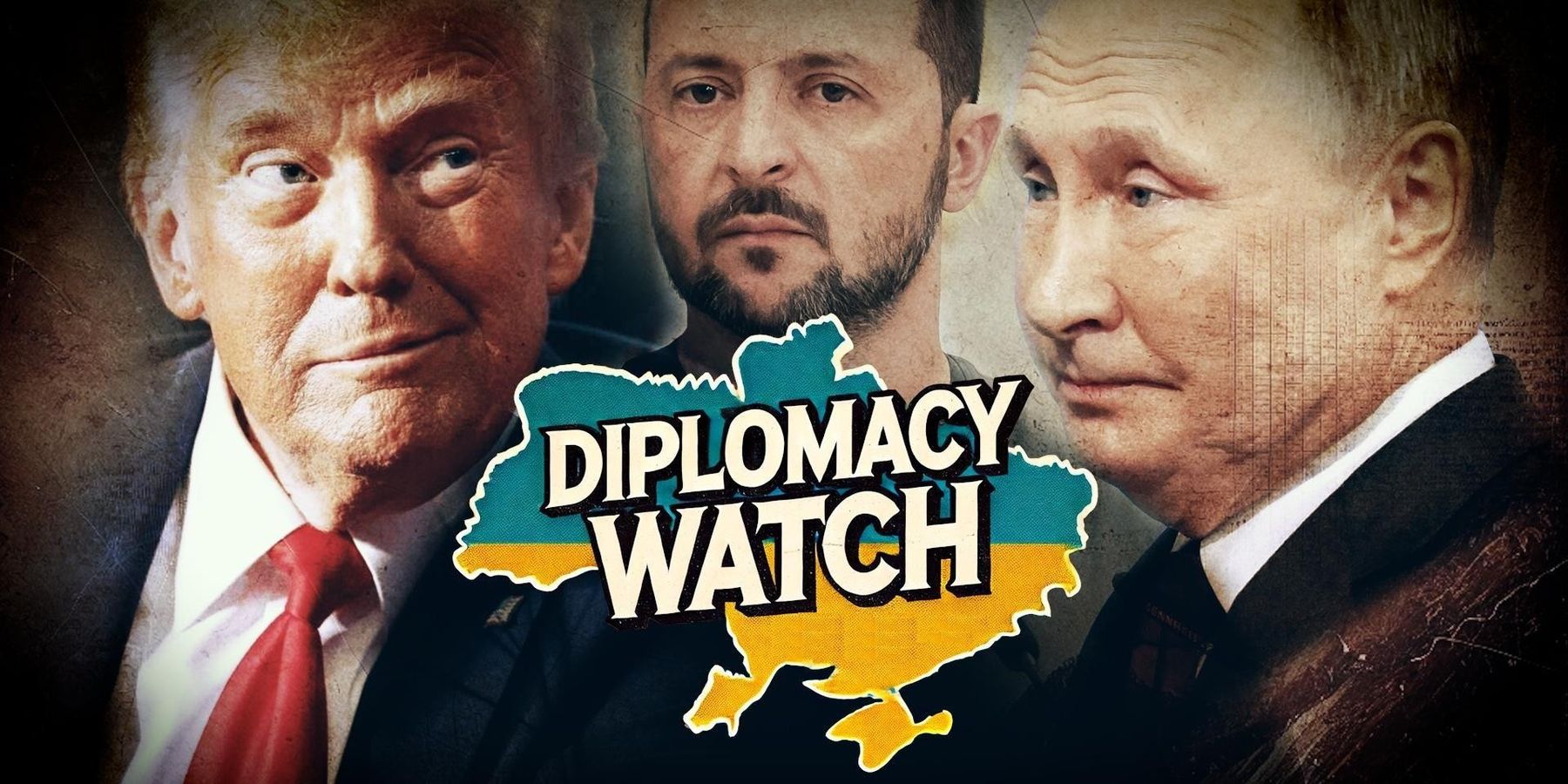
As diplomatic frustrations mount, Sen. Lindsey Graham (R-S.C.) wants to come down hard on Russia — with a sanctions bill that now has bipartisan support in the Senate.
The bill punishes Russia if it “refuses to negotiate a peace agreement with Ukraine, violates any such agreement, or initiates another military invasion of Ukraine.” It also includes a 500% tariff on imported goods from Russian oil buyers.
“Most members of the Senate believe that Putin has been resistant to finding a negotiated solution to the war, and has been brazen and barbaric in his actions against Ukraine,” Graham explained. “By co-sponsoring this bill I think a senator is making a pretty clear statement that they see Russia as the greatest offender here.”
Graham said Wednesday that he had enough votes to pass the legislation in the Senate, including support from Senate Majority Leader John Thune and Minority Leader Chuck Schumer. Rep. Brian Fitzpatrick (R-Pa.) is leading a House companion bill, but Punchbowl News reported that support for it remains limited.
When asked by the WSJ when the bill would be brought up for a vote, Graham said “we’re talking weeks.”
“It’s clear to me — and I think it’s becoming clear to President Trump — that the Russians are playing games,” Graham said. According to Graham’s legislative office, the legislation will likely target China, Russia and Iran economies the most.
Indeed, Trump did say a recent attack by Russia on Ukraine made him skeptical of Russia’s diplomatic intentions. "It makes me think that maybe he doesn't want to stop the war, he's just tapping me along,” he said on Saturday.
In an attempt to force hands, Rubio asked Tuesday for “concrete proposals” from both Russia and Ukraine as to how to resolve the conflict — warning that the U.S. would “step back as a mediator in this process” if progress was not made in due time.
Despite these hiccups, the diplomatic rubber has seemingly hit the road amid the Trump administration’s ultimatums.
Indeed, a minerals deal, a major diplomatic development, has been signed between the U.S. and Ukraine. And, as part of this minerals deal, a Ukraine-U.S. Reconstruction Investment Fund has also been established.
Experts broke down the minerals deal developments for RS. “The ratified minerals deal does not recognize prior U.S. assistance as counting toward the joint investment fund. It is a framework to ensure Ukrainian compensation for any future U.S. aid,” Mark Episkopos, a research fellow at the Quincy Institute for Responsible Statecraft’s Eurasia Program, explained.
“This, along with the potential presence of American companies on the ground in Ukraine, may become one of several smaller assurances with the other one being Ukraine’s path to EU membership — that together can replace the kinds of hard security guarantees that Kyiv wants but is highly unlikely to get from the White House,” Episkopos said.
“No less importantly, this framework for long-term cooperation reassures Ukraine that it will not be financially abandoned whenever the war ends and thus provides Kyiv with additional incentives to engage constructively with the US-brokered peace initiative.”
The joint investment fund, however, doesn’t force any commitments on the U.S. in terms of financial investments or security assistance.
“It is vital to note that this agreement does not commit the U.S. government to invest in Ukraine; and to judge by the present profitability of minerals extraction in the world, it is not certain that private investors will see major benefits from doing so,” Anatol Lieven, Director of the Eurasia Program at the Quincy Institute for Responsible Statecraft, wrote in RS yesterday.
“This [is] not just a financial arrangement. This is a bonding between two countries that will make a difference for a nation, certainly in Ukraine's situation, where they have a friend,” State Department Spokesperson Tammy Bruce said of the deal. “And the rest of the world will notice that when you have a friend like the United States. And when we are in business with you and in your nation, it creates a stronger national security…for everyone involved.”
In other Ukraine war news this week:
Following the minerals deal signing, the Trump administration has sent Ukraine $50 million in military aid, according to the Times — the first instance of military assistance sent by the Trump administration to Kyiv.
Despite persistent talks of a European peacekeeping force in Ukraine, the Times reports that Europe, collectively, would struggle to gather 25,000 troops for a "deterrence" force for the cause due to lack of funds and troops alike. In response, Lithuania’s defence minister Dovile Sakaliene reportedly told counterparts: “Russia has 800,000 [troops]. Let me tell you this, if we can’t even raise 64,000 that doesn’t look weak — it is weak.”
According to Business Insider, the Security Service of Ukraine said it conducted a drone strike on the Murom Instrument-Building plant, a defense manufacturing plant in Russia east of Moscow, on Tuesday night, damaging the facility.From State Department Press Briefing on May 1
During the State Department press briefing on May 1st, Spokesperson Tammy Bruce explained the logic behind Rubio’s request Tuesday for diplomatic proposals from both Ukraine and Russia. Rubio had said the U.S. would “step back as a mediator” if diplomatic processes did not keep a reasonable pace.
“The methodology of how we contribute to [Russia-Ukraine diplomacy] will change in that we will not be the mediators…and the nature of how this would change is we would not we certainly were still committed to it, and we'll help and do what we can,” Bruce explained.
“But we are not going to fly around the world at the drop of a hat to mediate meetings. That it is now between the two parties [Ukraine and Russia], and…now is the time that they need to present and develop concrete ideas about how this conflict is going to end. It's going to be up to them.”