

The Supreme Court’s monumental ruling against President Trump’s use of reciprocal tariffs per the International Emergency Economic Powers Act (IEEPA) holds significant implications for not only the administration’s trade policy, but its wider foreign policy as well.
In his own words, Trump has repeatedly highlighted the word “tariffs” as the “the most beautiful word in the dictionary,” and he has leveraged them to great effect in both cajoling and threatening America’s friends and foes alike.
Nowhere has this been more apparent than in Southeast Asia. Here, Trump imposed additional levies on nine out of 10 ASEAN members in 2025, sparing only Singapore which just incurred the 10 percent universal tariff (Timor-Leste was spared as well but didn’t become an ASEAN member until after Trump’s tariff announcement). Indeed, with 90% of Southeast Asia subjected to reciprocal tariffs, no other region featured a higher percentage of its nations targeted by the United States.
Moreover, many of the countries facing the steepest tariffs globally were also in Southeast Asia, including Cambodia at 49%, Vietnam at 46%, Laos and Myanmar at 40%, and even U.S. treaty ally Thailand at 36%t. Three others — Brunei, Indonesia, and Malaysia — were all smacked with at least 23%t tariffs, and the Philippines — America’s other treaty ally — faced a rate of 19%t.
In subsequent months through negotiations, most of these nations achieved rate reductions, but the message was nonetheless clear: under an “America First” foreign policy, Trump would seek to leverage tariffs to enrich the United States at the expense of its allies and partners in the region. More importantly, his strategy confirmed Southeast Asia’s worst fears — that the U.S. was neither a trustworthy nor predictable partner, and though China still had its flaws, Beijing might now serve as the more reliable partner to help mitigate some of the damage and chaos caused by Washington. Indeed, the Trump administration’s tariffs were perhaps the biggest obstacle to advancing bilateral and multilateral relations across the region.
But now, with the Supreme Court’s decision, Washington is likely to have an easier time engaging Southeast Asia. Although it may not be a complete return to “business as usual” — because Trump has already imposed new, universal 15%t tariffs (though time-limited) outside of the IEEPA context and additional sector- or export-specific tariff attempts may follow — at least it’s now clear that the president cannot impose random and blanket tariffs in perpetuity. Resetting all tariffs to 15% — several if not many percentage points below the original reciprocal rates or even reduced rates — will begin the healing process that will hopefully enable the U.S. and its allies and partners to focus on other important topics.
Southeast Asia has thus far been relatively muted about the change. One exception has been Indonesia, which just negotiated down its tariff rate when President Prabowo Subianto recently visited the White House. Prabowo noted that, “We are prepared for all possibilities. We respect the domestic politics of the United States, and we will monitor the developments.”
Forthcoming Southeast Asian responses are likely to be equally understanding, and this is because they not only never liked the tariffs to begin with, but their exporters are also set to economically benefit at least in the short-term from this mandated shift in the administration’s strategy.
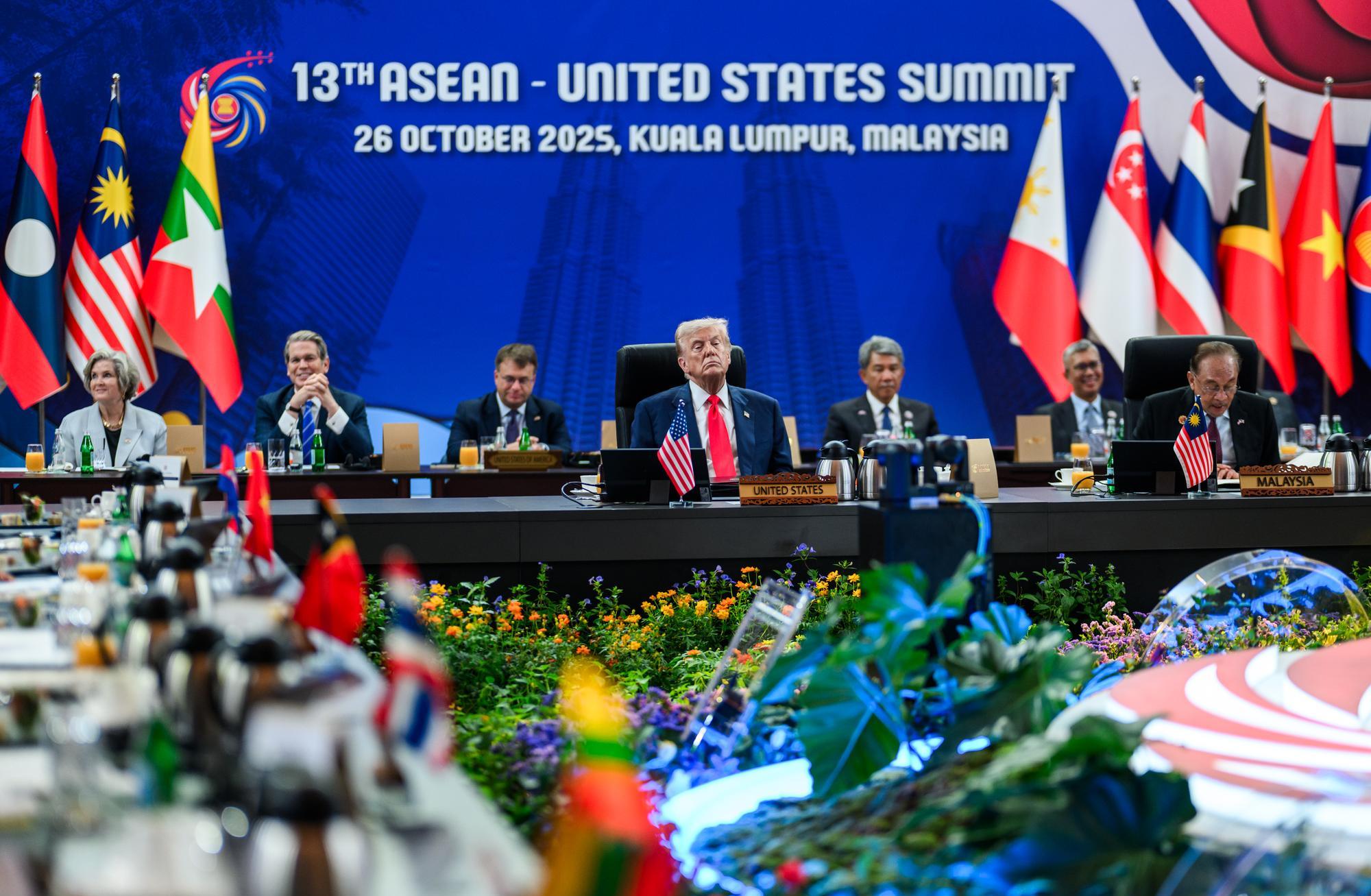
Happier Southeast Asian states, however, won’t guarantee that Trump achieves the same types of policy deliverables without tariffs as his main weapon. In October, for example, he participated in the annual ASEAN summit, chaired by Malaysia, and on the sidelines of this event, Trump dangled the possibility of reduced tariff rates to convince Cambodia, Malaysia, and Thailand to offer access to their critical mineral supplies. All three nations acquiesced to his demand.
Vietnam also received a reduced tariff rate after agreeing to expand its imports of U.S. products and to engage on enhancing supply chain resilience for semiconductors and AI. Indonesia, similarly, forged its most recent deal to lock in 19% tariffs, down from 32%, by in part promising greater U.S. access to its critical minerals.
Similarly, Trump repeatedly claims that the threat of tariffs have actually helped him resolve numerous wars around the globe. As recently as Thursday, Trump argued during his inaugural Board of Peace summit in Washington that tariffs helped him defuse the Cambodia-Thailand border dispute last summer, though the actual substantive impact of tariffs on such conflicts is controversial. Nevertheless, he tends to think tariffs are essential, and without those granted by IEEPA, it is conceivable that Trump will feel less empowered or less inclined to engage in dispute resolution, whether in Southeast Asia — Cambodia recently said Thailand is still occupying parts of its territory — or elsewhere.
Depriving Trump of his IEEPA tariffs could also complicate U.S. security strategy in Southeast Asia. Earlier this month, the administration released its “America First” arms transfer strategy that prioritizes supporting nations who contribute to Washington’s “economic security,” among other criteria. If a Southeast Asian state takes advantage of Trump’s weakness on tariffs, then it is conceivable that he would consider this harmful to American economic security and thus withhold or limit future security assistance.
Already, key strategic partners, like Indonesia and Vietnam, were in the crosshairs of this new strategy. It is more likely, however, that Trump will have to ignore or at least deemphasize this factor in security assistance since he can no longer dictate blanket tariff rates that would optimize a country’s contribution to the American economy, though he is already exploring more limited tariff options.
Much remains uncertain about how the Supreme Court’s ruling will reverberate internationally, particularly in Southeast Asia. What is clear, however, is that the region bore a disproportionate share of the burden from Trump’s IEEPA tariffs. Their removal creates an opening — not just for improved trade flows, but for recalibrating broader U.S. engagement—so long as the administration doesn’t end-run the IEEPA ruling by imposing tariffs through other means. Southeast Asian governments now have greater room to strengthen ties with Washington on security, supply chains, and strategic alignment without operating under the shadow of unpredictable tariff escalation.
Whether the administration can sustain influence in the region without its preferred instrument of economic coercion remains an open question.
- The hidden costs of Trump's 'madman' approach to tariffs ›
- Why SCOTUS won’t deter Trump’s desire to weaponize trade ›