

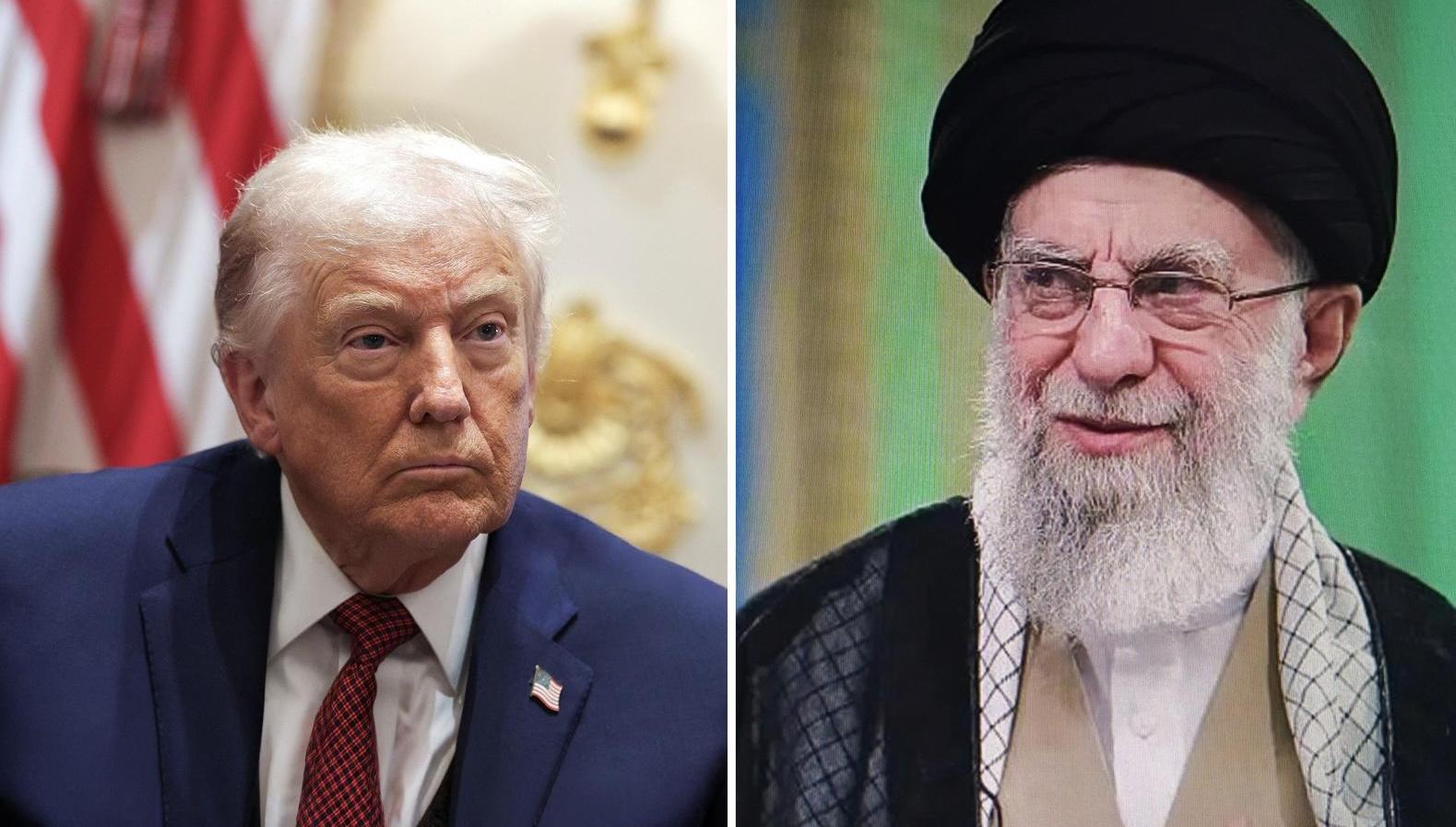
The Wall Street Journal reports that President Donald Trump is considering a small attack to force Iran to agree to his nuclear deal, and if Tehran refuses, escalate the attacks until Iran either agrees or the regime falls.
Here’s why this won’t work.
First of all, the “deal” Trump has put forward entails Tehran completely giving up its nuclear program in return for no new sanctions, but no actual sanctions relief. This is, of course, a non-starter for Iran.
There are hardly any more sanctions the U.S. could impose on Iran. And the current level of sanctions is suffocating the economy. Accepting this deal would not enable Iran to escape its economic dead end, but would only prolong the economic decay while depriving it of the nuclear leverage it believes it needs to free itself from existing sanctions.
Second, according to my sources, Trump recently also floated the idea of a smaller attack, with the Iranians responding symbolically by striking an empty U.S. base. But Tehran refused and made clear that any attack would be responded to forcefully. Trump may hope that with a much larger strike force in the region, Tehran will reconsider its response.
But it is difficult to see why Tehran would, since caving to this military threat likely will only invite further coercive demands, beginning with conventional military options such as its missile capabilities. That is Iran’s last remaining deterrent against Israel. Without it, Israel would be more inclined to attack and cement its subjugation of Iran, or alternatively move to collapse the theocratic regime altogether, Tehran fears.
Thus, capitulating to Trump’s “deal” would not end the confrontation, but only make Tehran more vulnerable to further attacks by Israel or the U.S.
Third, since the U.S. strategy, according to the WSJ, is to escalate until Tehran caves, and since capitulation is a non-option for Iran, the Iranians are incentivized to strike back right away at the U.S. The only exit Tehran sees is to fight back, inflict as much pain as possible on the U.S., and hope that this causes Trump to back off or accept a more equitable deal.
In this calculation, Iran would not need to win the war (militarily, it can’t); it would only have to get close to destroying Trump’s presidency before it loses the war by: 1) closing the Strait of Hormuz and strike oil installations in the region in the hope of driving oil prices to record levels and by that inflation in the U.S.; and 2) strike at U.S. bases, ships, or other regional assets and make Trump choose between compromise or a forever war in the region, rather than the quick glorious victory he is looking for.
This is an extremely risky option for Iran, but one that Tehran sees as less risky than the capitulation “deal” Trump is seeking to force on Iran.
None of this, of course, serves U.S. interest, has been authorized by Congress, enjoys the support of the American people or the support of regional allies (save Israel), is compatible with international law, or answers the crucial question: How does this end?
- Trump knew about Israel attacks, already threatening 'next' ones ›
- Short, sharp shock? Trump's idea of quick victory is illusory ›
- Why Arab states are terrified of US war with Iran | Responsible Statecraft ›
- History tells us coercion through airpower alone won’t work | Responsible Statecraft ›
- How does this war with Iran end? Or does it? | Responsible Statecraft ›