

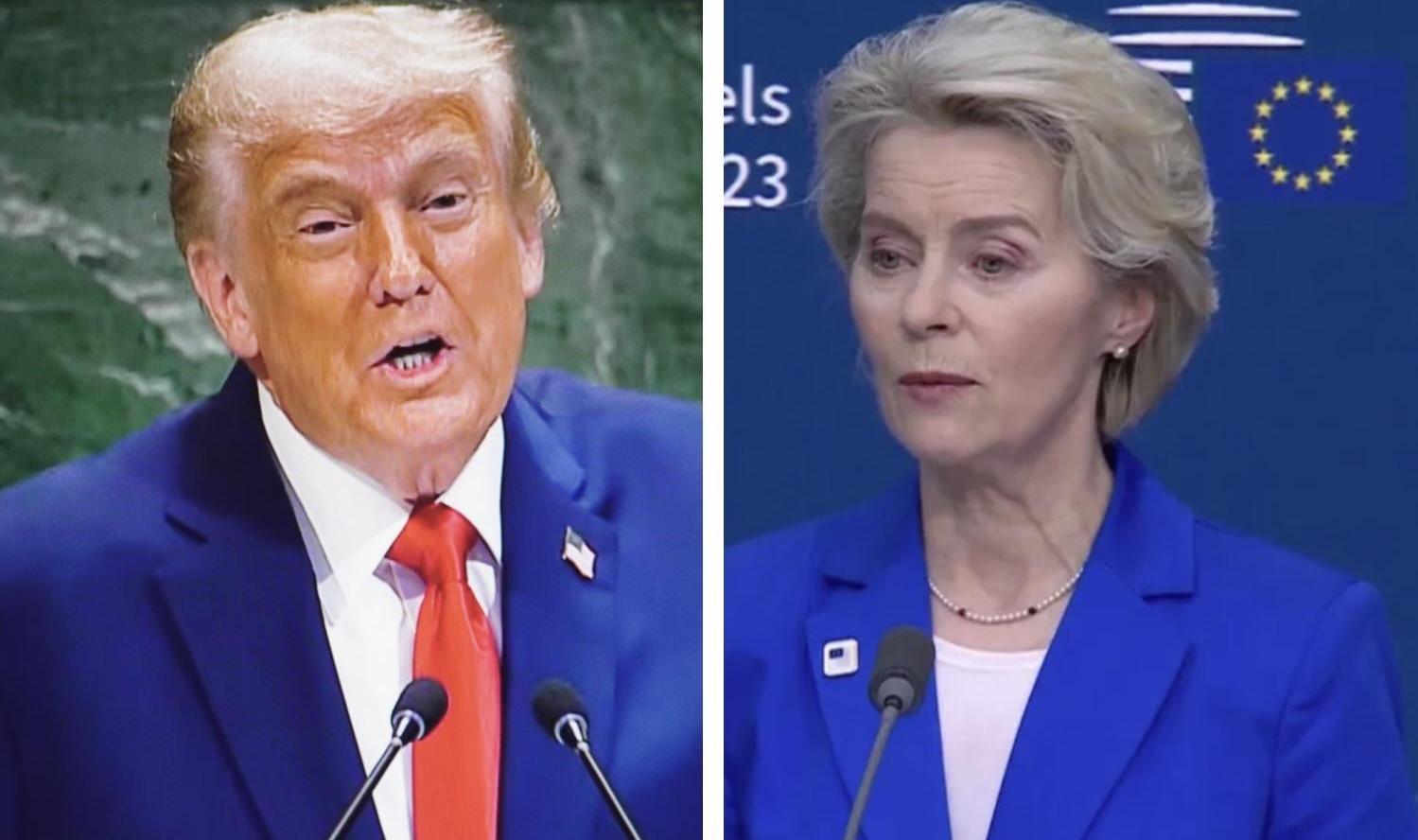
When President Donald Trump announced a possible U.S.-Iran understanding, he did so after placing calls to a number of regional countries: Saudi Arabia, the United Arab Emirates, Qatar, Bahrain, Turkey, Pakistan, Egypt, Jordan, and – separately – Israel. Not a single European capital was on the call list.
As the Quincy Institute’s Executive Vice President, Trita Parsi, noted, “Europe’s near-total absence from the process is striking — though hardly problematic. By this point, Europe’s diplomatic irrelevance in major Middle Eastern diplomacy has become so normalized that its exclusion barely registers.”
Yet this absence and its implications deserve a closer look. How did Europe transition from leading on Iran diplomacy – culminating in the nuclear deal known as Joint Comprehensive Plan of Action (JCPOA) in 2015 – to this level of irrelevance ten years later?
Objectively, there are factors that are beyond Europeans’ control. For one, Trump’s dislike of European leaders is well-established. And the feeling is mutual.
Yet, there is another, deeper reason: in his own erratic way, Trump wants to pacify the Middle East and claim sole credit for that. This is probably why he's been pushing his improbable proposal that all countries in the greater region — from Saudi Arabia to Pakistan — join the Abraham Accords. Sharing a diplomatic trophy with Brussels, Berlin or London would presumably detract from his achievement.
Then there are the regional actors themselves. For the Persian Gulf nations as well as Egypt, Turkey and Pakistan, the stakes of a continued war on Iran are truly existential. As the war has already shown, they are easily within the range of Iranian missiles. A resumption and exacerbation of active hostilities would risk economic collapse, especially of the Gulf states. An implosion of the Iranian state would destabilize borders, provoke uncontrolled migration, and ignite ethnic and sectarian strife on a regional scale.
The consequences for Europe would also be significant: higher energy prices and inflation mean the European Union already is losing €500 million a day, according to EU Commission President Ursula von der Leyen. But this is not a life-and-death matter in the same way it would be for Iran’s neighbors.
This asymmetry of the stakes explains why the Gulf nations, Pakistan, Turkey and Egypt have engaged proactively in favor of diplomacy and de-escalation. And the fact that Trump talks to them would help to embed a potential new Iran deal regionally. That would permanently remove a key complaint of some of Iran’s neighbors, particularly Saudi Arabia and UAE, about former President Barack Obama’s original 2015 deal, which dealt only with the nuclear file.
Yet attributing everything to Trump’s vainglory and regional diplomacy would miss a more difficult truth. After all, geography was no different in 2015 when the E3 (Britain, France and Germany), working with the EU’s high representative for foreign policy, led the way to the JCPOA. In 2026, Europe’s exclusion was not just imposed from outside. It was earned from within – by squandering any leverage Europe enjoyed with Iran.
First, after Trump withdrew from the JCPOA during his first term in 2018, Europe launched INSTEX, a trade vehicle designed to bypass U.S. secondary sanctions on Iran. But it never worked, and thus Iran concluded Europe would posture but ultimately bow to Washington’s wishes. Iranian confidence in Europe was undermined.
Second, in 2025, the E3 triggered the United Nations Security Council’s snapback of nuclear-related sanctions on Iran, even as Russia and China insisted the room for diplomacy had not been exhausted, and Tehran itself had offered new concessions that would preclude weaponization. Tehran took note: Europe had clearly ceased to be an honest broker and had become instead a U.S. auxiliary.
Third, and most decisively, the war in Ukraine changed Europe's entire worldview. After 2022, Brussels embarked on a geopolitical path that divides the world into friends and foes based solely on their stance toward Russia. Iran – which has supplied Moscow with drones – was swiftly placed in the enemy camp.
In the immediate wake of U.S.-Israeli attack on Iran on February 28, European leaders like von der Leyen and German Chancellor Friedrich Merz offered their full-throated support for the initial aim of regime change. In Brussels, the only strategy was transatlantic unity against the purported Russia-Iran axis.
None of this is to excuse the role of Tehran's own choices in recent years that have undermined its relations with Europe. Iran's drone transfers to Russia have been real, destructive, and justifiably condemned. But cause and effect run both ways. Having watched Europe fail to deliver on the JCPOA and increasingly echo the U.S.-Israeli line on its nuclear program, ballistic missiles and regional policies, Tehran concluded it had nothing to gain from Europe.
Moscow, on the other hand, has provided assistance with sanctions busting, military technology, and geopolitical cover. Iran did indeed move closer to Russia, and that is primarily Tehran’s responsibility, but Europe helped push it in that direction.
Now, the EU is doubling down. Reacting to Trump’s announcement of a possible deal, von der Leyen issued demands for Iran: “Iran must not be allowed to develop a nuclear weapon” (ignoring Tehran’s repeated attempts to negotiate a deal that would ensure that very outcome). It must also, she said, end its “destabilizing actions” in the region, as well as “repeated and unjustified attacks on its neighbors” (ignoring the fact that it was the U.S. and Israel that actually initiated the war and that Iran’s first response was to target U.S. military facilities in the neighboring states).
As Belgian Member of the European Parliament Marc Botenga said, “we need a Europe that says: the U.S. must end its illegal acts of aggression.”
The perception of the EU’s weakness was further underlined by EU High Representative Kaja Kallas. During a session of the European Parliament, she said the EU has no strategy on the Middle East because “too much is going on,” and “much will depend on how the war ends” — as if Europe were merely a passive observer with no ability to shape in any form the conduct, let alone the outcome, of the war. Her words marked a dramatic contrast to her predecessors, Federica Mogherini, Catherine Ashton and Javier Solana, all of whom played critical roles in Iran diplomacy since the early 2000s.
Indeed, contrast Europe’s policies today with those of 2003. Back then, France and Germany spoke openly and eloquently against the U.S. invasion of Iraq. They failed to prevent it, thanks in important part to then-British Prime Minister Tony Blair, but at least they demonstrated strategic independence. Today, only Spain's Prime Minister Pedro Sánchez has shown consistent and principled opposition to the Iran war, while most other European leaders have offered an embarrassing spectacle of silence, hesitation and flip-flopping. But Sanchez leads only one EU member and can’t speak on behalf of the bloc.
Having lost any influence in bringing the war to an end, the EU can still play a constructive role in the post-war phase, if and when Trump indeed strikes a deal with Iran. As one experienced Track II regional diplomacy practitioner who asked for anonymity told me, the Gulf countries would welcome such a role, particularly because of the EU’s expertise in environmental protection and the reconstruction of critical infrastructure for energy, water and desalination. Tehran may also be interested in European investment in reconstruction.
That kind of outreach is not do-gooder naivete. It’s a hard-nosed, practical way of regaining influence and respect by playing to the EU’s traditional strengths, rather than espousing a militarized, geopolitically Manichaean approach for which it is ill-suited. In other words, the EU needs more Sanchez, and less von der Leyen and Kallas.
- No more ‘daddy’? Trump becoming orphan with Euros over Iran ›
- Is the Iran War breaking NATO forever? ›