

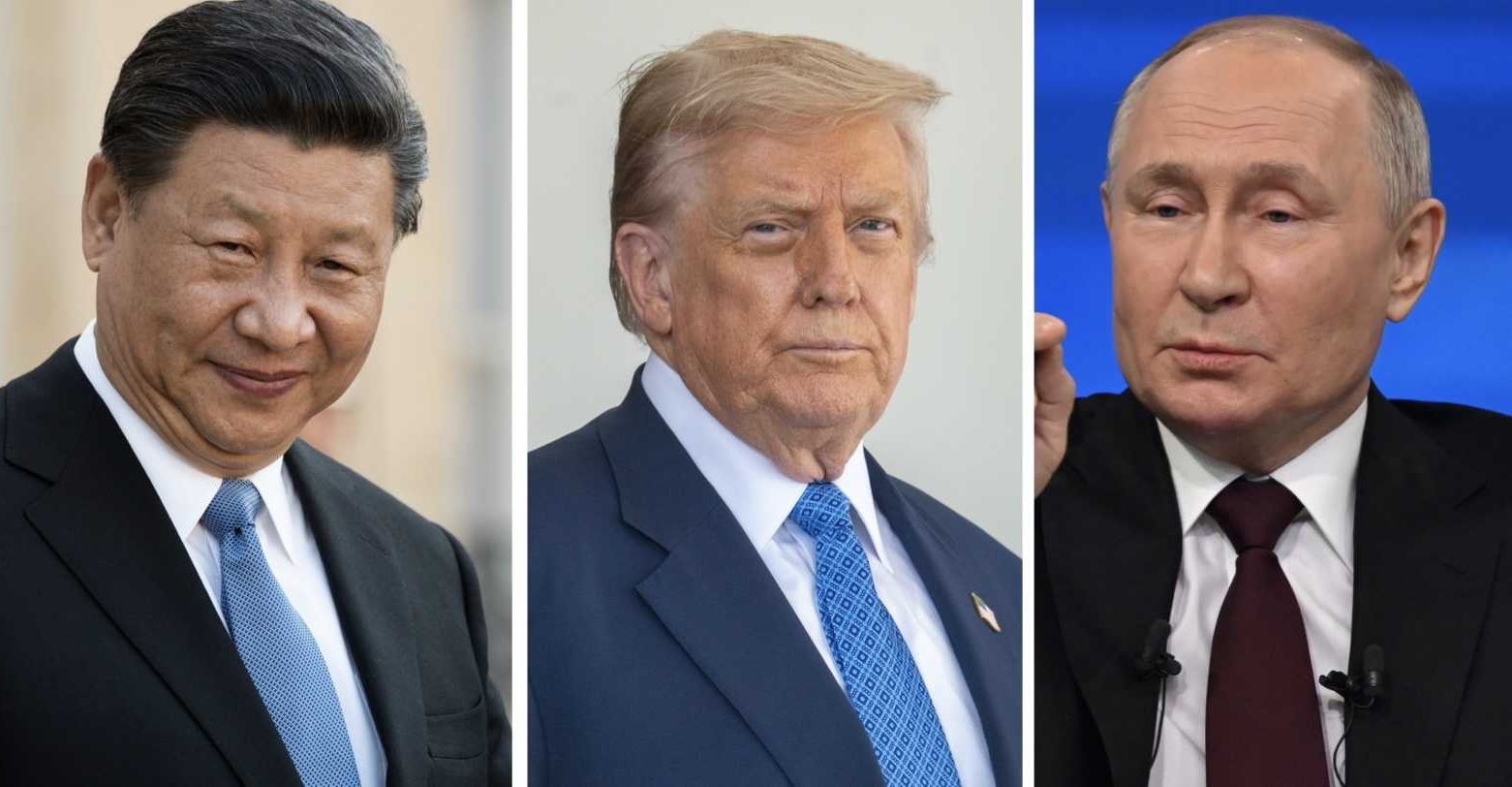
In a September 20 Truth Social post, President Trump threatened the Taliban, declaring, “If Afghanistan doesn’t give Bagram Airbase back… BAD THINGS ARE GOING TO HAPPEN!!” He now wants the military base he once negotiated away as part of the U.S. withdrawal agreement his first administration signed in 2019.
Not unexpectedly, the Taliban quickly refused, noting “under the Doha Agreement, the United States pledged that ‘it will not use or threaten force against the territorial integrity or political independence of Afghanistan, nor interfere in its internal affairs.’” And with China now deeply entrenched in post-war Afghanistan, it’s likely Beijing will ensure that the threat remains little more than another off-the-cuff comment that should not be taken literally nor seriously.
Since early 2025, Trump has mentioned Bagram, not as a military objective but as a strategic chess piece in his broader confrontation with China. He has described the base as being “an hour away from where [China] makes its nuclear weapons,” framing it as a critical outpost the U.S. should never have given up. In Trump’s view, reclaiming Bagram would reestablish American dominance in a region he believes is drifting into Beijing’s orbit. It’s also a powerful political narrative: take back what Biden lost, restore strength and project American resolve in an era of perceived decline.
But while Trump talks about taking Bagram back, China has already moved in. After the U.S. withdrawal in 2021, Beijing wasted little time expanding its influence, becoming the first country to accredit a Taliban ambassador in 2023.
In August 2025, Chinese Foreign Minister Wang Yi visited Kabul for high-level talks, during which Beijing signaled interest in Afghanistan’s vast mineral reserves, including lithium, copper and uranium, and in expanding trade and infrastructure links under its Belt and Road Initiative. For China, Afghanistan is now a critical strategic partner. A renewed U.S. military presence would threaten those interests, and Beijing is unlikely to stand by quietly if Washington tries to force its way back in.
Some analysts believe Trump’s demand may be less about actually retaking Bagram and more about creating leverage. It could be a bargaining chip, a maximalist opening meant to extract something smaller, such as the return of some of the $7 billion in U.S. weapons left behind during the withdrawal. He might seek assurances regarding the protection of minority rights or commitments to restrict terrorist safe havens in exchange for concessions, even though concerns of ISIS-K and other terror groups have proven illusory.
According to Helena Malikyar, Afghanistan's former ambassador to Italy, “The U.S. has military bases in many other countries, but that doesn’t necessarily imply a colonizer-colonized relationship — consider Japan, Germany, Qatar, or Bahrain.” She adds: “That said, I doubt the U.S. has any urgent need for Bagram, given that Pakistan has granted access to its airbases since 1959. In fact, the airbases in Khyber Pakhtunkhwa and Punjab are even closer to China than Bagram is.”
Rhetorically, Trump’s ploy also plays well, allowing him to cast Biden’s exit from Afghanistan as a historic blunder that he alone is prepared to fix. But whether it’s a bluff or a real objective, the rhetoric raises the stakes, and regional powers like China, Russia and even the Taliban are watching closely.
But as Zalmai Nishat, Research Fellow at Sussex Asia Centre, points out, “the Taliban is far from monolithic. While certain factions may see benefit in cooperating with the U.S., others, particularly those tied closely to Hibatullah [Akhundzada], would fiercely resist. Any move to reclaim Bagram would expose these divisions, and the Taliban’s response would depend on which faction prevails.”
This internal fragmentation is only one layer of a far more complex equation. Trump’s push for Bagram would not just challenge the Taliban but also confront a regional order that no longer centers on Washington. Realities on the ground have shifted dramatically since the days of U.S. occupation. China is intent on solidifying its role in Afghanistan’s reconstruction and won’t tolerate a U.S. return that threatens its access to valuable minerals or its broader security interests.
Iran would certainly see U.S. facilities as potential targets and Russia, the first country to formally recognize the Taliban government, has a broad footprint in Afghanistan today. It provides oil and wheat at discounted prices, cooperates with its security services on counterterrorism programs and promotes its 11-nation Moscow Format to address Afghan issues. Neither Beijing nor Moscow is likely to support a renewed American military presence that could destabilize the fragile balance they seek to maintain.
Critically, the American people are likely to reject a military redeployment to a country where two decades of fighting achieved little and the threat of Afghanistan turning into a sanctuary and safe haven for terrorism has not borne out.
Even if the Taliban were to agree to a negotiated solution, it would be difficult for President Trump to sell the deal. It took two decades after the fall of Saigon for the United States to reestablish diplomatic relationships with Vietnam, and it’s reasonable to believe that popular and congressional support would be equally opposed. Like most of President Trump’s verbal and Truth Social pronouncements, the Bagram proposal can be taken literally or seriously, but not both.