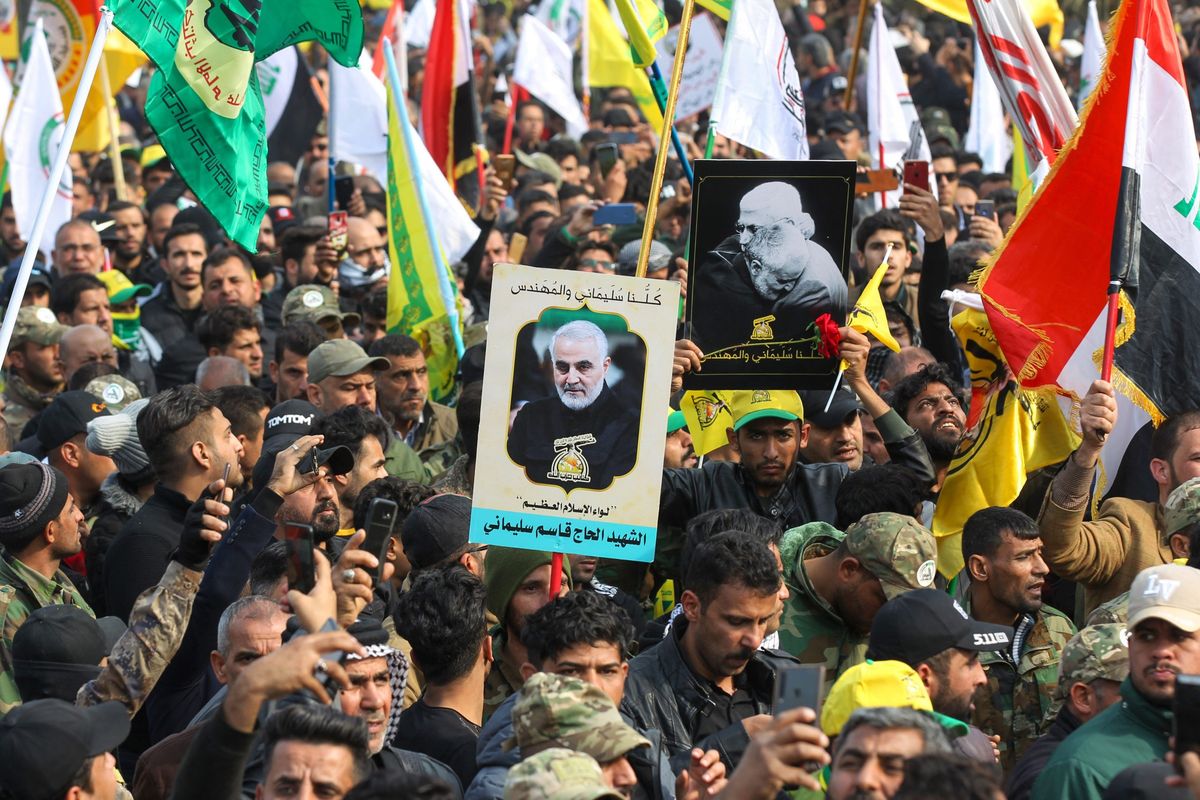
A Pause in the Rush to War
We’ve avoided war for now. But the regime-change crowd in Washington won’t stop trying.
Trump doesn’t seem to realize that he himself built the escalation ladder by withdrawing from the Iran nuclear deal.
To the sure delight of the hardliners inside and outside the U.S. administration who have always favored regime change, Trump has no plan B that can create a credible path back to diplomacy and negotiations.
President Kennedy once said that, “Peace need not be impracticable, and war need not be inevitable. By defining our goal more clearly, by making it seem more manageable and less remote, we can help all peoples to see it, to draw hope from it, and to move irresistibly toward it.”
Hawks hated the Iran nuclear deal because they feared not that it would fail to prevent Iran from getting the bomb, but that it would succeed — and thereby deprive the United States of a rationale to dominate the region and discipline its foe.
Lebanese Hezbollah leader Hassan Nasrallah recently warned that retaliation for the Soleimani assassination would be aimed at U.S. military assets, suggesting that suicide bombers will be deployed.
If U.S. troops in Iraq are attacked by Iran, the Trump administration will feel compelled to respond, and the U.S. will soon be fighting yet another war in the Middle East.
Regime change is now in its coffin and the assassination of Soleimani is the last nail hammered in.
The political fallout from Trump’s kill order will extend far wider than Iraq.
Masih Alinejad isn’t just an Iranian journalist and activist. She’s on the U.S. government payroll and works for the increasingly “rabidly pro-Trump” Voice of America.
Congress had the chance to repeal the law authorizing the 2003 U.S. invasion of Iraq. Team Trump is now using it as legal justification for killing Soleimani.
Meanwhile, Secretary of State Mike Pompeo blamed President Obama for starting a war with Iran.
This latest act of “foreign policy by assassination” will be largely rejected by most in the world. Only a few craven Gulf kings and princes—and Israel—will applaud it.
The outlines of the blowback are already taking shape as the Iraqi government, even some neutral and anti-Iran factions, have condemned the attack as, at the very least, an insult to the sovereignty of their country.
U.S. officials privy to the intelligence Trump used to determine a purported “imminent” threat from Iran say the evidence was “razor thin.”
The latest developments in Iraq and the greater Middle East illustrate the flaws in a piecemeal, unrealistic, and excessively military-reliant U.S. strategy.
Soleimani’s death will not end the opposition. Instead, it is an invitation to ignore the existing rules of the game. Americans in the Middle East, whatever their profession, are now targets.