

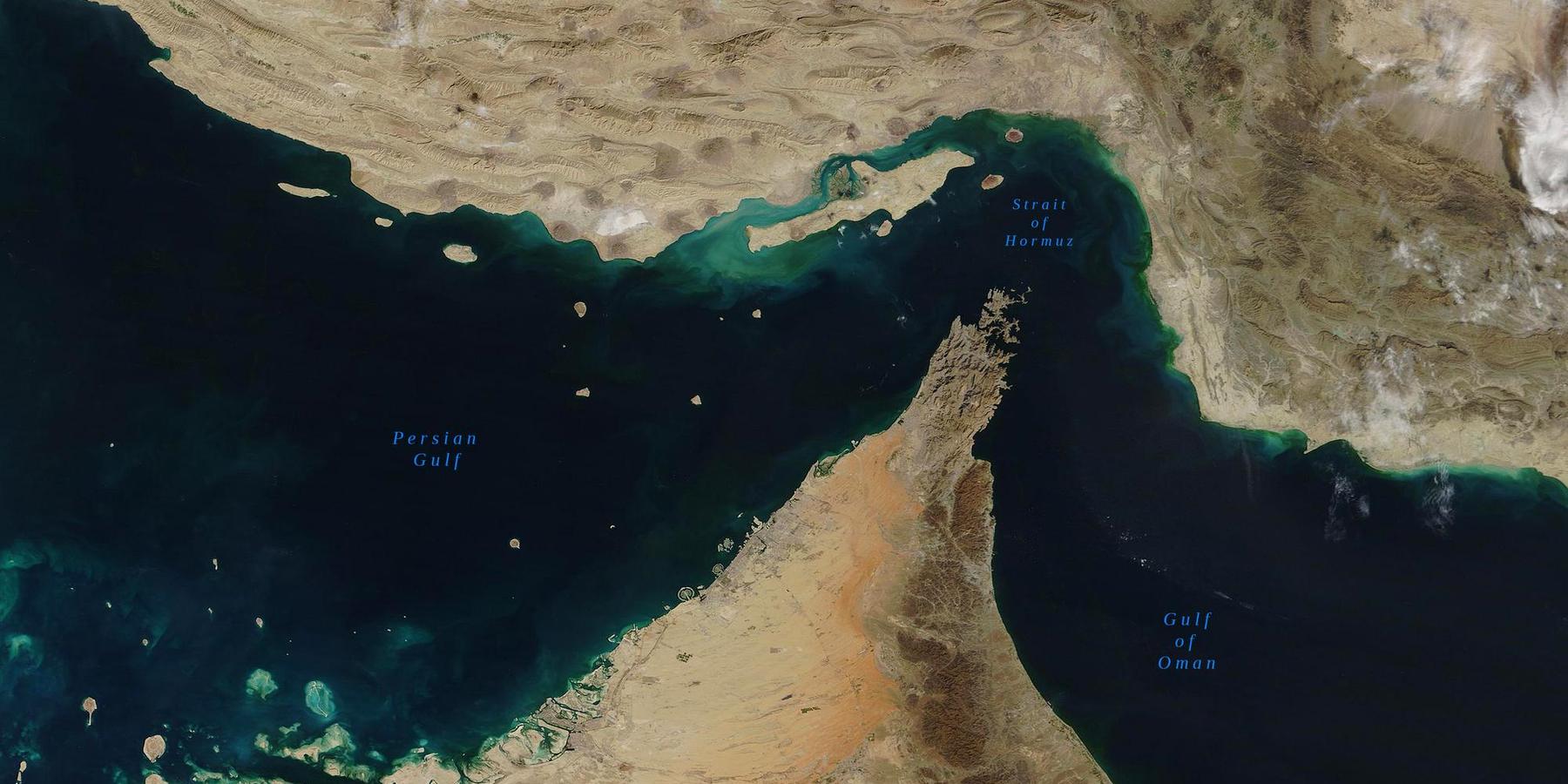
More than a month into the second U.S.-Israeli war on Iran, two facts have become clear.
First, the conflict is now fundamentally about the future of the Strait of Hormuz. Second, the dilemma of the Strait of Hormuz has no military solution. The risks of any operation to open the channel far exceed what American planners likely imagined, and the odds of a decisive success appear low. As French President Emmanuel Macron recently said, “This was never an option we supported, because it is unrealistic.”
Iranian officials have long warned that, in the event of an attack, the strait could be closed. Iran has now imposed significant restrictions on transit through Hormuz and even targeted several vessels attempting to pass through it. This effort has demonstrated Iran’s enormous leverage over the international economy. Iranian leaders are now looking to turn this tactical victory into long-term leverage.
Trump has miscalculated again. He is trying to win the battle; Iran is focused on winning the war. In Tehran’s plan, the strait is not a tool to end the war, but a permanent fixture for its aftermath.
The gray zone: neither war nor peace
The most likely scenario ahead is neither full peace nor open war. Instead, the Islamic Revolutionary Guard Corps (IRGC) is expected to maintain de facto control over the Strait of Hormuz, supported by a broad consensus across Iran’s political spectrum, including both hardliners and reformists. Transit will remain restricted for vessels linked to the U.S., Israel, or their allies, while other ships — already including those from China, Russia, Iraq, Turkey, Thailand, Pakistan, and India — are permitted passage under an informal framework.
A bill on ‘Strait Security Arrangements,’ now pending in the Iranian parliament, includes provisions granting Iran greater control over the strait, like maritime navigation safety, financial arrangements and toll regulations, the exercise of Iran’s sovereignty, and cooperation with Oman. Yet from the perspective of international law and international relations, this arrangement is far from straightforward.
The legal landscape
The Strait of Hormuz is an international strait under the United Nations Convention on the Law of the Sea (UNCLOS); imposing tolls for mere passage is generally prohibited. Fees may only be levied in exchange for specific services and must be applied without discrimination.
The principle of “transit passage,” which allows vessels to navigate international straits with minimal restriction, is widely accepted by states. There is, however, a significant complication: the U.S., Israel, and Iran are not parties to UNCLOS. While many of its navigational rules are widely regarded as customary international law, their applicability remains contested, particularly by Iran, which has explicitly rejected the transit passage regime.
Some legal scholars argue that because Iran is not a party to the UNCLOS — and because "considerable ambiguity" remains in customary international law regarding straits less than 24 nautical miles wide that lie entirely within a coastal state's territorial waters — Iran's imposition of fees may be legally defensible, provided they are not mere "obstacles to passage" and are tied to real services such as security, environmental monitoring, or navigation coordination.
In practice, Iran justifies its legal position under the rubric of “innocent passage,” a principle dating to the 1985 Geneva Convention.
The international community has not remained silent regarding Iran’s restrictions in the strait. U.N. Security Council Resolution 2817 condemned Iran's actions against Gulf states and its obstruction of the strait. Also, Bahrain circulated a draft resolution at the U.N. Security Council condemning Iran’s restrictions in the Strait of Hormuz. Still, it is widely understood that China and Russia would likely veto any resolution authorizing military action against Iran.
From Tehran's perspective, recent developments suggest a selective application of international legal norms because military actions against Iran — including attacks on its infrastructure and a school in Minab, as well as continued threats of further escalation — have not met with equivalent condemnation.
The logic of permanent control
While Donald Trump has set a deadline of April 6 for Iran to reopen the Strait of Hormuz, he has once again sent mixed messages. In his recent televised address to the American nation, he called on others to police the strait, saying, “they must cherish it. They must grab it and cherish it.”
The president appears to assume that Tehran is using the strait as a bargaining chip in exchange for a ceasefire or even sanctions relief. But that assumption may be mistaken.
Iran appears to be thinking about the strait not as a tool to end the war, but as a fixture for the aftermath. What Iran has lost most acutely since the 12-day war in 2025 is deterrence. Its missile program had long ensured that Israel would not dare to attack unilaterally. It had also allowed Iran to strike multiple American military bases in the region, forcing the U.S. and Israel to deploy Patriot and THAAD systems at historic levels.
Yet Tehran has now concluded that this missile capability alone cannot preserve deterrence. The perceived solution is permanent control of the strait — providing services, collecting fees, and, most importantly, securing not just the Persian Gulf but a valuable lever over the global economy.
Is this because Iran sees itself in a position of strategic loneliness, lacking reliable ties with Russia or China to help in such a war? That may be part of the story, but the internal debate has moved beyond this old question. So far, economically, the strait has been closed to Iran as well. After the war, Iran will likely try to re-enter the international economy by striking a quiet but crucial deal with nearly every country: secure passage through the Strait of Hormuz in exchange for recognition of the new Iranian framework and payment.
Iran will not use its previous money-transfer vehicles based in the United Arab Emirates; instead, it will seek to maintain bilateral channels with each country. Some analysts suggest that Iran's revenue from collecting strait fees could eventually exceed its earnings from oil exports.
The Gulf neighbors' dilemma
Iran's plan for the Strait of Hormuz faces its most immediate challenge not in Washington or Tel Aviv, but in the Persian Gulf's own capitals.
The very neighbors whose vessels would pass through the strait — and whose economies depend on its openness — are also Iran's regional rivals. This complicates any unilateral Iranian attempt to impose a new transit regime. Ironically, Tehran may be open to discussing war compensation claims from the UAE, Qatar, Saudi Arabia, Kuwait, and Bahrain, offering them discounts on passage fees.
Iran may also be willing to revive a revised version of the Hormuz Peace Endeavour (HOPE), a little-known framework first proposed by Tehran in 2019. The initiative originally brought together eight countries: Saudi Arabia, Iraq, Oman, the UAE, Kuwait, Qatar, Bahrain, and Iran itself. The initiative aimed to achieve durable, homegrown security in the Persian Gulf by fostering inclusive intra-regional dialogue and cooperation among states, grounded in principles of good neighborliness and non-interference.
Beyond the multilateral framework, Iran will offer Oman a specific role in the new transit mechanism, modeled on the authorities governing the Panama or Suez Canals. Oman may be silent for now, but it is expected to join once the war ends. Whether such a strategy proves sustainable is another question. But it is the strategy Iran appears to be embracing.
For Gulf states, the choice may ultimately be between negotiating a place in Iran's emerging order or watching it take shape without them. Iran knows its future depends on making peace, or at least proposing it. The Strait of Hormuz may well be Iran's key to that peace.
- The Iran war and the death of the global maritime commons ›
- Why the US Navy won't blast the Iranians and 'open' Strait of Hormuz ›