

Since the U.S. war against Iran started earlier this year, Washington has pressed its allies in Europe and Asia to “step up” with military aid to help the United States reopen the Strait of Hormuz.
Despite persistent pressure from both Trump administration officials and President Donald Trump himself, most U.S. allies have remained reluctant. Those who have chosen to provide support have done so largely in an indirect capacity, such as by permitting limited base access.
South Korea has been a major target of that pressure. In August, Trump abruptly announced on social media that Washington will “substantially reduce” U.S.-South Korea joint military exercises, linking the decision to Seoul’s continued refusal to support his war efforts against Iran. Trump’s apparent retaliation alarmed Seoul and sparked a serious debate over whether to deploy its navy to the Strait of Hormuz.
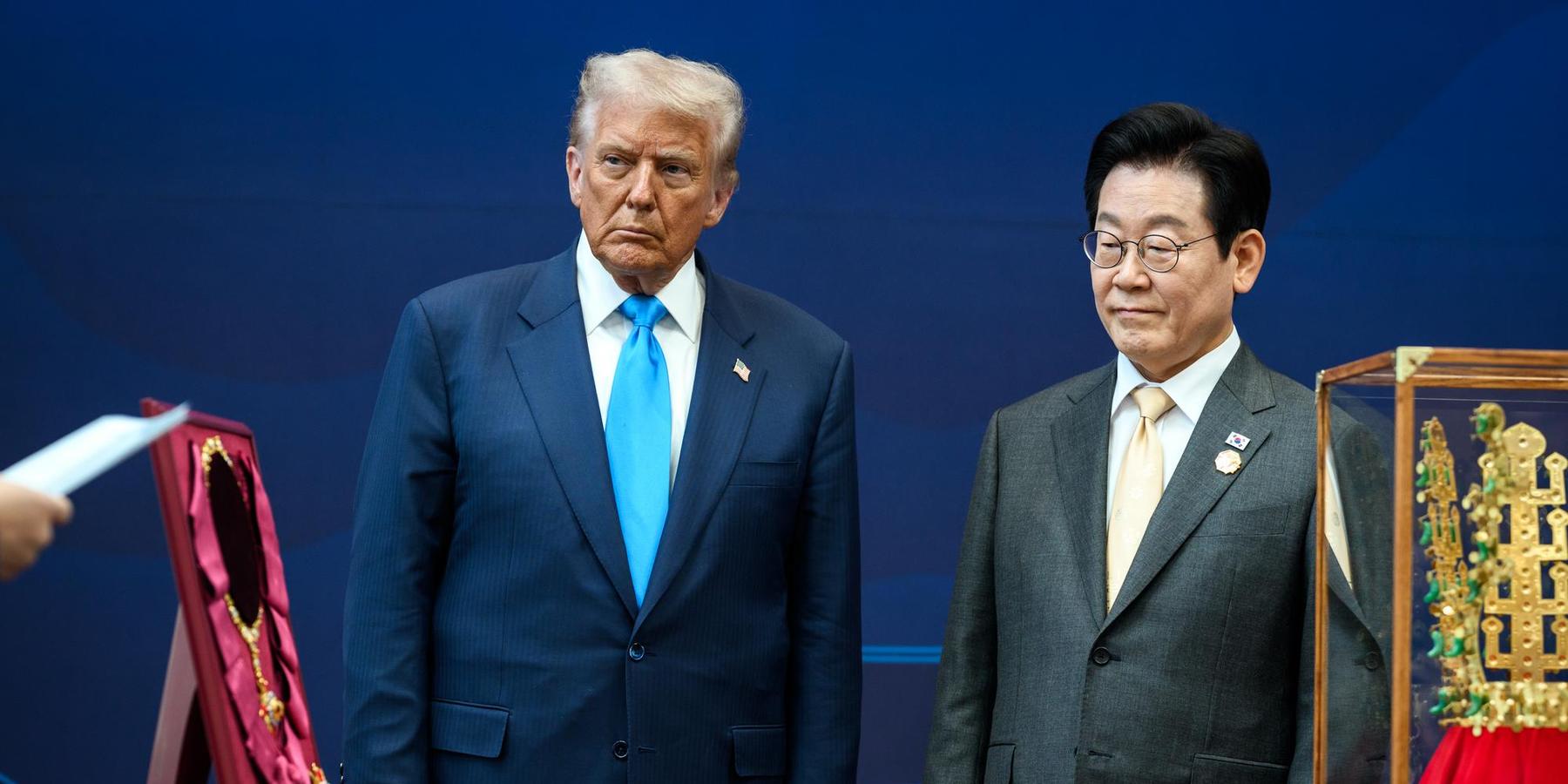
At a September 18 press conference, South Korean President Lee Jae-myung answered the question, ruling out sending troops or military assets to the Strait of Hormuz in a way that would involve South Korea in the U.S. war against Iran — while leaving open the possibility of expanding the role of its existing anti-piracy unit in the Middle East to protect South Korean shipping, oil shipments, and citizens.
This is a sensible choice for Seoul. Military deployments to the Strait of Hormuz would entail clear, high risks while promising nothing positive in return.
Some observers have argued that Seoul should send military assets to protect freedom of navigation in the Strait of Hormuz — it is not simply someone else’s problem but an important economic interest for South Korea. However, the reality is that South Korea sending assistance is unlikely to change the course of the war in Iran or the underlying strategic balance in the Strait of Hormuz.
Even if South Korea deploys assets supposedly strictly focused on non-combat missions, once South Korean forces enter an active war zone, the boundary between “support” and “participation” will become difficult to maintain. What begins as a mission to support “freedom of navigation” can prove much harder to control once deployed personnel are exposed to attacks and the risks of deeper entanglement.
South Korean public opinion reflects these concerns. A recent survey showed that 52% of South Koreans — and 69% of the ruling Minjoo Party base — oppose deployments to the Strait of Hormuz. This popular sentiment is difficult for Seoul to ignore, especially as Lee’s approval rating has declined in recent months due to economic problems, controversies over new cabinet appointments, and other domestic challenges.
Domestic opposition, however, does not always discourage Seoul from accommodating controversial, high-risk strategic demands by Washington. Seoul has done so many times in the past, including sending troops to support the United States in an active war.
In 2004, the Roh Moo-hyun administration deployed troops — focused on medical and engineering support — to aid the U.S. war in Iraq, despite considerable public opposition. It was a tough decision for Roh, whose approval rating fell to 25% at one point during the saga. But in the end, Seoul saw an opportunity to advance its core strategic interest: to deepen trust in the alliance and leverage it to influence Washington’s approach toward North Korea.
The George W. Bush administration then initially adopted a hawkish policy toward North Korea, including exploring military strikes to set back the North’s nuclear weapons program. But Washington eventually came around to a more diplomatic approach favored by Roh — pursuing dialogue with Pyongyang through Six-Party Talks, rather than relying solely on pressure and coercion.
At a glance, today’s situation regarding Iran resembles 2004. There is an active war far from the Korean Peninsula that Washington started unilaterally, and Washington is seeking Seoul’s assistance. And there is a South Korean administration pursuing diplomacy with North Korea and hoping to move Washington in that direction. However, there are clear differences between the two cases that further disincentivize Seoul from making the same choice as in 2004.
Obviously, Iran is not Iraq. While Iraq was in no position to seriously resist U.S. military forces, Iran actually has a serious ability to impose costs in the Strait of Hormuz and beyond. South Korea also has long-term economic, energy security, and diplomatic interests in avoiding an adversarial relationship with Iran.
Moreover, unlike Roh, Lee is not dealing with a White House that formally designated North Korea as “evil” and was inherently pessimistic about diplomacy. Trump has already met with North Korean leader Kim Jong Un three times and has shown through words and deeds that he considers Kim a genuine diplomatic counterpart. What Seoul needs from Washington now is not a mere interest in dialogue with Pyongyang. It is serious rethinking of U.S. policy toward North Korea.
As Lee underscored in a recent New York Times interview, Pyongyang will likely continue to reject dialogue unless it sees fundamental reductions of hostility in the U.S. approach to North Korea through concrete policy changes — including easing sanctions and prioritizing coexistence with a nuclear North Korea over denuclearization.
The dilemma for Seoul is whether it can count on Trump to undertake such a major policy reform through careful alliance coordination. If Seoul had enough confidence in Trump as an alliance manager, the scenario of leveraging a South Korean military deployment to the Strait of Hormuz to influence Trump on North Korea might be more worth considering. However, Trump is far from a trustworthy alliance manager, and that makes it harder for Seoul to be as risk-accepting as it was in 2004.
In 2004, Seoul had a relatively predictable, conventional U.S. administration as a counterpart. Seasoned policy professionals were in charge of alliance coordination. Today, Seoul is dealing with Trump, who views allies predominantly as free riders — to whom Washington has sacrificed far too much without receiving anything meaningful in return — rather than key partners pursuing shared objectives. For Trump, alliance coordination is largely meaningless; he routinely makes unilateral “surprise” announcements about key alliance issues on social media without consultation, and can change his mind overnight on any policy decisions or diplomatic agreements.
In sum, South Korea deploying its military to support the U.S. war against Iran is simply too dangerous a gamble. The risks of becoming more deeply entangled in a war whose geographical scope has expanded over the past seven months are high and very real, and the upsides are uncertain at best, perhaps even non-existent. From a rational strategic standpoint, it is more than understandable that Seoul has decided to rule out such a deployment.
- Iran war could cripple the 'Yuxi Circle' or 55% of world population ›
- Suddenly Trump wants to scale back military drills with S. Korea ›
- US diplomatic incompetence is tanking hopes for Korean peace ›