

The president of Somaliland took advantage of the geopolitical and global economic turmoil caused by the Iran War to visit Washington this week in an effort to advocate for American recognition of Somaliland and for the deepening of economic ties between the two.
President Abdirahman Mohamed Abdullahi, known as Irro, made a public appearance at the Hudson Institute on September 14, where he argued that his country’s three-and-a-half decade run as a secure, self-governing actor warranted recognition from the United States. Irro also said that, although he’s “not a geologist,” experts tell him his country has “everything” the U.S. could want in terms of critical minerals, which he’d be happy to provide the U.S. in exchange for deeper relations.
A self-proclaimed sovereign country widely considered to be part of Somalia by the international community, Somaliland has for decades struggled to gain recognition on the international stage. But Israel’s unexpected decision in December 2025 to be the first government in the world to recognize Somaliland as an independent state has raised questions about which other countries might follow suit. Somaliland denies that recognition came as part of a quid-pro-quo arrangement, but, shortly after the recognition, it was reported that Somaliland will be forming a security partnership with Israel, potentially including offering the Israelis military access to its territory.
If there was ever a moment for Somaliland officials to make the case for recognition, now is indeed the time. Somaliland sits in one of the world’s most geostrategically significant locations. With roughly 530 miles of coastline along the Gulf of Aden — which connects to the Red Sea through the vitally important Bab el-Mandeb Strait — Somaliland is at the heart of a crucial shipping route and on the edge of the expansive battlefield of the Iran War.
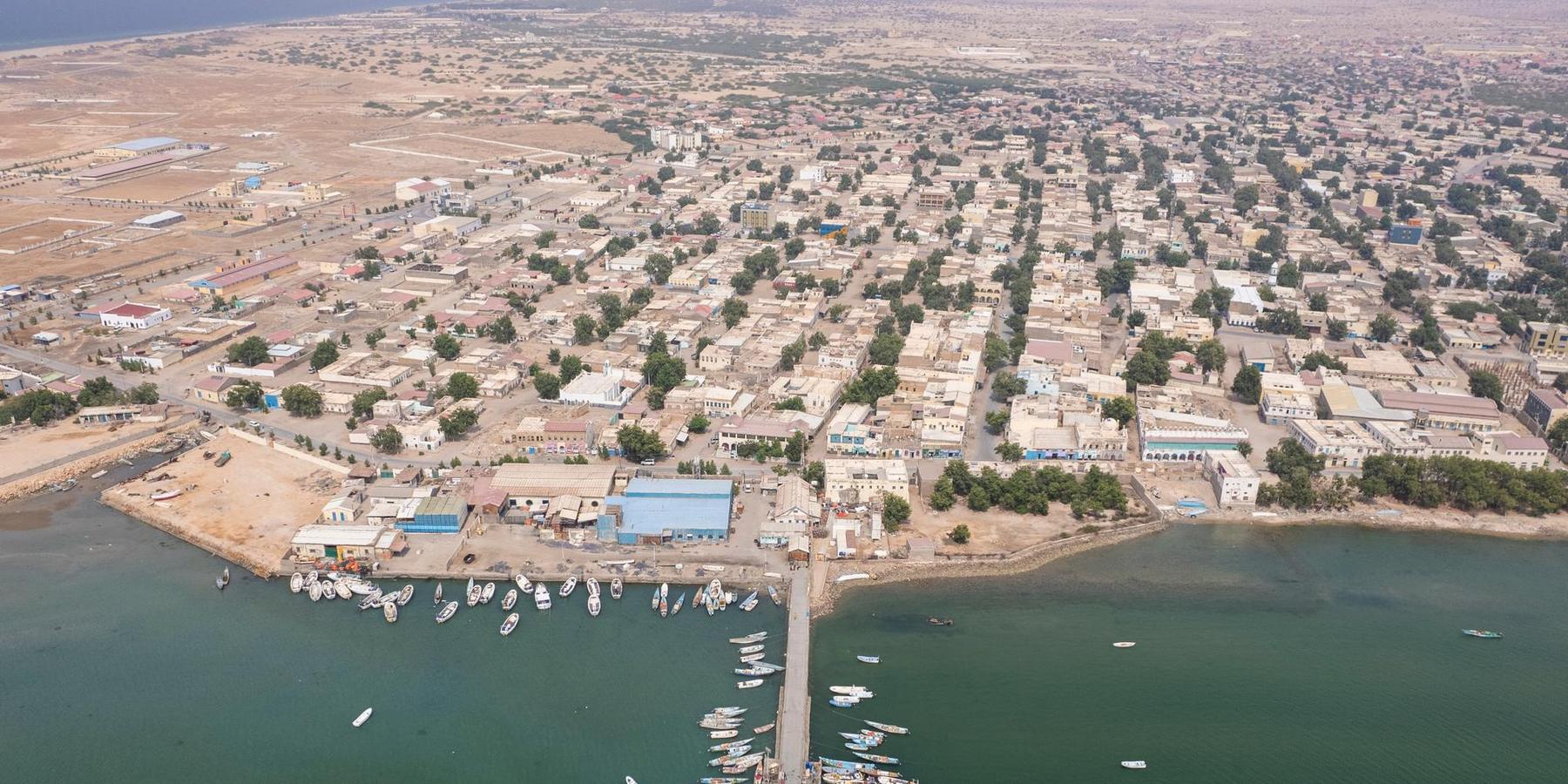
Somaliland’s major port city of Berbera is located just across the Gulf from the Yemeni coast, putting Somaliland’s major economic engine within striking distance of potential Houthi attacks.
The Houthi rebels — an Iran-aligned militant group fighting the Yemeni government and its Saudi backers in Yemen’s devastating civil war — have played a major role in expanding the footprint of the ongoing Iran War. The Houthis have repeatedly targeted ships traversing the Red Sea as well as energy and logistics infrastructure in Saudi Arabia.
Their stunning gains along Yemen’s southwest coast in recent weeks — including the capture of the major port city of Mocha, near Bab el-Mandeb — mean the Houthis are increasingly in control of the Yemeni coastline along the strait, which gives the group added leverage. Indeed, if a lasting peace deal remains elusive, Iran could aim to use the Houthis’ position to effectively shut down shipping through Bab el-Mandeb, which is only about 18 miles wide at its narrowest point.
This would essentially mirror the Iranian strategy on the Strait of Hormuz, which sits on the other side of the Arabian Peninsula. By shutting down shipping through both Hormuz and Bab el-Mandeb, the Iranians and their allies would essentially bring to a halt nearly all sea trade connecting the Middle East to the Indian Ocean, worsening the ongoing global supply shock, especially as it relates to energy. The greater the pain on the world’s pocketbook, the greater the likelihood, the Iranians believe, that pressure will mount to a point where the United States and Israel have no choice but to negotiate an honest end to the war.
Irro’s argument for recognition is straightforward. Somaliland has been operating as a functional and relatively secure country since claiming independence from Somalia in 1991. It has its own military and police force, and has a coast guard that patrols its waters along the Gulf of Aden, defending against potential threats from pirates and other nefarious actors on the seas. In an appeal to traditional Western appreciation for democracy, Irro argues that Somaliland’s ability to hold consistent (though often delayed) elections is another indicator of its ability to govern well.
But the Hudson Institute appearance was unsteady. Irro, aged 70, giggled seemingly uncontrollably throughout, and struggled to articulate a vision for the broader region. At one point, he compared neighboring Sudan to Venezuela, saying — like the Latin American country — Sudan is “too far away” from Somaliland for him to provide an opinion on its civil war, despite the fact that the two are only about 460 miles apart.
Cameron Hudson, a former U.S. intelligence official specializing in Africa, said on X that Irro “did himself and his country a major disservice by being unprepared or incapable of being able to respond convincingly to serious topics that will determine his country’s future. It was like watching an African Biden.”
Last Tuesday, Irro held a breakfast with a bipartisan group of members of Congress from both chambers as well as a group of ambassadors. The president also met individually with several members of Congress, including Sen. Ted Cruz (R-Tex.), Rep. John Rose (R-Tenn.) and Rep. John Moolenaar (R-Mich.), with whom he reportedly discussed a wide variety of issues pertaining to security, trade, and investment.
In addition to meeting with American officials, Irro met with members of the Israeli embassy in Washington, including the country’s ambassador.
Ever since Trump took office, Somaliland has seen an opportunity to push for American recognition. Last year, the breakaway state offered the United States the opportunity to open up a military base along its Gulf coast in exchange for recognition, which the Trump administration reportedly seriously considered. Ultimately, though, concern over how such recognition would complicate U.S. relations with nearby governments in the region ultimately dissuaded the American president from agreeing to the arrangement. Such recognition would also hurt American relations with Somalia, which remains a major counterterrorism partner in the fight against the al-Qaeda affiliate al-Shabaab.
Nevertheless, American military presence in the region appears to be growing. Recent reporting suggests the U.S. has sent military personnel to Somaliland’s eastern neighbor Puntland, another region claiming independence from Somalia.
Despite a fraying federal system and deep insecurity, Somalia is still a member of both the African Union and Arab League, allowing it to maintain close ties with its regional neighbors. U.S. recognition of Somaliland would risk hurting American relations with this broad base of countries across the Middle East and Africa.
In terms of what Somaliland is willing to provide the U.S. for recognition (or at least for enhanced relations), Irro told Semafor he would consider offering greater military access — including potentially building a military base (as he has offered before) — as well as access to the country’s deep resources. In an appeal directed right at Trump, Irro also suggested the possibility of naming the airport in the major port city of Berbera, which has one of the longest runways on the continent, after the American president.
Still, it’ll be a challenge for Somaliland’s leadership to persuade the United States to recognize it while Somalia remains an American partner in counterterrorism activity, and while the wider regional community opposes Somaliland’s independence. But if either of these factors change, and if the Gulf region remains a hotbed for conflict, global geopolitical and military positioning will, at the very least, keep the conversation going.
- US military marching into Puntland as Red Sea tensions escalate ›
- Is Somaliland recognition worth a new Israeli outpost on the Red Sea? ›