

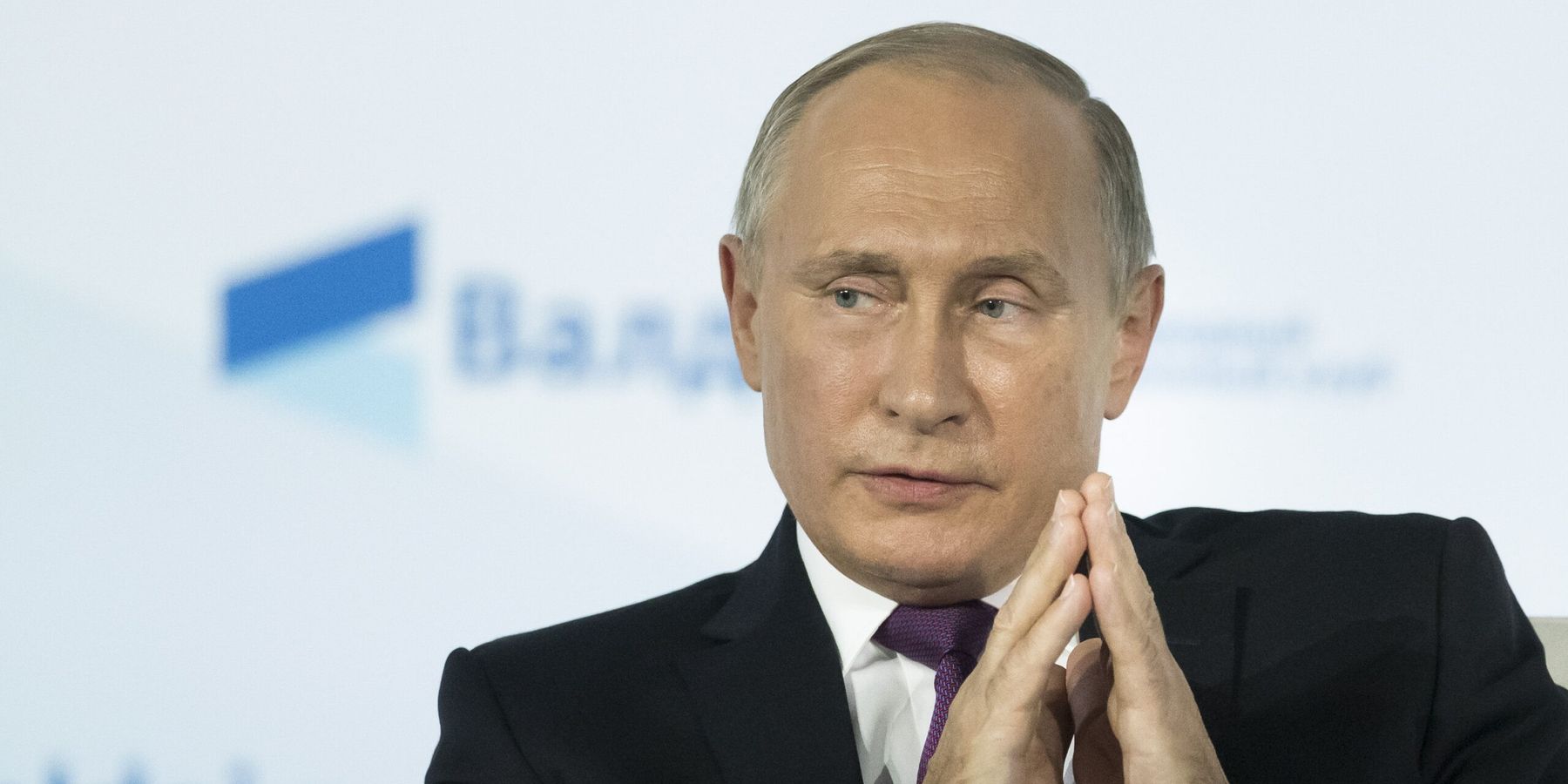
On December 1, Russian President Vladimir Putin signed the budget law for 2025-2027. The Duma had earlier approved the law on November 21, and the Federation Council rubber stamped it on November 27.
The main takeaway from the budget is that Russia is planning for the long haul in its war with NATO-backed Ukraine and makes clear that Russia intends to double down on defense spending no matter what the cost. While the increased budget does not shed light on expectations for a speedy resolution to the war, it is indicative that Moscow continues to prepare for conflict with both Ukraine and NATO.
More importantly, the recently signed budget only reinforces Russia’s move towards a war economy at the risk of exacerbating growing problems in the domestic economy related to labor shortages and inflation.
According to Russia’s Ministry of Finance (MinFin), the largest portion of budget expenditures will be dedicated to national defense. According to published figures, 32.4 percent ($126 billion) will be specifically allocated to defense. In comparison, the figure for 2024 was 29.4 percent of the budget or $98 billion. In 2026 and 2027 the expected budget increases are estimated at $69.5 billion and $125.1billion, respectively.
The figures suggest that military expenditures are crowding out spending in other areas of the economy. Planned spending on "national defense" is more than twice that allocated to social spending. Defense expenditures are followed by social policy (15.7 percent), national economy (10.5 percent) and national security and law enforcement activities (8.3 percent).
In addition, the new budget threatens to exacerbate existing pressures within the domestic labor market. According to Reuters, heavy recruitment by the armed forces and defense industries has drawn workers away from civilian enterprises, as has emigration, pushing unemployment to a record low of 2.3 percent.” Figures from Rosstat indicate that unemployment is at the lowest level since the collapse of the Soviet Union in 1991.
Furthermore, last week Anton Kotyakov, the minister for labor and social defense, appeared before the State Duma where he announced that labor market demand by 2030 could face a deficit of 2.4 million people. The shortage is expected to be most critical in manufacturing, logistics and IT. The Labor Ministry is fearful that as Russia's labor woes intensify it may contribute to slowing economic growth.
Overall, Russia’s GDP growth, which is approximately 3.9 percent for 2024 according to the Russian ministry of economic development (MinEcon), will slow to about 2.5 percent in 2025 and level off at 2.8 percent by 2027. This contrasts with the International Monetary Fund’s estimate of 1.3 percent growth for 2025.
As a result of the new budget, MinFin forecasts an increase in state debt of nearly 50 percent in ruble terms through 2027. That would translate to 15 percent in 2023 of GDP to 18 percent in 2027. This runs counter to previous Russian economic policy that emphasized budget surpluses to counter Russia’s persistent inflation.
Inflation in Russia is currently running at about 8.7 percent. The MinEcon forecasts a decline to 7.3 percent by the end of the year. .
One result of the rise in inflation will be a 7.3 increase in pensions at the beginning of 2025. This will be higher than the expected figure. Pensioners make up a significant portion of Russia’s populace and can be a source of protest and public discontent. According to Sergei Chirkov, head of Russia’s Social Fund, more than 42 million people, or nearly 25 percent, will receive a pension in 2025.
It must be noted that Putin approved the increase in military expenditures as the United States announced that it is preparing a new $725 million military aid package for Ukraine. The assistance includes counter-drone systems, munitions for High Mobility Artillery Rocket Systems (HIMARS), and antipersonnel land mines. Previously, President Biden committed to expending all allocated Congressional funds for Ukraine's military support before leaving office on January 20. His latest package brings the total U.S. aid to roughly $7.1 billion in Pentagon stockpiles since the start of 2023.
Thus, both sides continue to see doubling down as the only option both militarily and fiscally. Until this cycle of escalation is broken, the risk of direct conflict, possibly even nuclear exchanges, appears ever more likely. Indeed, the absence of restraint from either side appears to be the course of action at least until the change of U.S. administrations.
For Russia, expanded military expenditures are a worrying development for the long-term health of a Russian economy that continues to expend greater amounts of financial resources on its war versus NATO-backed Ukraine. According to the Center for European Policy Analysis (CEPA), “for the first time on Putin’s watch, pure military expenditure is expected to rise above social spending, including social policy, education, and healthcare.” Moreover, CEPA notes “increases in overall tax rates contribute a larger share, not least because the extra revenue (including from a higher corporate tax rate) will be diverted into the federal budget and not given to the regions.”
Minister of finance Siluanov noted last week that overall regional budgets will shift from a surplus of one trillion rubles to a deficit of approximately 100 billion rubles in 2024. Declining finances in the regions are primarily attributable to declining exports and export revenues. He cites lower coal exports in the Kemerovo region as one example. This development is important as inhabitants of Russia’s regions are doing most of the fighting.
Combined with Russia’s labor shortages, fears of consumer inflation, and budget pressures on non-defense items, like pensions, education and social services, it is doubtful that the Kremlin can continue on this course indefinitely without risking popular opposition.
Likewise, the Trump campaign’s promises to reduce government spending and increase the real income of most American workers are likely to affect its support for Ukraine. While Trump will almost surely increase defense spending, it will probably not be directed to Ukraine if one believes his campaign rhetoric.
Russia’s leadership must understand this and, therefore, the condition of the Russian economy must be part of the formula for when and under what conditions Russia agrees to negotiations. Perhaps the newly signed Russian defense budget is a signal to the new Trump administration that Moscow is willing to up transaction costs of the war until it reaches a point where restraint and negotiation becomes possible if not necessary.