

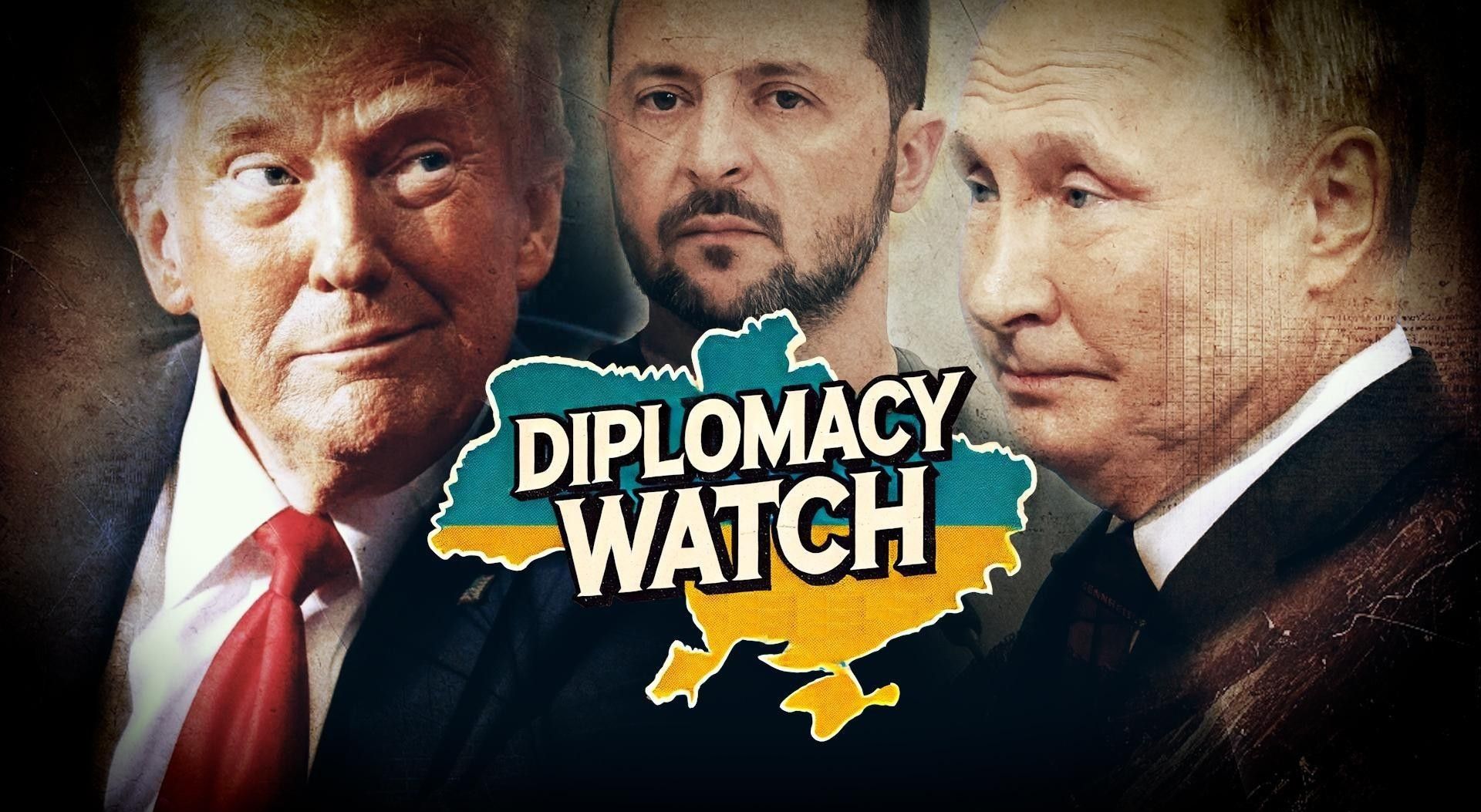
One of the top headlines that emerged from the Alaska summit earlier this month was that, according to President Trump, Russian President Vladimir Putin and Ukrainian President Volodymyr Zelensky would soon meet face-to-face to find a way to end the war in Ukraine, which has dragged on for more than three years. The president, however, expressed skepticism this week that it would happen anytime soon.
“I don’t know that they’ll meet — maybe they will, maybe they won’t,” he said in the Oval Office on Monday during a meeting with South Korean President Lee Jae-myung. He added that if Putin and Zelensky don’t meet, “there could be very big consequences, but we’ll see what happens. There might be very big consequences because this is something that has to end.”
Indeed, the president followed through this week on his promise to double tariffs on Indian goods to 50% as punishment for New Delhi continuing to import Russian oil, which he views as helping Moscow finance its war on Ukraine.
But whether a Putin-Zelensky meeting is still on offer is up in the air. Some are speculating that Trump and his top advisers perhaps misunderstood what Putin agreed to in Alaska. And Russian Foreign Secretary Sergey Lavrov said on Sunday that Putin would not meet with Zelensky until there’s a set agenda in place. “And this agenda is not ready at all,” he said.
For his part, Zelensky said shortly after the Alaska summit that he was willing to meet with Putin. But this week he accused Russia of “doing everything it can” to prevent that from happening while reiterating his demand that to end the war, he needs strong security guarantees — a concept that remains a major sticking point as the Ukrainians, Europe and the United States have struggled to agree on an outline to a framework that would also satisfy Russian demands.
Zelensky this week reiterated his desire to meet with Putin, floating Turkey, Gulf states or some European nations as possible hosts. He is also sending two senior advisers — chief of staff Andriy Yermak and Secretary of the National Security and Defense Council Rustem Umerov — to Washington this week for meetings with Trump’s senior envoy Steve Witkoff to discuss the security guarantee issue and a possible future Putin-Zelensky meeting.
Meanwhile, Vice President JD Vance said on Sunday that the United States “has a lot of cards left to play to apply pressure to try to bring this conflict to a close.” Two days later, the president followed up with a slightly upgraded commitment, promising an “economic war” if the two sides can’t end the conflict. “It’s going to be bad for Russia, and I don’t want that,” he said.
In other Ukraine war news this week:
Russia stepped up attacks on Ukraine this week, striking the city center in Kyiv that killed at least 21 people and wounded dozens more, according to the Associated Press, which noted that “[t]he bombardment of drones and missiles was the first major Russian attack on Kyiv in weeks.”
The Trump administration has reversed a Biden administration decision that allowed Ukraine to use long-range American supplied missiles to strike targets inside Russia, the Wall Street Journal reported. “The U.S. veto of long-range strikes has restricted Ukraine’s military operations as the White House has sought to woo the Kremlin into beginning peace talks,” the Journal said.
While there has been much discussion about the possibility of European troops being deployed to Ukraine as part of a possible peace settlement, European leaders, the Wall Street Journal reports, “are contending with the inconvenient fact that many voters are opposed to any deployment that places troops in harm’s way.”
From the State Department
There were no State Department press briefings this week.
- Zelensky White House meeting could spell end of the war ›
- Why Putin is winning ›
- What can we expect from a Trump-Putin meeting? ›