

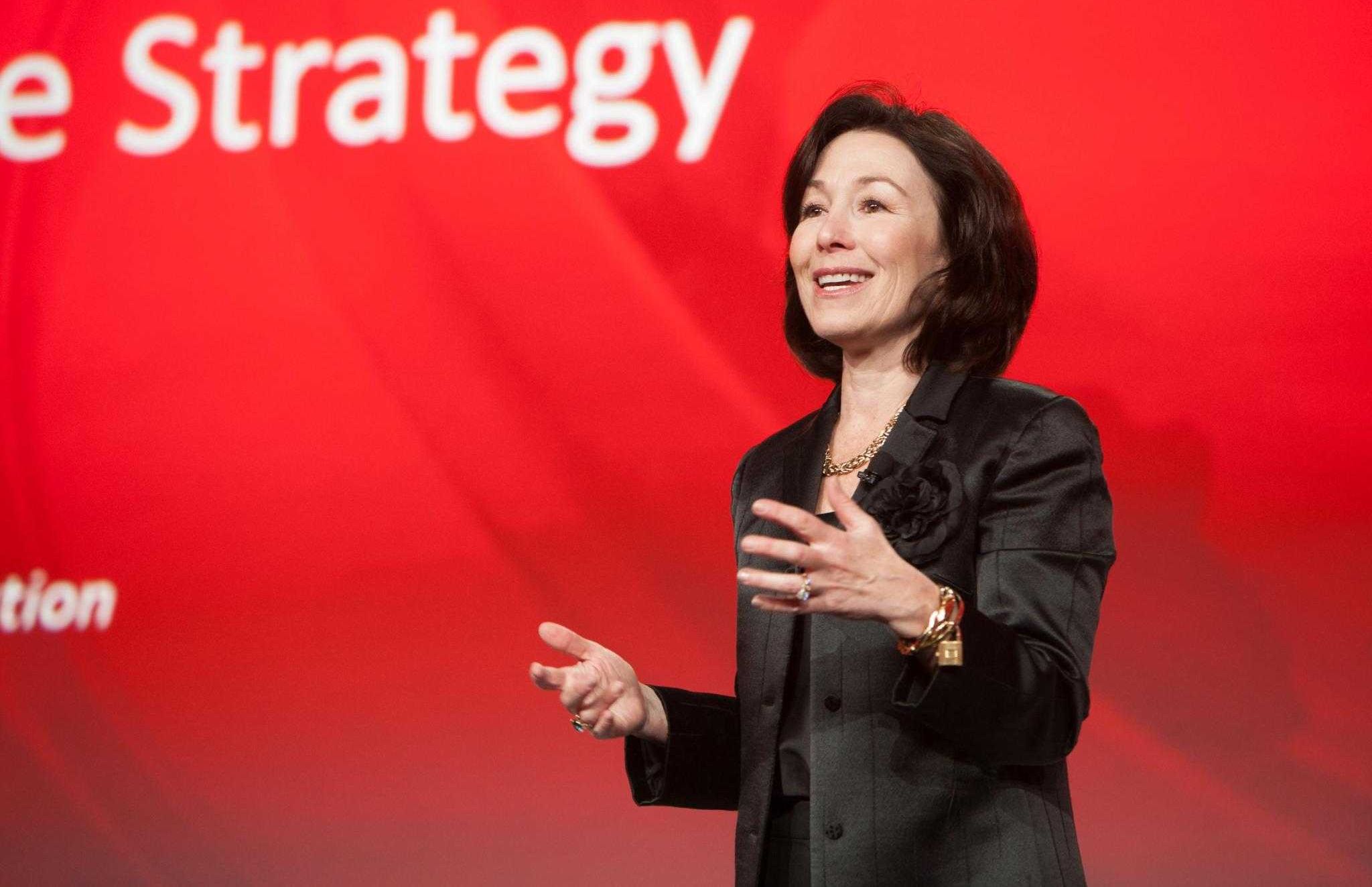
The $14 billion deal to transfer TikTok’s ownership away from ByteDance, a company with roots in China, may be the culmination of the Biden and Trump administration’s efforts to force divestment of Chinese-linked ownership in the social media behemoth. Fears over foreign influence at TikTok undergirded the campaign but an executive at one of the new investors has expressed a commitment to influencing U.S. public opinion in favor of Israel.
In a previously unreported email released as part of a hack of former Israeli Prime Minister Ehud Barak’s email account, Oracle CEO Safra Catz explicitly expressed a commitment to influencing U.S. public opinion in favor of Israel. Catz, writing in February 16, 2015, urged Barak to sign on as a consulting producer for a reality TV show about “Women of the IDF” with the goal of “human[izing] the IDF in the eyes of the American public.” (The show, created by Sarit Catz, Safra’s sister, ultimately premiered in 2024 without Ehud Barak as a consulting producer.)
Catz, after burnishing his sister’s pro-Israel bonafides as a “very prominent pro-Israel activist and AIPAC national leader,” shared her own views on how Americans should be conditioned to support Israel, writing:
"We have all been horrified by the growth of the BDS movement in college campuses and have concluded that we have to fight this battle before the kids even get to college. We believe that we have to embed the love and respect for Israel in the American culture. That means getting the message to the American people in a way they can consume it."
“As Executive Vice Chair of the Oracle Board of Directors, Safra will be nowhere near the algorithm of TikTok,” sources familiar with the matter told Responsible Statecraft. The sources “could not confirm the authenticity of the email.”
Catz’s shift from CEO, a job she held for over 10 years, to executive vice chair of the board only occurred on September 22, meaning it’s likely she oversaw much of the negotiations involving the TikTok purchase. She was also serving as head of Oracle when she expressed her view that “we have to embed the love and respect for Israel in the American culture.”
The deal — and the presence of Catz, who signaled a strong interest in advancing a foreign country’s agenda in the United States — stands out even more in light of remarks made last week in New York by Israeli Prime Minister Benjamin Netanyahu. Speaking to a group of social media influencers, Netanyahu said:
"The most important purchase going on right now is [...] TikTok. Number one. And I hope it goes through because it can be consequential. And the other one? X. We have to talk to Elon. He's not an enemy, he's a friend. We should talk to him. Now, if we can get those two things, we get a lot. [...] We have to fight the fight, to give direction to the Jewish people and give direction to our non-Jewish friends."
Oracle’s ties to Israel extend to its founder and chief technology officer, Larry Ellison. Ellison, the world’s second wealthiest person, gave over $26 million to Friends of the Israel Defense Forces. He told Israel’s Channel 10 in 2014, “We love our country of Israel and we’ll do everything we can to support the country of Israel.”
Catz and Ellison are joined by top Republican donor Jeff Yass whose philanthropy includes $16 million sent to anti-Muslim and pro-Israel groups between 2011 and 2019, many of which have advocated for a U.S. war with Iran. One of Yass’s largest philanthropic efforts in the foreign policy space was $7.9 million in contributions to Jerusalem Online University between 2014 and 2019 by a foundation at which he had served as one of three directors.
A 2011 investigation of Jerusalem Online University by The Forward found:
"On its website and its promotional materials, Jerusalem Online U hardly portrays itself as a center for neutral academic inquiry. In fact, it boasts an explicitly pro-Israel mission that seems distinctly at odds with academic principles. In one advertisement for its services, the Jerusalem Online U site’s blog features a video of Israeli Prime Minister Benjamin Netanyahu telling Congress last May that ‘Israel is what is right’ about the Middle East. The words ‘Be a Part of What’s Right’ appear on screen as he speaks."
Yass, like Ellison, also contributed to Friends of the Israel Defense Forces.
Fears of foreign influence by TikTok’s China-linked investors have largely driven the impending sale of the social media platform that serves as a news source for a fifth of U.S. adults and 43% of adults under 30, according to Pew Research Center polling released last week. But for the participants in the sale, particularly Ellison and Catz, advancing Israel’s interests have been a driving motivation in both of their philanthropies, raising serious questions about whether the sale is to prevent foreign influence on U.S. social media platforms or, as Netanyahu said, “the most important purchase going on right now” in amplifying Israel’s messaging and influence over young Americans.
Oracle did not respond to a request for comment.