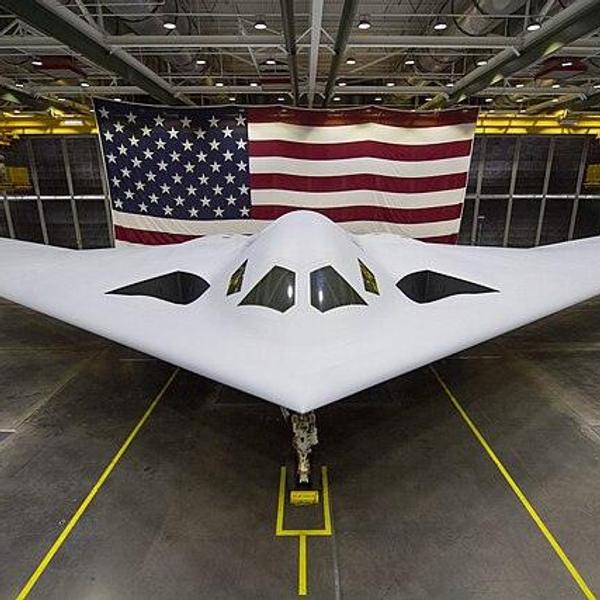
Citing low munitions stockpiles, the Pentagon is urging weapons contractors to accelerate missile production, doubling or even quadrupling production rates, to prepare for possible war with China.
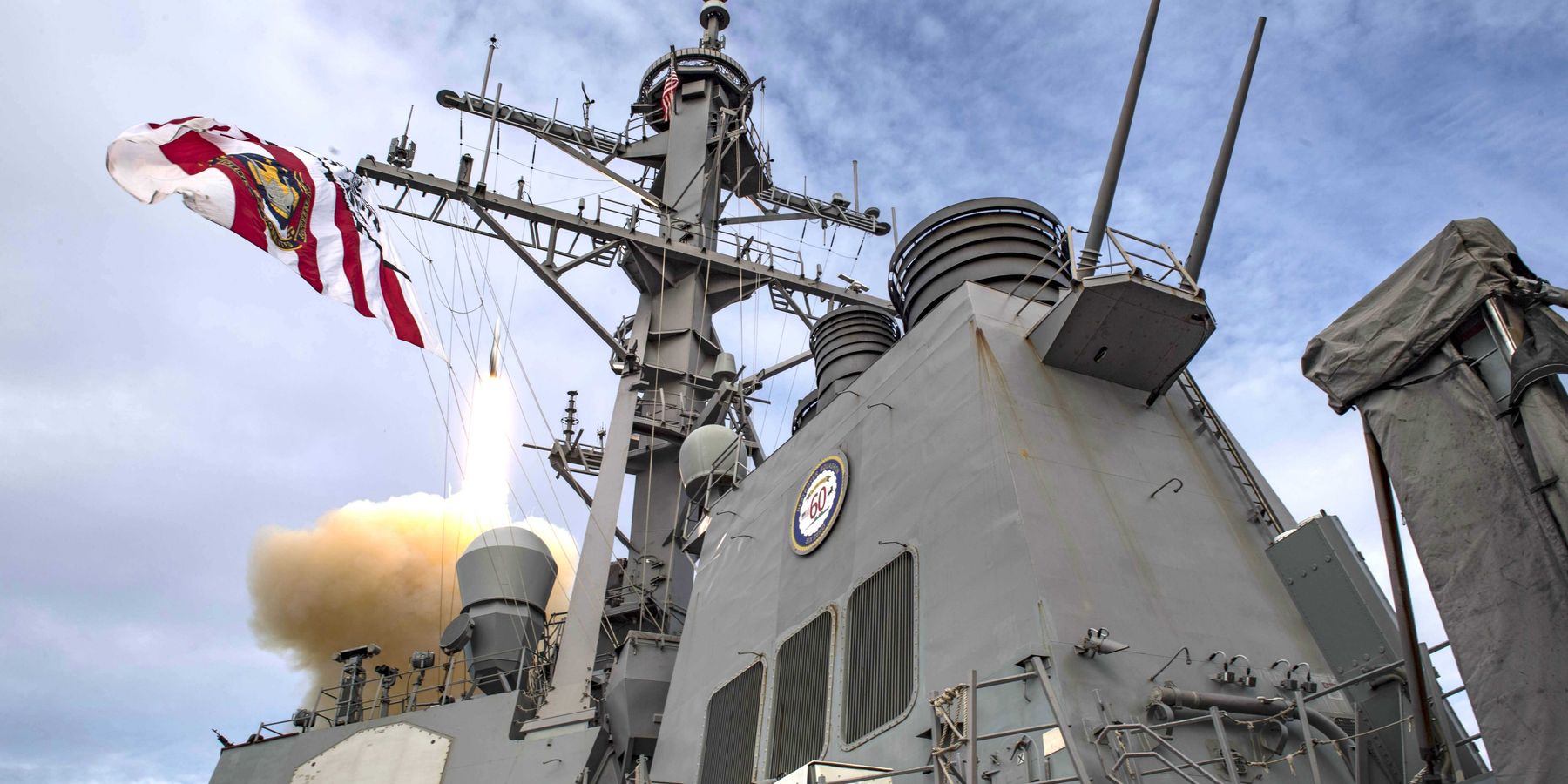
Namely, it hopes to boost production rates for 12 types of missiles it wants on-hand, including Patriot interceptor missiles, Standard Missile-6, THAAD interceptors, and joint air-surface standoff missiles.
Replenishing now-depleted missile stockpiles is important for U.S. military preparedness. But experts tell RS that this ambitious missile production ramp-up is a time-intensive, costly, and logistically challenging endeavor that may ultimately fail without substantive financial commitment from the DoD.
Moreover, Washington needs to assess its current foreign commitments, primarily in Ukraine and Israel, before it depletes its current stores further, requiring more money, more industry, and more time to get back up to fighting shape. In other words, say experts, put the much needed focus back on the U.S. national interest even if that means turning off the spigot for other countries.
Ramping up missile production: what does it take?
Experts told RS that ramping up missile production, in the way the Pentagon wants, could take years, and likely new weapons manufacturing facilities and infrastructure.
Ret. Col. Mark Cancian, a senior adviser with the Center for Strategic and International Studies, told RS that, if the necessary funding was available, the U.S. defense industrial base could double the production of many missiles over about two years, merely by having existing weapons factories double-up on production shifts and workers.
However, production times would vary by missile type, and higher production rates would likely require new facilities that would take time to build, Cancian noted.
Defense writer Mike Fredenburg was a bit more pessimistic. “Even with a new contract firmly in place, I could easily see it taking four years or more to double production.”
"My gut is — to try to quadruple production? [It is] not going to happen — at least not quickly,” he said.
"We do need to replenish our missiles. We burnt through them,” he explained.
Indeed, Fredenburg estimated in August that Israel’s wars on Gaza and Iran, together with the U.S. campaign on Yemen’s Houthis earlier this year, consumed 33% of the U.S. stock of Standard Missile-3 (SM-3), and 17% of the Standard Missile-6 (SM-6), since 2023. The U.S. used a quarter of its THAAD missile interceptors during the Israel-Iran war alone. And the Guardian reported in July that the U.S. only had 25% of the Patriot missile interceptors it would need for the Pentagon’s military plans — having sent many to Ukraine, which still often lacks them.
But, the current defense industrial infrastructure is not well suited to take on the rapid missile production rates the Pentagon wants to pursue.
"We have a peacetime defense industrial base, and we've had that for decades…we're not really set up to quickly produce things,” Fredenburg said. “We don’t know how much more capacity they can squeeze out of existing facilities.”
Cost is another roadblock. The “Big Beautiful Bill” passed earlier this year allocated $25 billion over the next five years toward munitions funding; the Pentagon’s new missile production targets may well cost tens of billions more.
"This is a lot of money…many tens of billions of dollars, ultimately, to get to these kinds of [missile production] numbers” the Pentagon wants, Fredenburg told RS.
To his point, the price of individual missiles can be staggering. For example, in September, the Army awarded Lockheed Martin nearly $10 billion to make nearly 2,000 PAC-3 Patriot Advanced Capability-3 missile interceptors — putting the cost of just one missile interceptor at several million dollars. The SM-6 (Standard Missile-6), which the Pentagon also wants to ramp up, costs about $4.3 million each.
And it's not just about putting the missiles together but testing them and that can take months and cost hundreds of millions.
As a point, experts say less complicated munitions production like 155 millimeter shells, have already fallen behind.
“They've been trying to build-up 155 millimeter shell production, which is…relatively simple compared to missiles. And they've been having trouble doing that,” Fredenburg said. “What makes us think that they're going to be able to ramp this production up massively for much more sophisticated, more complex, more expensive weapon systems?”
Experts say that the Pentagon’s intentions to double or quadruple missile production will likely remain aspirational — unless they are matched with substantive contracts to actually support the process.
“All we're saying so far is that we want to urge the defense industrial base to make these new capabilities, build new factories, get new weapons, equipment,” Lt. Colonel Daniel Davis said on his Deep Dive podcast. “You need a lot more than just ‘we should,’ or, we ‘urge you to,’ if you really want anything to happen.”
Jennifer Kavanagh, senior fellow and director of military analysis at Defense Priorities, told RS that while increasing missile production was important for U.S. military readiness, what the Pentagon is asking for is a “reach.”
“It is not clear that contractors can meet [the Pentagon’s] targets, especially without additional federal funding to expand production and some way to find and train more workers,” she explained.
How did we get here?
The U.S. stockpile is low because the Pentagon has burnt through many of its munitions in ongoing conflicts in Ukraine and Israel — at a rate faster than it can replace them.
“We've been involved with the Ukraine war since 2022. And we've known what kind of, and how many [American munitions] are being used over there," said Fredenburg.
Not everyone agrees that Washington was carefully balancing its missions, one of them being to maintain national readiness. Some worry that the lessons haven’t been fully learned.
“In recent years, the United States has wasted a ton of missiles and air defense interceptors on conflicts that are not in its vital interests. This includes those in the Middle East and in Ukraine,” Kavanagh told RS. “Speeding up munition production so that the United States can send those munitions abroad or expend them in conflicts that do not have implications for vital U.S. interests is a waste of resources.”
“As the U.S. supply of advanced munitions becomes larger, it will always be tempting for American leaders to squander some portion in wars of choice,” Kavanagh concluded. “This is a risk of the new effort to build missile stockpiles.”
- US missile depletion from Houthi, Israel conflicts may shock you ›
- By the numbers: US missile capacity depleting fast ›
- Trump Gaza Deal will work: If he keeps pressure on Israel | Responsible Statecraft ›
- Inflating Russian missile costs hides US weapons crisis | Responsible Statecraft ›