

As Congress debates the 2027 defense budget, members must confront an essential reality: their children and grandchildren will be left footing the bill.
Many of the dollars that will be appropriated for military purposes in 2027 will be borrowed and tacked onto the ballooning national debt. But that is only part of the problem. Defense policies established today become spending obligations for future generations.
If members of Congress are seriously considering $1.5 trillion in defense spending for 2027, it is in part because they must cover the expenses resulting from policy decisions made years ago by people who have long-since passed from the scene.
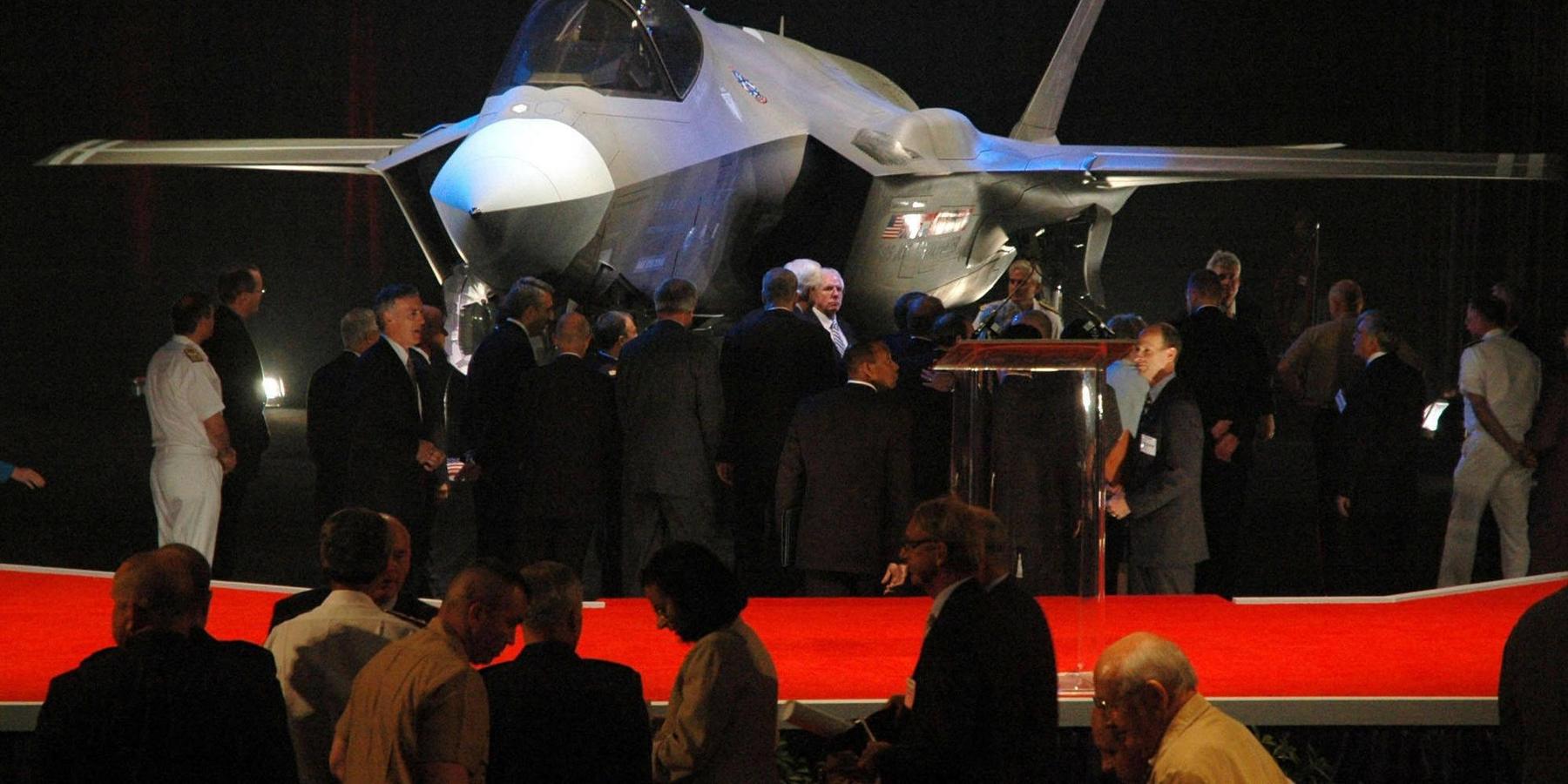
To take just one example, Pentagon officials awarded the Joint Strike Fighter contract to Lockheed Martin nearly a quarter century ago. Much has been made about how expensive the program is and how its costs have more than doubled since 2001. But the real costs of the F-35 program are yet to come.
Defense acquisition programs generally follow what is known as the “Rule of Thumb,” where one-third of a program’s total cost is the headline-grabbing development, testing, and acquisition expenses, while the other two-thirds are the far-less-interesting operations and support costs. In the case of the F-35 program, the front-end development and acquisition costs are approximately $442 billion. But the back-end operations and support costs over the lifetime of the program are estimated to be $1.58 trillion.
Congress is now contending with the crashing “bow wave” of defense spending that started growing around the turn of the century. At the same time, they are also creating an entirely new bow wave of future spending as they continue to pour money into programs like nuclear triad modernization, the Golden Dome missile defense system, a new class of battleships, and the F-47 fighter jet program. All of these new programs are in the relatively inexpensive development and acquisition phase. When they become operational in the next 20-30 years, the American people will contend with their true costs.
The only way to control those future costs is for policymakers today to make important tradeoffs. All of the current proposed programs need to be evaluated for practicality and genuine security needs.
As good a place to start as any are the proposed aircraft programs currently in development. The B-21 and F-47 programs should face a fundamental reappraisal based on a cost evaluation that can be called the “platform/munition equation.” This simple assessment considers the cost of the delivery platform and the munition it launches towards a target. In the case of the B-21, the current estimated cost per jet is approximately $700 million. Joint Direct Attack Munitions, guided gravity bombs, cost between $25,000 and $84,000 each depending on the size of the bomb and how many the government buys at a time. In this case, the $700 million platform flown by two human beings flies through heavily defended airspace directly over the target to drop an $84,000 bomb.
Contrast that with a B-52 with an inflation-adjusted cost of approximately $139 million per jet. A B-52 crew can remain outside of the enemy’s air defense zone and launch a $1 million AGM-158 Joint Air-to-Surface Standoff Missile. The JASSM, or “Jazz-em,” has a range of at least 230 miles and was designed specifically to prevent manned aircraft from flying directly into heavily defended airspace. In the vast majority of cases, it is far preferable to use the less expensive launch platform in a manner that keeps the human beings safer, even if that means launching a more expensive munition.
Beyond manned aircraft and long-range bombs and missiles, there are plenty of other ways to deliver munitions to distant targets in the 21st century. Military planners can decide between long-range rocket artillery like HIMARS, cruise missiles, ballistic missiles, and drones. At some point in the near future, the military will also have an array of hypersonic missiles.
Considering all the options available, the notion of sending manned aircraft like the B-21 or F-47 to accomplish the same mission that can be done by a cruise missile or a drone makes little sense.
Policymakers should think very carefully about the future of military aviation when deliberating over the kind of obligations they contract for subsequent generations. The three individuals who saddled today’s Americans with the F-35 boondoggle were all from the Silent Generation. It would be a great shame if the Baby Boomers, Gen X, and Millennials in Congress now did the same to Generations Z and Alpha, as well as the generations that follow.
Manned bombers are obsolete and have been for years. Strike aircraft face a similarly uncertain future. Just because the United States has maintained large fleets of such aircraft in the past doesn’t mean we need to continue doing so. The Army eventually abandoned horse cavalry. The Navy swapped aircraft carriers for battleships. It is long past time that policymakers undertake a similar process with aviation to ensure they make the platform/munition math work out right.