

Europe’s security fears are real and legitimate. But deploying nuclear-capable aircraft to Russia's doorstep is not the answer, and Washington's contradictions are making things worse.
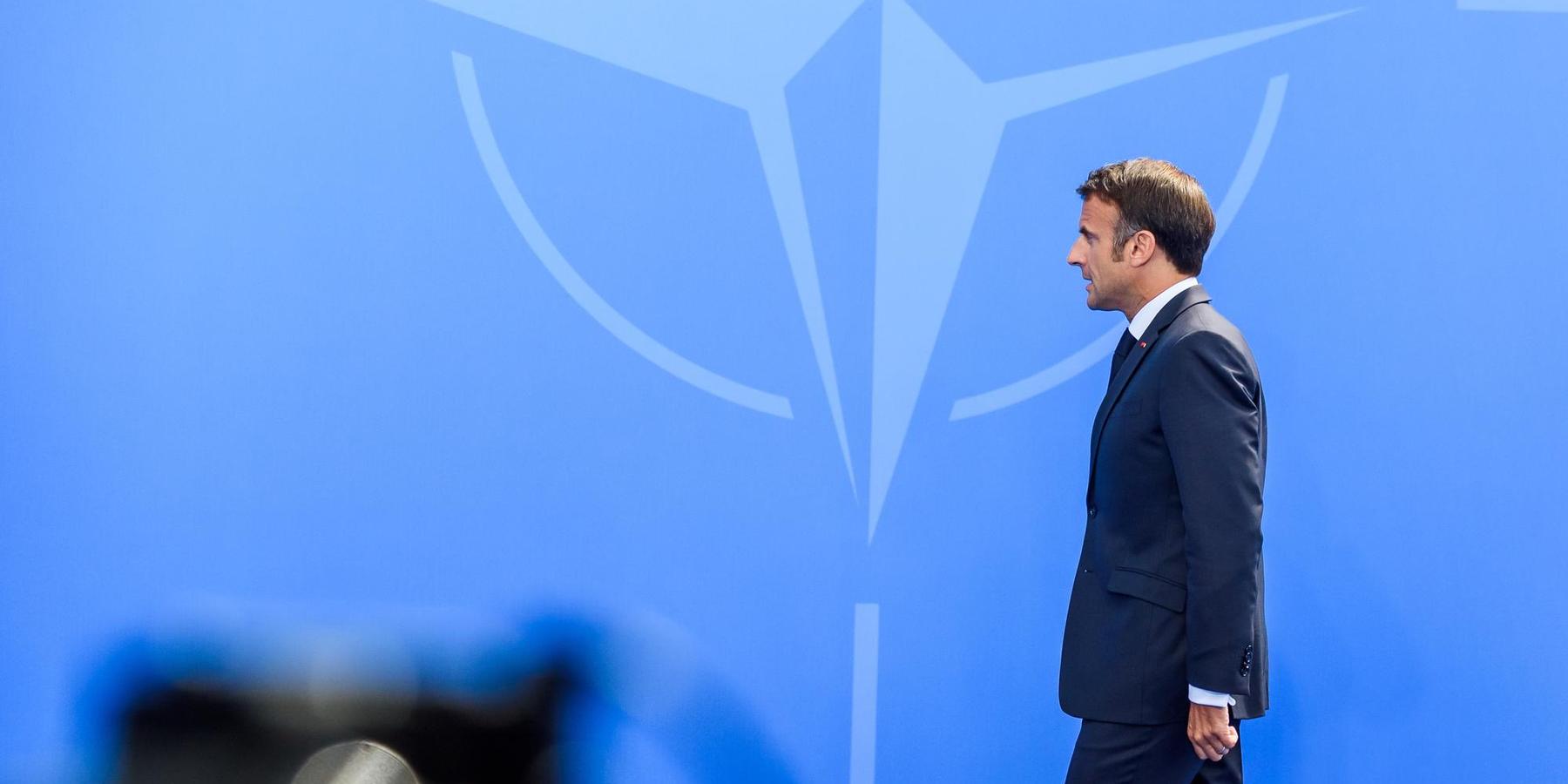
On March 2, French President Emmanuel Macron announced major changes to France’s nuclear deterrence doctrine: an increase for the first time since 1992 in France's nuclear stockpile. France will also stop publishing the size of its nuclear stockpile altogether. This opacity makes verification and arms control dialogue functionally impossible.
Macron announced that France would adopt a policy of “forward deterrence,” which could include “the temporary deployment of elements of our strategic air forces to allied countries” and the involvement of allies in support of French nuclear forces. Nine European countries have already signed on.
On May 27, Norway officially joined the initiative through the Narvik Arrangement. Finland is now evaluating its participation in the initiative, as well as moving to lift its long-held ban on hosting nuclear weapons.
At first glance, this is Europe finally taking its own defense seriously in the face of an unpredictable Trump administration. However, for those who believe that durable security is built through diplomacy, arms control, and risk reduction, this is something else entirely. France extending its nuclear weapons to Northern Europe is a cascading nuclear escalation. It could make things a whole lot less stable and wreck the chances for arms control down the line.
At the same time, Washington itself appears to be joining the nuclear rush. The U.S. is reportedly in talks to expand nuclear weapons deployments to additional European NATO states, beyond the six countries currently hosting nuclear-capable aircraft, to countries on NATO’s eastern flank, including Poland and some Baltic states.
Those “highly confidential” discussions, as the Financial Times described them, come even as the Trump administration has withdrawn troops and cancelled planned weapons deployments in Europe. From Moscow, the message is clear: wherever you look from the Kremlin, nuclear-capable aircraft are getting closer.
French defense analysts have pointed out that a base like Norway’s Bardufoss would permit French Rafale B jets to quickly reach Murmansk, Russia’s Northern Fleet, and their early-warning radars — in as little as 15 minutes. Some Russian targets would be reachable from within Norwegian airspace itself, without a need for refueling.
If Finland joins, suddenly all of Scandinavia turns into a new front of French nuclear operations. Russia will need to rethink its air and missile defenses across its entire northern flank.
This shift becomes even starker if you remember Finland’s past neutrality. Helsinki joined NATO only in 2023, prompted by the 2022 Ukraine War. A base for French nuclear-armed aircraft in Finland, which shares an 833-mile border with Russia, completely changes the nuclear equation in the north.
Unsurprisingly, Russia is not taking these developments lightly. Moscow already slammed France’s nuclear buildup as “highly destabilizing” and demanded that French and British nuclear weapons be included in any future arms control talks. The Russian Embassy in Norway called Oslo’s new nuclear cooperation an immediate threat and promised a response.
Finland’s moves to lift its legal ban on hosting nuclear weapons would likewise increase tensions in Europe. Following Helsinki's announcement of plans to revise its law, Moscow warned that such a move would make Finland more vulnerable and that deploying nuclear weapons there would also trigger a response.
The Nordic embrace of French nuclear weapons is contributing to a wider normalization that could spread even farther. While France’s current partnership is primarily focused on Northern and Central Europe, this could encourage Eastern European governments, such as the Baltic states, to ask to be included.
Lithuania is already moving to lift a constitutional ban on nuclear weapons and foreign military bases. What happens in northern Europe, therefore, could presage the entire continent’s potential nuclear future.
These moves do not make Europe safer. Shrinking warning times and raising the stakes just makes any possible crisis that much more difficult to control.
Even France’s own commitment to the project may prove to be short-lived and, therefore, needlessly hostile. Macron has less than one year left as president, and his potential successors are unlikely to follow through with Macron’s project.
Marine Le Pen, who is likely to win the first round of the upcoming presidential election, has warned that “sharing [French] deterrence means abolishing it.” Similarly, her protégé and potential prime minister Jordan Bardella, has criticized the potential Europeanization of the French nuclear arsenal. Meanwhile, Le Pen’s potential opponent in the second round of the election, Jean-Luc Mélenchon, is a longtime critic of rearmament. He has pledged to withdraw France from NATO and completely review Macron’s security cooperation with Germany if elected, while affirming that a shared command over French nuclear weapons “would be absolutely unacceptable.”
Though currently welcomed by Northern and Central European governments, the French initiative lays the foundation for future tensions and instability.
Macron has made it clear that France would retain sole decision-making power over launch. According to the French Ministry of Defense, “the President of the Republic alone takes the decision, without sharing his authority or being subject to any form of control” and that “the survival of a nation cannot be delegated. It is subject to no committee, no ally and no veto.”
However, if European partners are expected by Paris to shoulder more of the financial costs of this new nuclear posture, they are likely to insist that they be part of the decision-making process to actually deploy, let alone use, a nuclear weapon. Yet such an offer to share control could lead to a breakdown of credibility and dangerous uncertainty that may result in unintentional escalation.
Washington isn’t helping end the confusion. Pentagon officials like Undersecretary for Policy Elbridge Colby praise the roles of the U.K. and France in nuclear deterrence, but the U.S. draws the line at expanding the number of nuclear club members. At the same time, U.S. officials want Europe to handle most of its own conventional defense, with the U.S. moving toward “partnerships, not dependencies.” Washington says it will uphold its nuclear guarantee to Europe, but in a “more limited and focused fashion.”
The 2026 National Defense Strategy hints at this point, telling Europe to take “primary responsibility” for conventional defense, while leaving the nuclear umbrella situation murky. The ambiguity itself breeds more uncertainty and hence anxiety.
Now, the Trump administration appears to be floating new plans for more U.S. nuclear deployments, just as it’s withdrawing troops elsewhere. It sends a mixed message: the U.S. is stepping back everywhere except where it believes the risk is consequential.
Lost in this nuclear shuffle is any real debate about arms control. We’re at more risk of nuclear conflict now than at any time since the Cold War ended. The anxiety driving European capitals toward French nuclear cover is understandable. But in their rush to get under the French nuclear umbrella, they’re losing sight of the line between restoring confidence and provoking escalation.
Norway and Finland used to have practical relationships with Russia. Those histories prove that responsible northern diplomacy is possible. The answer to not knowing if America will show up to help isn’t parking nuclear bombers on Russia’s doorstep. That road ends in disaster.
The only real way out of this is diplomacy: reopening arms control dialogue with Russia, agreeing on confidence-building measures, and opening military-to-military lines of communication — before it’s too late.
- Finland moves to allow hosting of nuclear weapons in dangerous shift ›
- France and Germany launch Europe's nuclear Plan B ›
- Norway's seizure of a Russian vessel is a dangerous escalation | Responsible Statecraft ›