

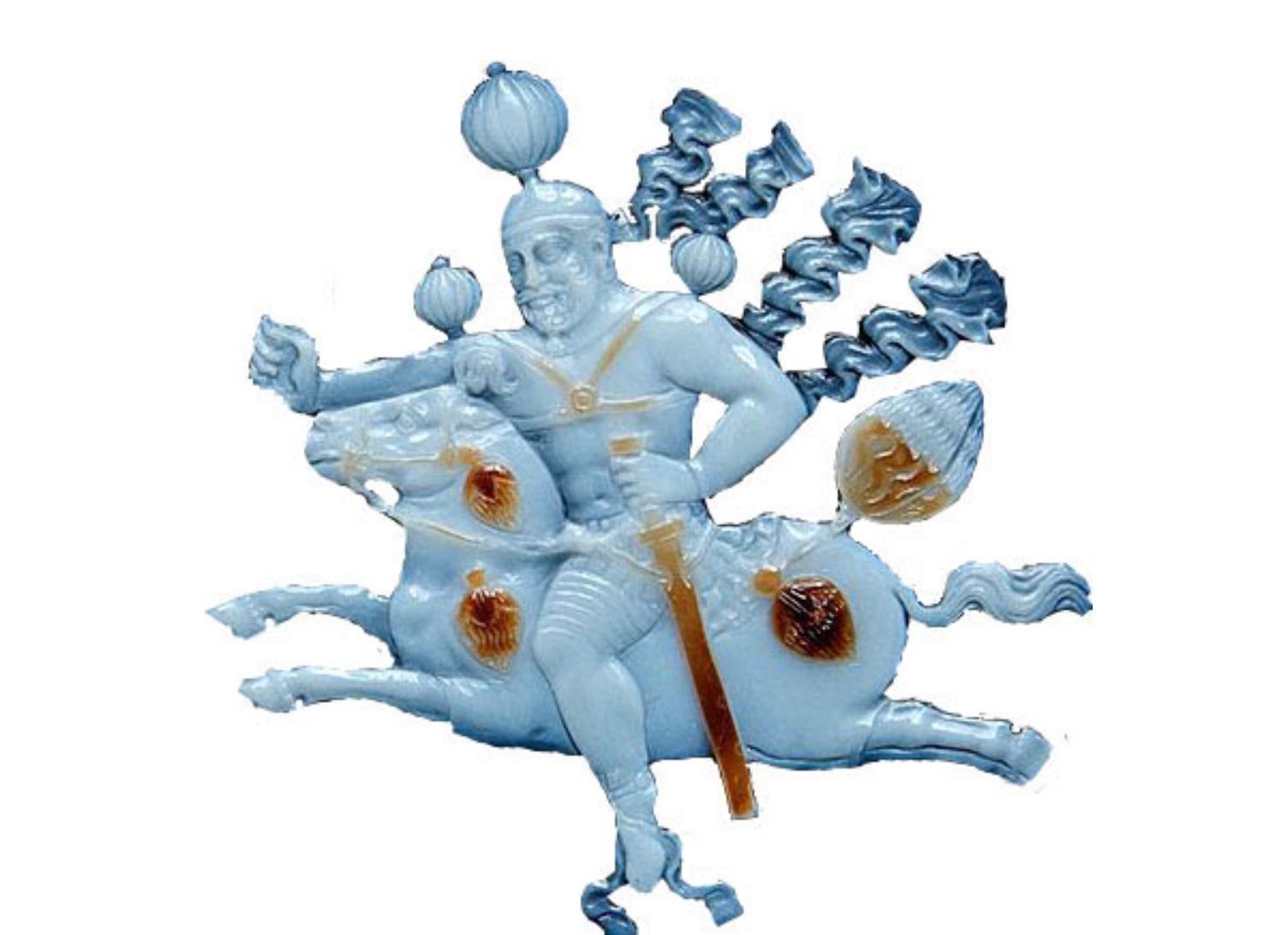
Donald Trump is far from the first foreign ruler to come to grief after launching an ill-advised military operation against Iran.
At least four Roman triumvirs and emperors, driven by hubris and ignorance, launched military attacks on Persia that ended in disaster. In each failure there are lessons for our own time.
Crassus: A prop in a Greek tragedy
In 53 BCE, Roman Triumvir and real estate magnate Marcus Licinius Crassus launched a campaign against the Parthians in search of military glory to match that of his fellow triumvirs, Caesar and Pompey. According to Plutarch’s account, Crassus ignored the counsel of his Armenian ally King Artavasdes, who advised him to send his forces from Syria into Parthia via a northern route through Armenia, where mountainous terrain would favor Roman infantry.
Crassus, whose only military experience was suppressing a slave revolt, convinced himself he was a military genius on a level with his fellow triumvirs. He ignored Artavasdes’ advice and led his legions directly east across the North Syrian plains. At the famous battle of Carrhae (modern Harran in southern Turkey), the Parthians caught Crassus’ army in the open, and their mounted archers, equipped with stirrups and with an effective supply chain of arrows, destroyed seven Roman legions.
In Plutarch’s account, the Parthians killed Crassus, and a messenger took his head to the Persian king, who was visiting the Armenian capital to celebrate a marriage alliance between his son and King Artavasdes’ sister. There it became a prop in a performance of Euripides’ drama The Bacchae.
Marc Antony: Beaten by General Winter
Seventeen years later, in 36 BCE, another triumvir, Marc Antony, sought both military glory and revenge for Carrhae when he led an expedition against Parthia.
King Artavasdes of Armenia, having once more switched sides, supported Antony’s advance through his territory into the Persian province of Media Atropatene (today’s Iranian Azerbaijan). But Antony’s army lost its baggage train to Parthian attacks, leaving it with limited supplies. After an indecisive attack on the provincial center of Praaspa (today’s Maragheh, in northwestern Iran) the Romans were forced to make a disastrous winter retreat through the mountains of Azerbaijan and Armenia.
In the end, Marc Antony had not only failed to take revenge for Carrhae, but his folly had also cost about 30,000 Roman lives.
A Captured Valerian: And an unexpected national hero
Nearly 300 years later, in the early third century, the powerful Sassanian dynasty replaced the Parthians in Persia. Rome faced this strong rival at a time of internal chaos and civil wars – the so-called “crisis of the third century.”
As Rome endured frequent military rebellions and changes of emperor, the powerful kings Ardashir I (r. 224-242) and Shahpur I (r. 240-270) led the Persians. Syria, Armenia, and border towns such as Amida (today’s Diyarbakir in southeastern Turkey) became battlegrounds.
By the middle of the century, a rising Persia and a weakened Rome were fighting for control of Armenia, long ruled by the Parthians, bitter enemies of the Sassanians. Shahpur I first defeated Emperor Gordian in 244 and forced his successor, Philip the Arab (r. 244-249), to pay tribute and cede Armenia and Mesopotamia. Most memorably, in 260, Shahpur defeated a Roman army at Edessa (today’s Urfa) and captured Emperor Valerian.
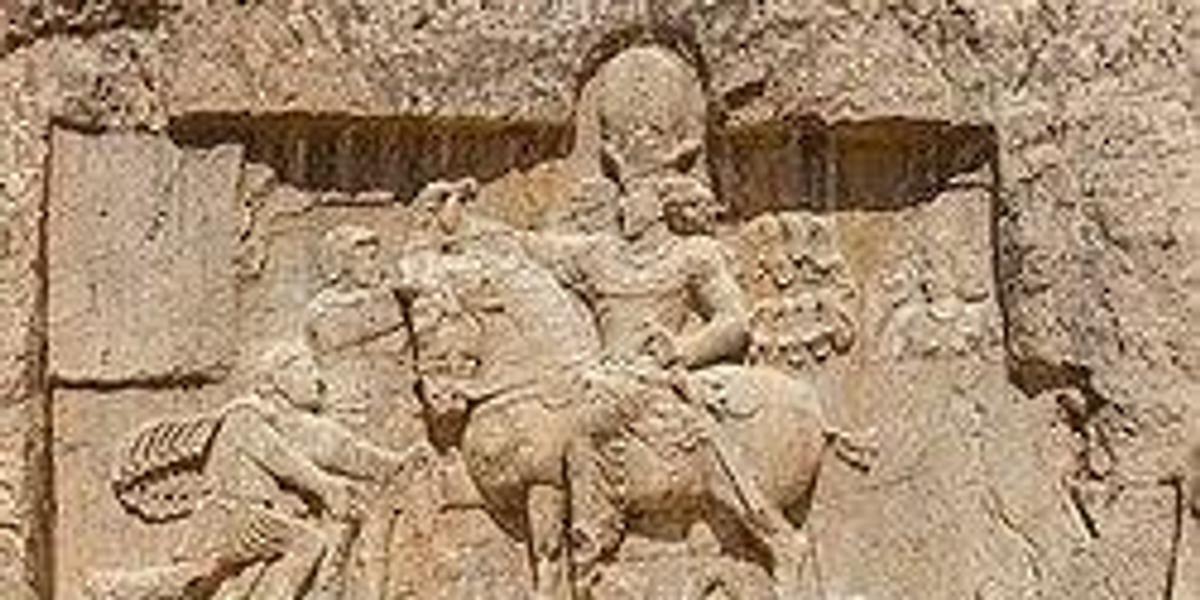
The capture of a Roman emperor was a momentous event in the ancient world, and Shahpur wanted it properly commemorated. Numerous rock carvings on the Iranian plateau (see above from Naqsh-e-Rostam) depict a mounted Shahpur triumphant over two defeated Romans: Valerian and Philip the Arab.
During the recent fighting in Iran, the Islamic Republic revived this image to celebrate its “victories” over the U.S. and Israel. The irony was plain: a theocratic state built on Islam and opposition to both monarchy and nationalism had to go deep into its pre-Islamic past to find a hero of Iranian resistance — an absolute monarch whose dynasty later became known for resisting Islam’s expansion into Iranian territory.
Julian: The myth of regime change
In the fourth century, the Romans repeated earlier mistakes by pursuing regime change in Persia. They backed an exiled Sassanian pretender, Prince Hormozd (known in Western sources as Hormisdas), a relative of King Shahpur II (r. 309–379).
Hormozd had spent decades in Constantinople, where he made influential friends and became fluent in Greek. He persuaded his Roman supporters and Emperor Julian (r. 360–363) that, if he returned to Persia with Roman military backing, resistance would collapse, Persian nobles would turn against Shahpur and welcome him as king. Despite unfavorable omens from sacrifices at Antioch, Julian launched his invasion in 363.
According to the account of the Roman soldier and historian Ammianus Marcellinus, who accompanied Julian on his eastern operation, the campaign ended in disaster. The Persian cities remained loyal to Shahpur and closed their gates to Hormisdas.
Rather than get bogged down in sieges, Julan continued to the Sassanian capital of Ctesiphon near present-day Baghdad. After inconclusive battles there, he retreated northward and was mortally wounded in a battle near Samarra. His successor, Jovian, continued the retreat north.
But, blocked from crossing the Tigris into Roman territory, Jovian made a humiliating peace (a Memorandum of Understanding?) with the Persians. In return for an unhindered retreat, Jovian gave up Rome’s interest in Armenia, withdrew from five provinces, and gave up important border fortresses, including the strategic town of Nisibis (today’s Nusaybin in southeastern Turkey).
Lessons to be learned
At least four Roman emperors met disaster in Persia and their fates should offer lessons for our times. Crassus met his doom because he ignored his ally, obsessed over the triumphs of his rivals, and imagined that his becoming rich by real estate speculation made him a military genius. Marc Antony ignored geography and underestimated his enemy. Valerian both underestimated the enemy and overestimated Roman military strength. Julian was misled when a Persian exile prince, who had lived abroad for decades and spoke fluent Greek, claimed that Persia would welcome him as a liberator.
It may be too much to expect, but today can an Israeli leader who considers himself an expert on history and an American leader who considers himself a military genius apply those talents to avoid the mistakes of their Roman predecessors? So far they have gone down the same paths with the same disastrous results.