

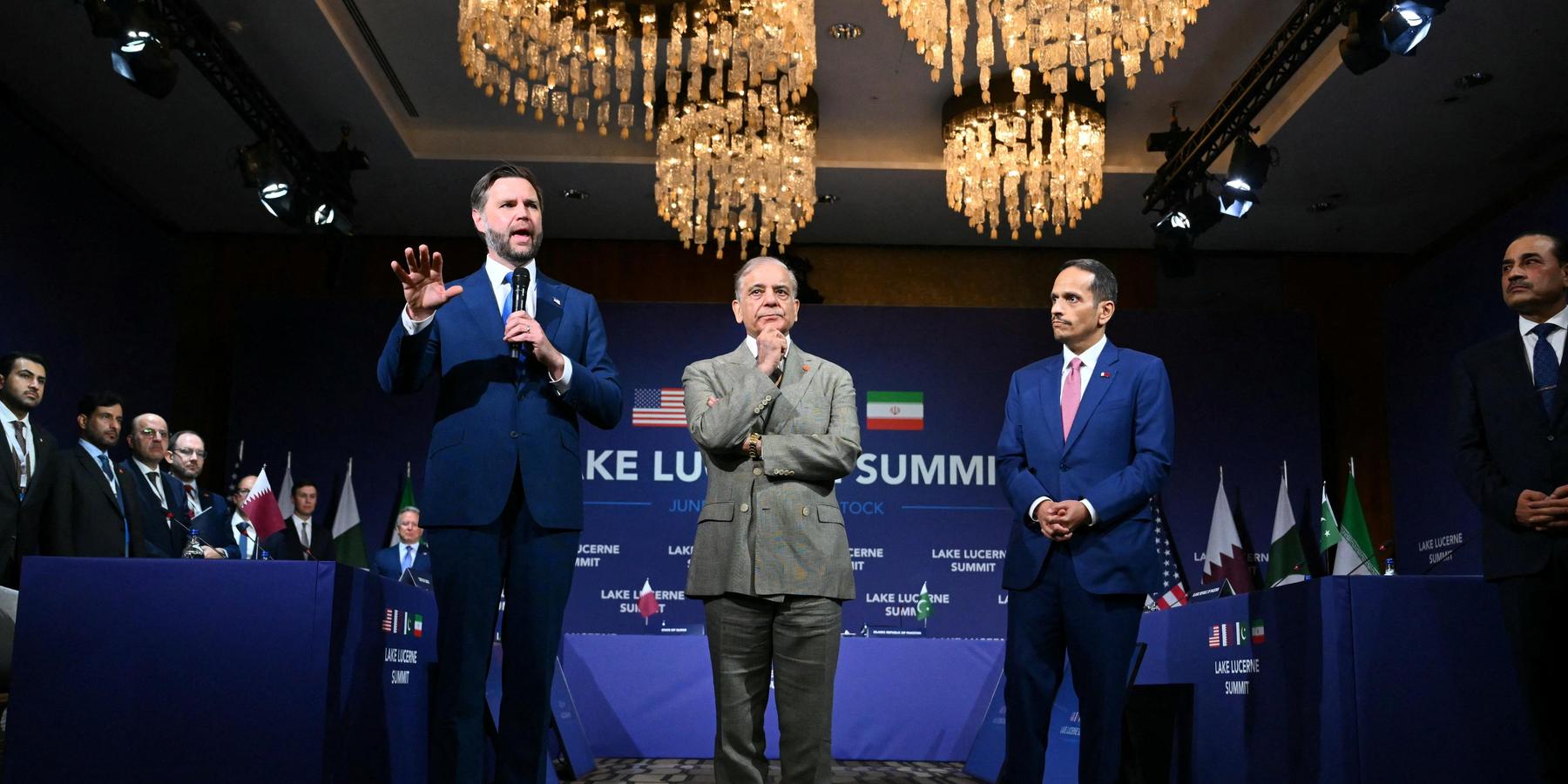
On June 18, Iran and the U.S. signed an agreement, titled the “Islamabad Memorandum,” which committed both countries to an immediate and permanent end to hostilities, the reopening of the Strait of Hormuz, and 60 days of negotiations to reach a final agreement.
Within 48 hours, Iran had closed the strait again. The reason was neither the failure of nuclear negotiations (which hadn’t yet commenced) nor a dispute over sanctions relief. It was Lebanon, a country that appears in the deal’s opening clause three times. The Lebanese government was not a party to the negotiations, nor was it consulted.
What the Lebanon standoff reveals is that the Islamabad Memorandum was designed to solve American problems without resolving the structural deadlocks that keep Lebanon at war.
If fully implemented, the Islamabad Memorandum would be the most consequential diplomatic instrument produced in the Middle East in years. But its Lebanon provisions are irreconcilable on their face because the parties whose behavior in Lebanon actually matters (Israel, Iran, Hezbollah and Lebanon’s executive) hold interests that cannot be simultaneously reconciled. What has kept the deal alive in its chaotic first week has been the sheer energy of its mediators.
Iran’s foreign minister, Abbas Araghchi, praised Qatar and Pakistan for their “tireless” mediation. The meetings reportedly spanned 18 hours of talks at a lakeside resort in Bürgenstock, Switzerland.
Despite a major hiccup, during which Iran’s negotiating team reportedly left the building after a threat by President Donald Trump to “hit Iran very hard again,” talks did not collapse. By Monday, Pakistan and Qatar announced a “de-confliction cell” for Lebanon, to ensure events in Lebanon don’t collapse talks between the U.S. and Iran.
Iran’s top diplomat called the Lebanon cell the deal’s “first real test,” which is an apt description of the challenge that lies therein. The mediators have not resolved Lebanon’s contradiction, though they have, for now, built a structure to manage it and hopefully prevent it from threatening to unravel the entire agreement.
Article One of the Islamabad Memorandum requires “ensuring the territorial integrity and sovereignty of Lebanon.” This means that Israeli forces must leave Lebanese soil. Yet Israel, which currently occupies 234 square miles of the country's south, shows no intention of doing so. Israel's prime minister, Benjamin Netanyahu, said Israeli forces will stay “as long as we need to protect our people.” Iran insists a continued Israeli presence violates the agreement.
Over the last few days, the gap widened further: Israeli National Security Minister Itamar Ben-Gvir urged Netanyahu to tell Trump “we cannot fulfill this agreement,” declaring that Lebanon should be “Israel’s playground.” Washington’s ambassador to Israel, Mike Huckabee, floated the idea of deporting all of Hezbollah’s members to “the ‘mothership’ in Iran,” while the Lebanese government position is that Israel’s withdrawal would enable the Lebanese state to “extend its authority...and eliminate any justification for the persistence of weapons.”
All parties with a stake in Lebanon hold irreconcilable positions, and Israel, the party doing the occupying, is not even at the table with the U.S. and Iran.
President Trump has claimed this doesn’t matter, arguing that “they have a lot of respect for me, and they do as I say.” But the Israeli response, articulated by its finance minister, Bezalel Smotrich, has been to promise a presence in Lebanon for years, regardless of American demands.
Underneath the recent geopolitical wrangling, the internal deadlock in Lebanon is also unchanged. Hezbollah will not discuss disarmament while Lebanese territory is occupied; the group’s leader, Naim Qassem, rejected Israel’s occupation outright and called the Islamabad Memorandum a “great victory” for Iran. The Lebanese executive, led by President Joseph Aoun and Prime Minister Nawaf Salam, has pledged to bring all weapons under state control without possessing the means or political consensus to do so.
Hezbollah remains a formidable parliamentary force, and Speaker of the Parliament Nabih Berri is a crucial ally who is structurally positioned to prevent any disarmament framework from advancing.
The possibility that Tehran will direct funds to Hezbollah once sanctions are relaxed is also real. Over the past year, Iran has reportedly engineered new channels to funnel money to Hezbollah. Washington says funds must not reach the designated terrorist organization, and, defending the agreement, Vice President JD Vance told reporters that “we actually know where the money’s going to move…and we’re going to be able to see if they try to fund terrorist organizations.” Just last week, the U.S. Treasury sanctioned Hezbollah official Mahmoud Qamati for coordinating cash smuggling from Iran to Hezbollah.
Despite these measures and crippling sanctions, Iran moved $1 billion to Hezbollah in the first ten months of 2025 alone, according to the U.S. Treasury Department, which used the claim to slap on more sanctions in November of last year. A deal that relaxes those sanctions is unlikely to defund Iran’s most potent regional assets. If the money flows, Hezbollah could recover, with its weapons intact, and its internal position strengthened by the very diplomacy meant to constrain it.
Against this, the West’s capacity-building offer to the Lebanese state remains thin relative to the timeline. Washington is mediating historic bilateral talks between Israel in Lebanon, with another round in Washington set for this week. On top of that, it is leading plans to boost support and training for the Lebanese Armed Forces (LAF). France has also announced that it plans to shore up additional support for the LAF by hosting a conference. All of these efforts aim to make the Lebanese army strong enough to disarm Hezbollah — a proposition that, if ever attempted by force, carries the risk of civil war.
These efforts are significant, but the LAF has received only $3 billion in U.S. support in over 20 years. The army has been deliberately kept below the threshold that would make it a genuine counterforce to Hezbollah, in large part due to U.S. law, which requires Washington to ensure arms sales to Middle Eastern countries don’t erode Israel’s "qualitative military edge.” The Lebanese army is the price of that doctrine, and that structural reality, built over decades, is now colliding with the 60-day clock set by the Islamabad Memorandum.
What is new, however, is the powerful diplomatic will now backing the deal. Qatar and Pakistan have demonstrated bandwidth and persistence, inserting structure, sequencing, and follow-through. A ceasefire in Lebanon between Hezbollah and Israel has held since Saturday. In the days prior, the White House has taken an unusually stern approach with Israel. Trump said he was “not happy with the way Israel has handled themselves with Lebanon.” Vance went further, warning that Trump is “the only head of state in the entire world sympathetic to Israel.” This public break with a historically untouchable ally helped keep the Iranians at the table in Switzerland, producing the next steps for Lebanon (and other files) proudly broadcast by Pakistan and Qatar on Monday.
Lebanese President Joseph Aoun spent the day working to consolidate that situation with Vance, White House Envoy Jared Kushner, and Qatari Prime Minister Sheikh Mohammed Al Thani. For the first time, there is a mechanism designed to absorb the shocks that Lebanon keeps generating.
The difference, and the danger, this time is that the framework for ending the war in Lebanon is wired directly into a nuclear negotiation and the global energy supply. Every Israeli strike on Lebanese soil now directly impacts the Strait of Hormuz.
The test now is whether two determined mediators can use this opportunity to resolve the irreconcilable interests of Hezbollah, Iran, Israel, and the Lebanese leadership.
- For peace with Iran to work a reckoning with Israel is in order ›
- Politically charged Dems call Trump deal 'surrender' and 'humiliation' ›
- Iran to Israel: You hit Lebanon, and we'll hit the UAE ›
- Critics of lifting Iran sanctions can't offer a viable alternative | Responsible Statecraft ›
- Iranians believe Israel will restart war before its October election ›
- Is Lebanon hurtling towards a Libya-style civil war? | Responsible Statecraft ›
- Trump's Lebanon fantasy is running smack into reality | Responsible Statecraft ›