

On Tuesday, Israel bombed a Syrian airbase that Turkish officials have been helping to renovate, marking the latest escalation in the Israeli government’s effort to beat back Turkey’s influence in Syria.
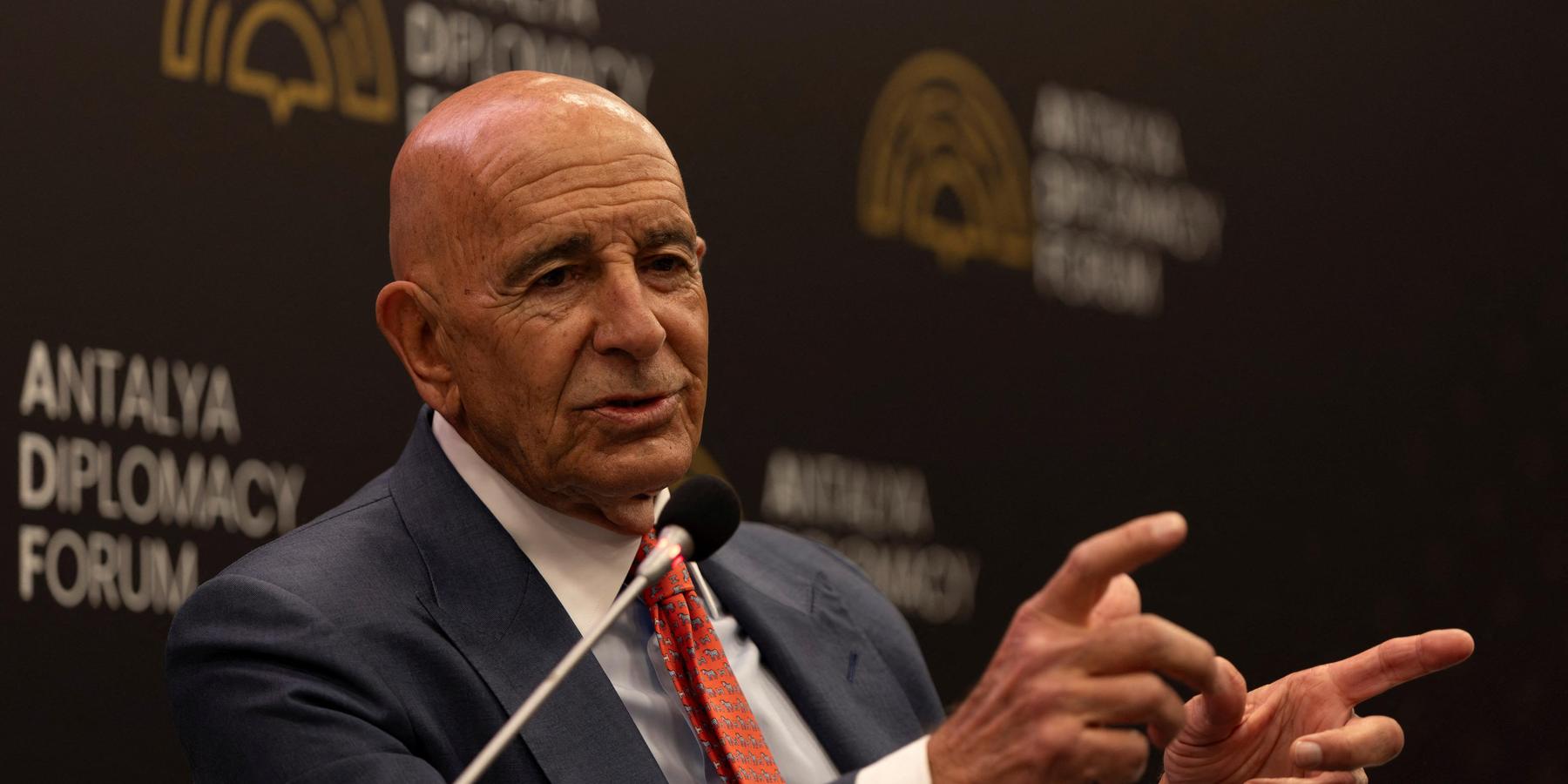
The strikes, which reportedly damaged an airstrip and a storage facility at the Abu al-Duhur Airbase, did not lead to any casualties. Still, they drew a strong rebuke from U.S. Ambassador to Turkey Tom Barrack, a long-time friend of President Donald Trump who is also serving as the president’s envoy to Syria.
The attacks “constitute an unnecessary escalation that does not advance regional stability,” Barrack posted on X, adding that the government in Syria has “repeatedly indicated a preference for de-escalation with Israel.”
The comments represent unusually sharp criticism of Israel from the Trump administration, which maintains a close relationship with the government of Prime Minister Benjamin Netanyahu. Barrack’s rebuke indicates growing U.S. frustrations over Israel’s habit of attacking potential threats pre-emptively rather than seeking diplomatic solutions.
Indeed, Syria has turned into a major sticking point in U.S.-Israeli relations since the fall of the Assad regime in December 2024. Trump has sought to improve relations with Syria since he began his second term last January. He has lifted most sanctions on the country and seemingly developed a positive rapport with President Ahmed al-Sharaa, a one-time al-Qaeda fighter who later rejected jihadism and led the campaign that toppled former President Bashar al-Assad.
Israel has been far more circumspect about the post-Assad government. Shortly after Sharaa took power, the Israeli military occupied a swathe of land in southern Syria and launched a campaign of airstrikes aimed at destroying the former government’s military equipment, lest it fall into the new government’s hands.
Turkey has played an important role in this dispute. Ankara has been a key backer of Sharaa since the late 2010s, when his militant group ruled over a small region surrounding Idlib in northwest Syria. Growing Turkish influence on the new Syrian government has infuriated Israeli leaders, who increasingly see Turkey as a “new Iran” bent on countering Israel’s interests across the Middle East.
Israel has so far been careful to avoid angering Trump through its anti-Turkey campaign. Prior to Tuesday’s strikes, the Israeli military had not hit Turkish interests directly, though it came close on several occasions, including when it launched a series of strikes in April 2025 on bases that Turkey had “scoped out” for potential troop deployments, according to Reuters.
As Israel-Turkey tensions have continued to rise, Netanyahu has begun pressing Trump to take a more emphatic stance, or at least to accept the necessity of an Israeli military presence in Syria. Just last month, Netanyahu took time during a meeting on Iran to show Trump a map of Syria that claimed Turkey was occupying 5% of Syrian territory, while the Israeli military was only occupying 0.1% of the country. (As the Times of Israel noted, Turkey is doing so with the permission of the Syrian government, while Israel is not.)
Netanyahu’s concerns appear to have fallen on deaf ears. According to a recent report from Israel’s Channel 13, Israeli officials asked Trump several weeks ago to approve an attack on a Turkish military site in Syria, and the president refused. It is unclear whether Tuesday’s strikes were related to these discussions.
Syria’s government condemned Tuesday’s attack as a “dangerous escalation that threatens security and stability in the region,” calling on the United Nations Security Council to “clearly condemn this aggression and take a firm position against Israel’s repeated violations of Syrian sovereignty.”
- Israel is going all out to stop Turkey from getting F-35s ›
- Shotgun wedding? Israel and Syria go to the altar ›
- Is Bibi cruising for a bruising by trolling Erdogan over Syria? | Responsible Statecraft ›