

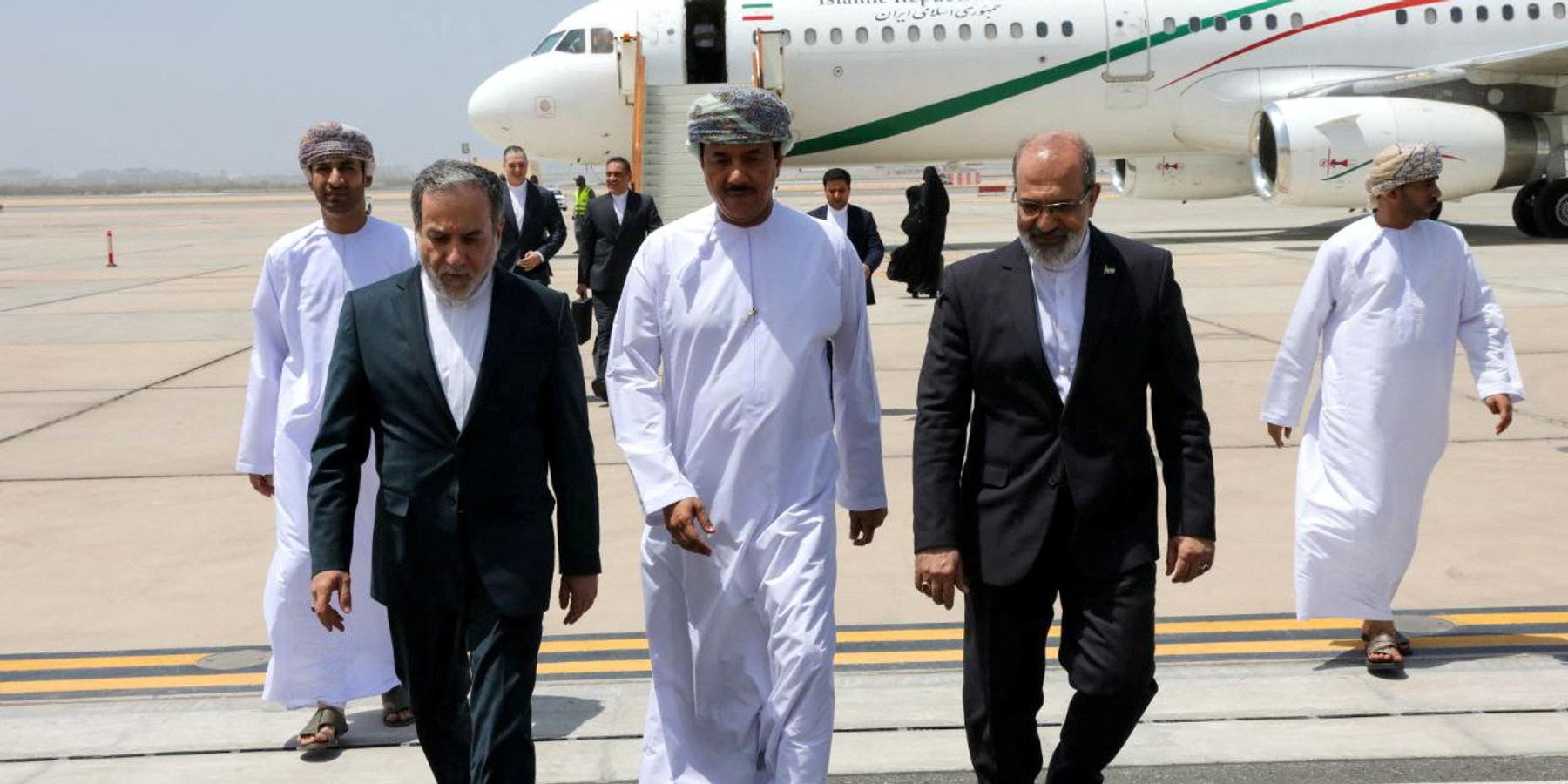
Up until last week, it would have been unthinkable that a partner and mediating stalwart like Oman would be a target in Washington. Yet, here we are.
President Donald Trump, in a characteristically offhand remark during a cabinet meeting, warned that Oman would “behave just like everybody else, or we’ll have to blow them up.” The comment was in response to reports that Oman was considering joining Iran in controlling and levying fees on shipping through the Strait of Hormuz. Treasury Secretary Scott Bessent followed up with a threat of “aggressive” sanctions.
Oman, it should be remembered, has hosted U.S. naval port calls for decades. It mediated nuclear talks between Iran and the U.S. for years and has maintained nearly two centuries of uninterrupted diplomatic ties with Washington. This history makes the recent turn of events especially surprising.
Iran, which effectively closed the Strait of Hormuz after the U.S.-Israeli strikes against it on February 28, now wants to reopen it while maintaining sovereign control. Tehran initially spoke of “tolls” for passage to offset damages from the conflict, but by May, after intense international backlash and questions surrounding legality of the move, it reframed the proposal as fees for navigation, security and environmental services.
Tehran has reportedly discussed a joint arrangement with Oman, whose territory (the exclave Musandam governorate north of the United Arab Emirates) borders the strait’s southern flank. Oman however, has not publicly agreed or officially signed onto the idea. According to Bessent, Oman’s ambassador in Washington assured him that there are “no plans for tolling.”
Indeed, the deeper source of American frustration stems from Muscat’s still-cozy ties with Iran against the background of a war that is not going in America’s favor. While other Arab Gulf states issue statements condemning Iran and sign U.N. resolutions against its actions, Oman has maintained silence.
When Iranian drones struck Omani ports, Muscat acknowledged the attacks but stopped short of naming Iran as the culprit. Oman’s head of state, Sultan Haitham bin Tarik, was the only Gulf head of state to congratulate Mojtaba Khamenei on his appointment as Iran's new supreme leader after his father was killed by Israeli airstrikes in the opening blow of the joint U.S. and Israeli campaign against the Islamic Republic.
And of course there’s the stunning essay in The Economist that Oman’s foreign minister, Badr al-Busaidi, penned a few weeks into the war. In it, he claimed that the U.S. “lost control of its foreign policy” and framed Iran’s retaliatory moves against Gulf neighbors as “the only rational option available.”
For an administration that sees the world through the lens of “with us or against us,” such language registers as betrayal.
But Oman’s approach has served it well in ways that became apparent during this war. Because of its openness to Iran and refusal to host permanent U.S. bases, it experienced a lower volume of attacks than its neighbors.
Before the war, it mediated five rounds of nuclear talks between Washington and Tehran, and just before talks collapsed and strikes began, al-Busaidi flew to Washington personally and went on American television to make one last plea for diplomacy.
The last ditch effort didn’t work, but this record of hosting, shuttling and being willing to tell both sides uncomfortable truths is what makes Oman irreplaceable, not just to the region's diplomatic architecture, but to any serious American effort to end the war.
Washington appears to have reached the opposite conclusion. Multiple U.S. officials told Middle East Eye that frustration with Muscat’s messaging has been growing for months. More recent reporting suggests that the U.S. is applying pressure on Oman to sever its ties with Iran altogether.
Apart from a carefully worded statement from May 29 — a readout of a phone call between Oman's foreign minister and his Iranian counterpart, which emphasized their “commitment to ensuring freedom of navigation in accordance with their sovereign responsibilities” — Muscat has been eerily quiet. Omani officials have not rushed to television studios or to social media platforms to clarify its relationship with Iran.
But this silence reflects pressure Oman faces due to its unique geographic position. The Strait of Hormuz is just 21 miles wide at its narrowest, where Iran’s coastline faces Oman’s Musandam peninsula. Given the proximity, Muscat and Tehran have always had to coordinate on the strait. They are doing so now, and whatever this war’s settlement says about fees or tolls, they will continue to do so in the future.
Iran has already signalled where it wants that coordination to lead. The New York Times reported on May 21 that Tehran had proposed a formal partnership, and that Oman — after initially rejecting the proposal — discussed sharing the revenue generated from fees charged. While Oman’s transportation minister publicly ruled out a pure toll in early April, citing international law, Muscat hasn’t publicly closed the door on a service-fee arrangement.
Moreover, the sourcing is worth noting. It was Iranian officials that gave these accounts. Tehran has every incentive to project an acquiescence it has not yet secured. Oman’s participation would not make a fee regime legal, but it would make it considerably harder to characterize as a simple seizure of an international waterway by one party acting alone.
Yet the fact that Oman has not denied these reports or clarified its position publicly does not necessarily mean that it is colluding with Iran to exploit the new conditions the war has created. Its ports are seeing increased traffic, owing to the fact that most of its coastline sits outside of the Strait of Hormuz. As a result of this and higher oil prices, which have bolstered its financial position, Oman’s economy is outperforming its neighbours. The International Monetary Fund predicts 3.5% growth in 2026. A naked pursuit of profit is therefore not only unnecessary, but would contradict the Sultanate's diplomatic heritage.
The silence then is better understood as a recognition of the new reality that Iran will press its newfound advantage over the world's most important chokepoint. With its economy devastated by war and sanctions, Iran cannot ignore the leverage it derives from controlling the world's most important energy chokepoint.
Iran knows it needs Oman’s cooperation to give any fee arrangement credibility. Oman knows it can de-escalate by making sure those fees never harden into an arrangement that is permanent or that looks like a toll. Caught between these two competing positions, silence begins to look like the most rational response.
Muscat is not alone in trying to find a win-win. Qatar’s Deputy Prime Minister, speaking from Singapore on Saturday, stated that Doha opposes permanent fees, since “charging fees will always impact the consumer,” but added that a temporary levy (for mine-clearing or other services rendered) was “negotiable.” This follows the logic of Iran’s current proposal: not fees for passage, which are prohibited by international law, but fees for services provided, which are permitted — provided the fees are genuine and not tolls in disguise.
The picture that emerges is of Oman and Qatar trying to find a formula that gives Iran enough to claim victory, gives the U.S. enough to avoid acknowledging that any of its red lines were crossed, and gives the global economy and shipping industry enough confidence to believe the strait is reopened. Against that backdrop, Oman’s studied ambiguity reads less like evasion and more like the neutral posture it has refined over decades, one that is designed to to keep all sides at the table.
The Trump administration is reading Oman’s posture as sympathy for Iran, but this is a fundamental misunderstanding of how the sultanate has always operated. Its record speaks for itself: its back-channels helped produce the 2015 nuclear deal, it brokered the face-saving ceasefire between the Trump administration and Yemen’s Houthi’s last year, and it played a crucial role throughout the years securing the release of American hostages and prisoners in Iran and Yemen.
By threatening to bomb and sanction one of the few U.S. partners Iran genuinely trusts, Washington risks eliminating an interlocutor whose help it will need to close whatever deal eventually ends this war.
- History tells us coercion through airpower alone won’t work ›
- The Persian Gulf is blowing up. These 3 obstacles explain why. ›
- Oman walks tightrope with Iran across the Strait of Hormuz ›