

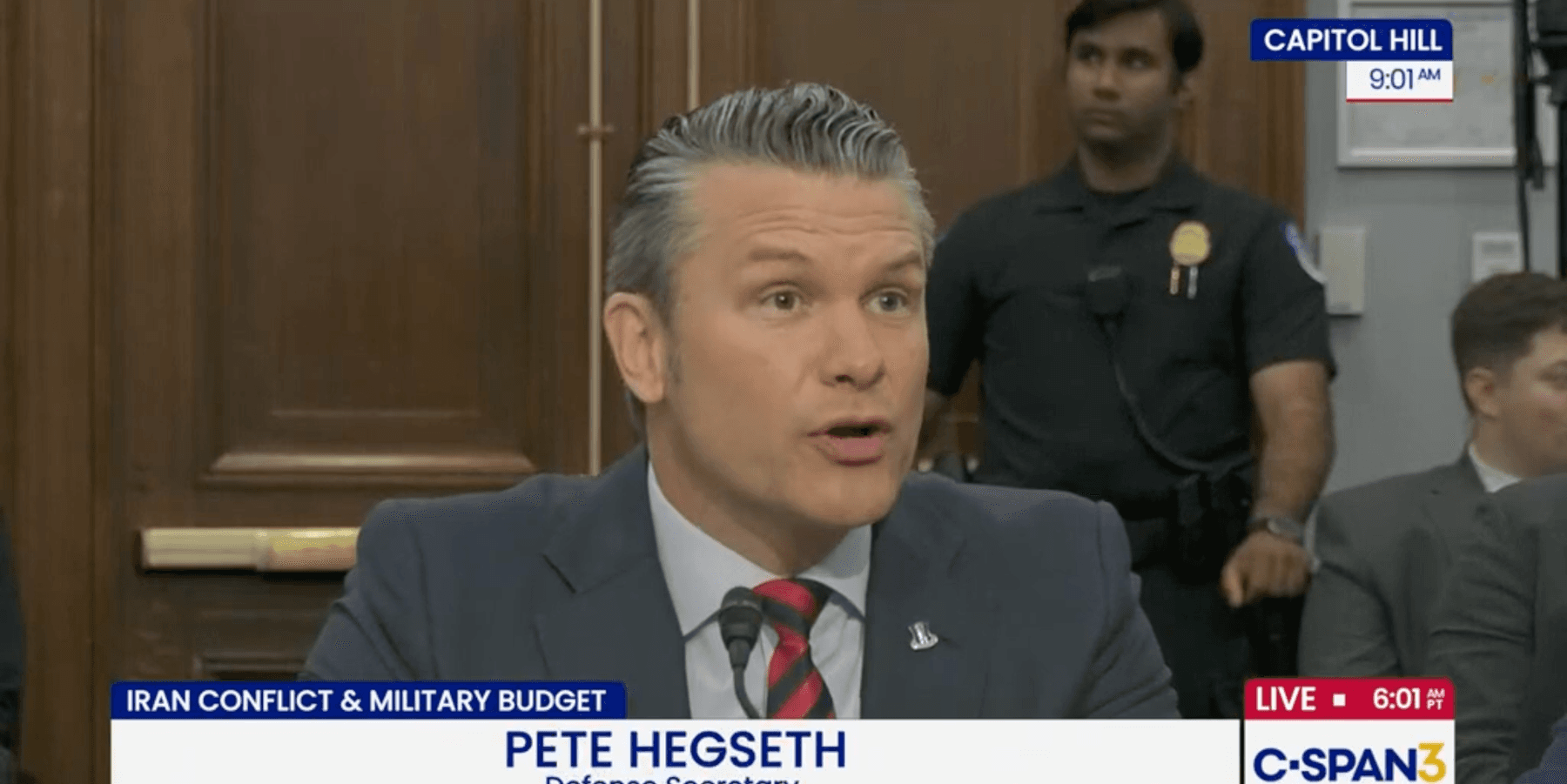
In a Tuesday hearing, Defense Secretary Pete Hegseth repeatedly rejected congressional concerns about depleting munitions stockpiles, dismissing them as “foolishly and unhealthily overstated.”
“We know exactly what we have. We have plenty of what we need,” Hegseth told the House Appropriations Defense Subcommittee. “Any munitions we're using, we know what we're trading off of to preserve capabilities, so we have maximum optionality across the globe, which we do.”
The Defense Secretary later added that he took issue with “the characterization that munitions are depleted.”
“Ultimately, we have all the munitions needed to execute what we need to execute, and we're going to ensure that we supercharge that going into the future,” Hegseth said.
Though independent analysts agree with the Pentagon that any munition shortage will not threaten the U.S. military’s ability to wage this war against Iran, lawmakers and experts have raised questions about future preparedness.
A report late last month from the Center for Strategic and International Studies found that the U.S. had already exhausted roughly half of its Precision Strike Missiles and potentially up to 80% of its THAAD interceptors. CSIS warned that, given the prewar inventories, “the levels today will constrain U.S. operations should a future conflict arise.”
A Financial Times report from March, roughly two weeks into the war, said that the administration had gone through enough munitions that it would take “years” to replenish them.
Hegseth himself had echoed similar concerns about the American weapons stockpile, reportedly pausing a 2025 weapons shipment to Ukraine over such concerns, and citing fears over munitions shortages as a reason to push weapons contractors to rapidly accelerate production.
In Tuesday’s hearing, Hegseth said that the $1.5 trillion dollar Pentagon budget was intended to help replenish the stockpile. Acting Defense Department comptroller Jules Hurst also updated his estimate of the war’s cost to $29 billion, a $4 billion increase over his testimony last month, and still well short of outside estimates, some of which has put the price tag as high as $72 billion. Neither Hegseth nor Hurst offered a timeline of when the administration might request supplemental funding for the war or how much they would be asking for.
In her closing remarks, Rep. Betty McCollum (D-Minn.), the ranking member on the subcommittee, noted this lack of details from those testifying.
“The department can't seem to manage $1 trillion that Congress provided last year. So gentlemen, we need information,” she said. “We mark our bill up on June 11, and need to be able to justify, to do our fiduciary responsibility to the taxpayers any increased funding that you seek. So we expect the information that we've been asking for munitions and supplemental requests.”
- Expert: Iran war cost $72 billion over first two months ›
- 2 hearings, 0 justification for a $1.5 trillion military budget ›
- Navy: Iran war stockpile woes behind 'pause' on aid to Taiwan ›
- Forget the Vietnam war 'gap' we have a real credibility chasm today | Responsible Statecraft ›
- Iran and Ukraine depleted 'virtually all' US long range missiles: Report | Responsible Statecraft ›