

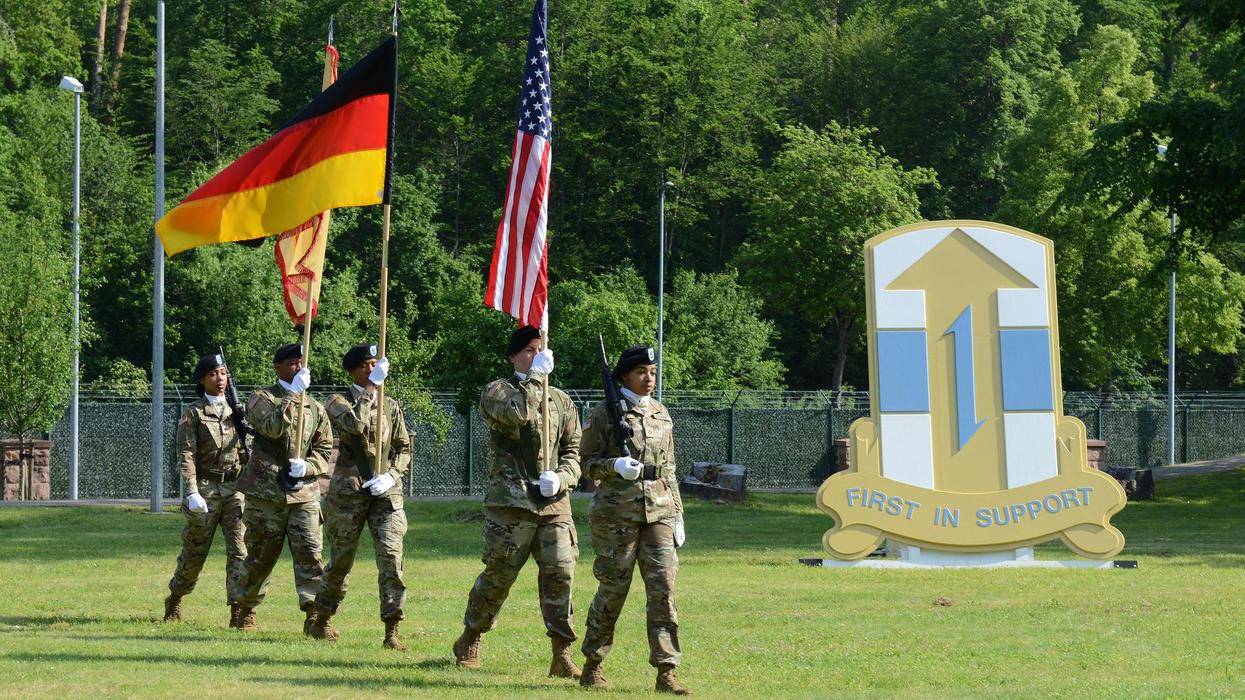
At first glance, the Trump administration’s decision to withdraw two battalions from Germany and cancel the planned deployment of intermediate-range ground-launched missiles there looks like a win for those who favor reducing America’s overseas military presence or prioritizing the Indo-Pacific over Europe.
But how the United States retrenches and refocuses its foreign policy ambitions matters enormously. And the way this announcement was handled could ultimately prove to be a setback for both so-called “restrainers” and “prioritizers” as they seek to reshape U.S. foreign policy strategy.
To understand the reasons why, one must broaden the aperture beyond basing arrangements, defense spending, military inventories, and missile capabilities to examine the key strategic challenges facing the United States, Europe, and Russia.
For the United States, the rise of China and the nature of the challenges it poses mean that Europe will no longer be a primary arena of geostrategic competition, as it was during the Cold War, and that Washington can no longer afford to use NATO as a means of Westernizing former Warsaw Pact states and Soviet republics, as it did for much of the post-Cold War period. To the extent that Europe will be valuable to the United States, it will be as a stabilizing counterweight to rival powers in the emerging multipolar order and as a partner to the United States in our high-technology competition with China.
A Europe that is economically stagnant, demographically weak, internally riven, and chronically prone to crises cannot balance against Russian power, let alone help the United States deal with China. To the degree that it demands increasingly scarce American military resources, NATO detracts from Washington’s ability to concentrate its power and attention on the Indo-Pacific. And Europe’s evident reluctance to use diplomacy to manage and mitigate the threats posed by Russia – which it views as far more hostile and aggressive than does the Trump administration – only increases the odds of new conflicts and encourages greater strategic alignment between Moscow and Beijing, thereby making America’s China conundrum even more complicated and challenging.
For Russia, the war in Ukraine is just one battlefield in a larger struggle to secure itself against threats it perceives from the United States and NATO, which has doubled in size since the end of the Cold War, even as Moscow has lost its former Warsaw Pact allies. One of the Kremlin’s most powerful incentives to accept a compromise settlement of the war has been its recognition that, even if it achieves all its declared territorial ambitions in Ukraine, it will still face a significant military threat from NATO, and therefore will have a strong reason to seek arms control negotiations with the West, which will be all but impossible if the war remains unsettled. Another is Moscow’s understanding that normalized relations with the United States would reduce Russia’s dependence on China (which the Ukraine war has greatly deepened) and provide the Kremlin with greater geopolitical maneuvering room in the emerging multipolar world.
All these considerations should add up to an American policy of managed, rather than abrupt, rebalancing within the NATO alliance, in which that rebalancing is harmonized with efforts to restore Europe to economic, military, and cultural health and normalize relations with Russia. As Europeans assume greater responsibility for their own self-defense, the United States should discourage nuclear weapons proliferation among NATO members, which could destabilize relations with Russia and increase the odds of proliferation in other parts of the world. The United States should not cancel weapons plans that Russia perceives as threatening without getting concessions from Moscow, as that would disincentivize Russian compromises over Ukraine and over its broader military posture.
Sadly, the Trump administration’s withdrawals from Germany do almost the opposite. By announcing his decision with little advance notice, Trump left NATO with inadequate means to counter Russia’s growing numbers of Oreshnik intermediate-range hypersonic missiles. This gap has stoked fears that the US nuclear umbrella is unreliable and increased the chances of nuclear proliferation in Europe. In unilaterally removing the threat of pointing America’s newly developed Dark Eagle hypersonic missiles at Russia, the administration has also weakened an important Russian incentive for compromising over Ukraine.
The result could be perpetual instability in Ukraine and other European hotspots, coupled with a Europe too distrustful to engage with Russia yet too weak to deter it. And a crisis-prone Europe would not facilitate reduced American involvement there.
How should this have been handled? Ronald Reagan struck a pragmatic balance in his approach to the somewhat similar challenge posed by the Soviet Union’s deployment of SS-20 intermediate-range missiles during the Cold War. These were highly accurate, multiple warhead, mobile systems whose range fell below restrictions in strategic arms treaties, and they prompted fears in Europe that the United States would be reluctant to put itself at risk by using intercontinental missiles to respond to theater-level Soviet nuclear strikes against NATO allies.
To reassure NATO allies of U.S. protection, incentivize Moscow to negotiate restrictions on these intermediate nuclear forces, and ensure effective deterrence should arms control efforts fail, the Reagan administration employed a “dual track” policy of deploying Pershing II missiles to West Germany while offering to remove them if the Kremlin agreed to end its own deployments.
Moscow first balked at this offer, breaking off arms control talks with the United States in the hope that West Germany’s peace movement would snarl Reagan’s plans. But the deployment of highly accurate Pershing IIs brought Moscow back to the negotiating table by provoking Soviet fears that these weapons could strike hardened targets in the western USSR and destroy Soviet command and control facilities with little warning. Reagan and Soviet leader Mikhail Gorbachev ultimately agreed to the Treaty on Intermediate-Range Nuclear Forces (now defunct), banning all missiles of this class.
Can Trump strike a similar, Reagan-esque balance between deterrence and diplomacy? It will require more than pragmatic presidential leadership. It will also require a well-managed interagency process in Washington. Reorienting the NATO alliance — as well as adapting to the broader demands of a more complex, multipolar world — will be much more difficult if the White House does not balance contending national and bureaucratic interests and ensure that progress toward one goal does not subvert progress toward another.
All statements of fact, opinion, or analysis expressed are those of the author and do not reflect the official positions or views of the US Government. Nothing in the contents should be construed as asserting or implying US Government authentication of information or endorsement of the author’s views.
- The US Army is about to get smaller, especially in Europe ›
- Trump's right to take troops out of Germany. Now see where they go. ›