

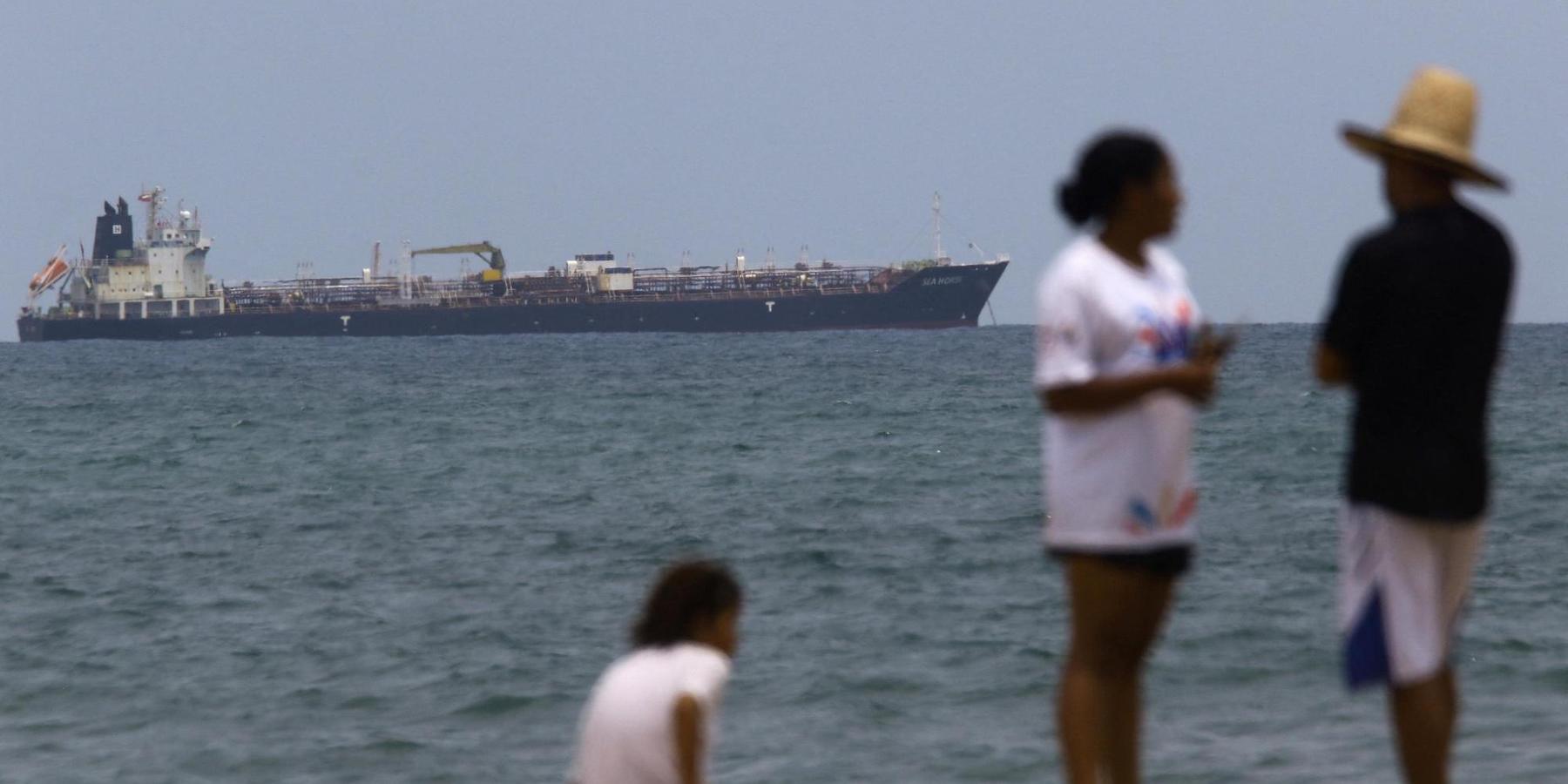
In a positive twist, the Trump administration said it does not plan to block a Russian oil tanker from delivering 730,000 barrels of crude to Cuba, which has been suffering from acute fuel shortages since the U.S. imposed a de facto oil blockade on the island in late January.
Speaking to reporters aboard Air Force One Sunday night, President Trump confirmed that he had “no problem” with countries, including Russia, sending oil to Cuba. The move came as a surprise given that the administration has coerced the island’s two largest suppliers, Mexico and Venezuela, into halting all oil shipments to Cuba. “We don't mind letting somebody get a boatload because they need it. They have to survive,” Trump said.
The crude oil aboard the U.S.-sanctioned Anatoly Kolodkin, which recently arrived in Cuban waters, can be refined into about 250,000 barrels of diesel. Now, it will take between 15-20 days to process the oil and another 5-10 days to distribute it across the country, according to Cuban energy expert Jorge Piñón.
Russian spokesperson Dmitry Peskov said the fuel shipment is intended to help Cuba maintain essential services. The country’s infrastructure has been deteriorating for years under U.S. sanctions and economic mismanagement but has become particularly precarious since January. Peskov stated, without providing further detail, that supplying Cuba with fuel was raised at recent talks his country held with the United States.
White House spokesperson Karoline Leavitt said Monday that U.S. sanctions policy toward Cuba had not changed and that future decisions regarding what she called “humanitarian” shipments to the island would be handled on a “case-by-case basis.”
Beyond Leavitt’s remarks, there are a number of possible explanations for the administration’s drastic shift from pressuring countries to halt fuel provisions to the island to now “allowing” a global superpower like Russia to give Cuba a lifeline.
On the one hand, the administration may be concerned about the dire humanitarian impacts of ongoing fuel shortages and a potential migratory crisis brewing just off U.S. shores in an election season. The island’s worsening crisis risks undermining U.S. moral standing and leverage in ongoing negotiations with Cuba, particularly if the country collapses before a deal can be reached.
On the other hand, the U.S. may simply need to focus on other priorities. America’s war in Iran and stalled negotiations with Russia over the war in Ukraine could mean the administration wants or needs more time to make progress on resolving those conflicts before paying closer attention to Cuba, which Trump most recently claimed on Friday would be “next.”
More likely, experts suspect, is that the shipment could indicate bilateral talks between the U.S. and Cuba — which Cuban President Diaz-Canel confirmed on March 13 after weeks of President Trump saying Secretary of State Marco Rubio was talking to Cuba’s leaders at the “highest levels” — are indeed moving forward after many had assumed they had stalled.
Bloomberg reported that the U.S. decision to let the shipment through came after Cuban authorities authorized the U.S. Embassy in Havana to import small quantities of fuel for its own operations. This happened just a week after the Washington Post reported that Cuba’s foreign ministry had denied Washington’s request, which they called “shameless.”
On Sunday, Cuba’s deputy foreign minister Josefina Vidal, who was the island’s point-person in bilateral negotiations with the Obama administration a decade ago, gave a rare public interview to Al Jazeera from Havana. She reiterated Cuba’s willingness to have the U.S. “participate in Cuba’s economic development” but clarified that Cuba “is not alone” in the world, a potential nod to the Russian shipment.
In a sign of cooling tensions over the past month, the Trump administration has authorized fuel sales, including from Venezuela, to Cuba’s private sector, and sent humanitarian aid to hurricane-stricken eastern Cuba through the Catholic Church. A U.S. official and a source close to the administration, meanwhile, have clarified that the U.S. is not planning for military operations on the island.
And while no large fuel shipments have reached the island since January 9, Reuters reported that at least 30,000 barrels of diesel have been imported by Cuban entrepreneurs from the United States through intermodal tanks being dispatched at Cuban gas stations exclusively for private use, which may help explain why residents have noticed more activity on Cuba’s streets over the last two weeks.
The Cuban government, for its part, has attempted to improve ties by releasing political prisoners, loosening restrictions on private enterprise, and making considerable, if long-overdue, outreach to Cuba’s diaspora to invest in businesses on the island.
But even amid a cooling of bilateral tensions, there was no guarantee that the U.S. would allow the Russian tanker to dock without incident. Two other Russian tankers have changed course, presumably due to U.S. threats, over the past month, and one Trump administration official told the Atlantic that the Anatoly Kolodkin barreling toward Cuba would constitute a “showdown.”
Rubio, for his part, railed against Cuba’s “incompetent” Communist leaders late Friday afternoon, telling reporters in France that he still sought regime change on the island and that its recurrent blackouts and economic decline were in no way related to U.S. policy.
While the fuel shipment from the Anatoly Kolodkin is not a long-term solution to Cuba’s perennial fuel shortages and deteriorating oil infrastructure, it opens the possibility of further emergency fuel imports. On the sidelines of last Saturday’s Community of Latin American and Caribbean States Heads of State Summit in Bogota, where many African leaders were also in attendance for a concurrent gathering, Cuba’s foreign minister Bruno Rodríguez met with his counterparts from Mexico, Colombia, and Brazil, as well as oil-producing Nigeria and Ghana, though it was not clear whether they discussed fuel shipments.
Regardless of whether these smaller countries join Russia in sending oil, Cuba is barreling ahead with attempts to meet its own energy needs. In her interview with Al Jazeera, Deputy Foreign Minister Vidal clarified that Cuba had plans, by the end of 2026, to boost its production of national crude to meet 50% of domestic demand as well as to double solar energy output to cover 20% of demand.