

This article is part of an RS series reflecting on the 250th anniversary of American Independence and its impact and meaning for modern U.S. foreign policy, war, and peace.
The spring of 1794 strained the nerves of even the most principled adherents to official neutrality and free commerce.
The British Royal Navy had seized 250 American merchant vessels en route to the French West Indies. Neither the Federalists nor the Republicans were clamoring for war, but they disagreed bitterly over how to resolve the crisis without being swept up in a European maelstrom. Most agreed the young country was too weak to take on a major power.
In an April 25 letter to Vice President John Adams, Thomas Jefferson — the Republican leader and famous French sympathizer — lamented, “my countrymen are groaning under the insults of Gr. Britain. I hope some means will turn up of reconciling our faith & honour with peace: for I confess to you I have seen enough of one war never to wish to see another.”
Jefferson would receive his wish this time, although he and the Republicans were outraged by President George Washington’s decision to avert war through an unpopular, one-sided treaty. But such was the price of peace. The British, then embroiled in an existential struggle against revolutionary France, eventually stopped seizing American ships, creating an opening for negotiations.
In the more than two centuries since the vexations of Washington’s second term, however, war has too often been the norm — unnecessary, undeclared, ruinous, even genocidal. This bloody history can obscure the founding generation’s genuine fear that war’s deleterious consequences would undermine republican government and weaken the country’s independence at an irrecoverable cost in blood and treasure.
America’s semiquincentennial should compel us to revisit these ideas without resorting to presentism, because the American Revolution remains the most important event in our history, and the Constitution these former revolutionaries crafted in 1787 is still our Constitution today.
This does not mean resorting to hagiography. While many founders dreaded foreign wars, railed against permanent alliances, or even proposed utopian visions for enduring international comity, they were not saints. They made plenty of mistakes in the cause of peace, such as Jefferson’s economically disastrous embargo to avoid another war with Great Britain in 1807.
They were not pacifists, either. Jefferson, who “retained the instruments and followed the basic thrust of his predecessors’ foreign policy,” according to historian George Herring, deployed the new navy to fight a limited war against the Barbary pirates from 1801 to 1805. The operation included a failed attempt to overthrow Tripoli’s government. When the fighting ended indecisively, it had cost the treasury “far more than the price of tribute” typically paid to the Barbary States, says Herring.
Meanwhile, on the North American continent, both the U.S. government and a racist citizenry pursued violent expansionism in Indian lands, unleashing campaigns of indiscriminate murder and dispossession. As historian David Silverman writes in “The Chosen and the Damned,” “the conquest of Indians was the central activity of the federal government and several states and territories throughout the era of the early republic… killing Indians for their land was the doctrine of the entire nation.”
Yet in light of our current troubles, America’s first leaders still have something to teach us. Though they inhabited a vastly different world, one of their problems broadly resembles one of ours: determining the difference between vital and peripheral national interests — and how best to safeguard the former. In our age of the imperial presidency and permanent war, it may seem quaint that Presidents Washington, Adams, and Jefferson treated war against rival European powers as a true last resort to be avoided if at all possible.
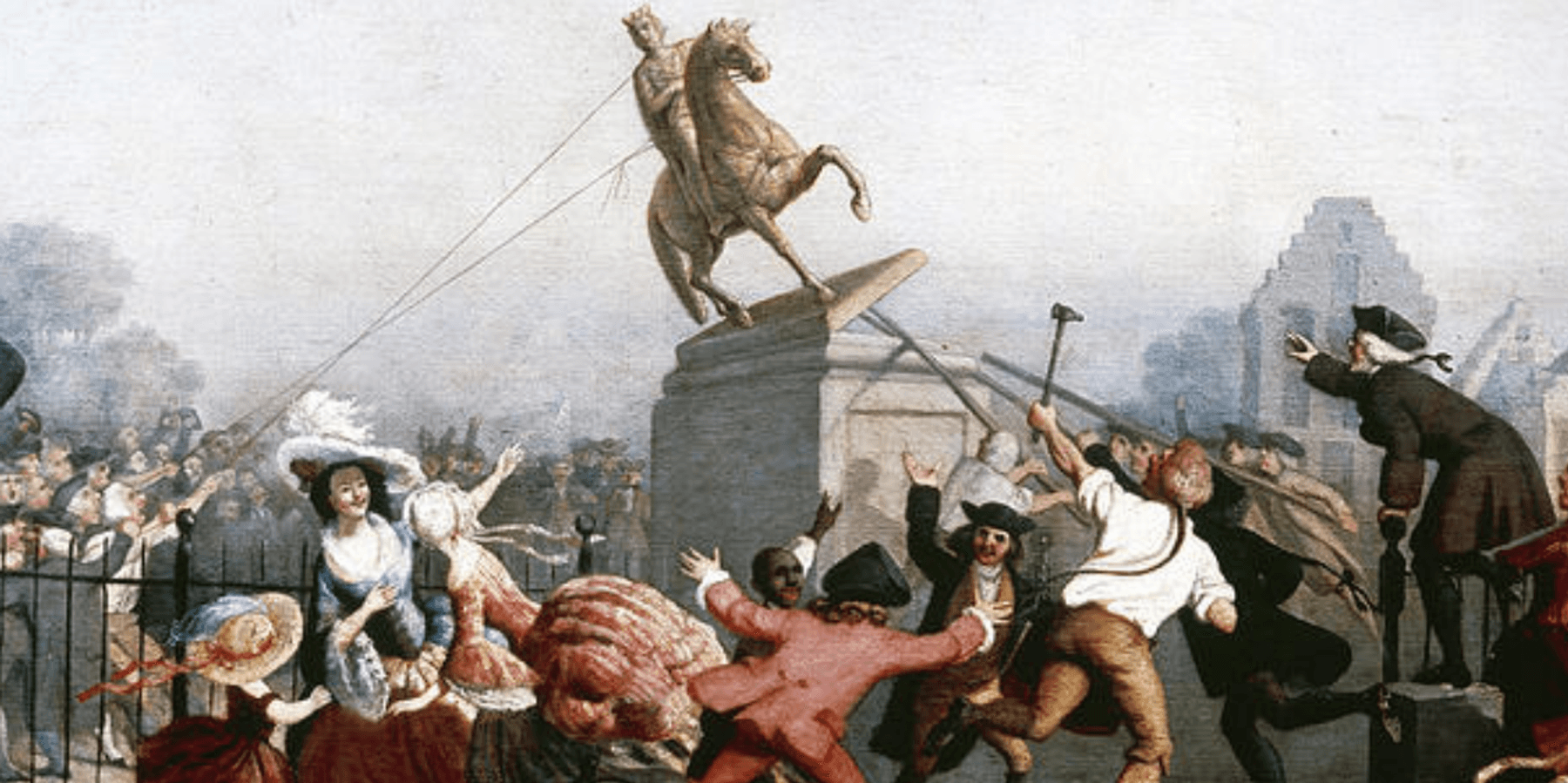
We might start with the debates at the Constitutional Convention in August 1787 concerning war powers. Massachusetts delegate Elbridge Gerry “never expected to hear in a republic a motion to empower the Executive alone to declare war.” By vesting this power in Congress, the framers rejected British notions of prerogative power. An “elective King” the new republic did not need.
As John Jay warned in the oft-quoted Federalist No. 4, “... absolute monarchs will often make war when their nations are to get nothing by it, but for the purposes and objects merely personal, such as thirst for military glory, revenge for personal affronts, ambition, or private compacts to aggrandize or support their particular families or partisans.”
The framers’ fear of arbitrary, prerogative power resonates for reasons that are all too obvious. In waging war against Iran without so much as a nod to Congress or trace of public consent, President Donald Trump defiled the Constitution, unwittingly confirming the 18th-century wisdom about corrupt, self-dealing despots. Trump is scarcely the first president to leap headlong into an ill-advised war of choice, and some of his predecessors notably obtained congressional authorization and public backing before sinking into the abyss. Yet Trump’s folly stands out as we mark the 250th anniversary of the revolutionaries’ rejection of monarchy.
In an interview with Responsible Statecraft, Pulitzer Prize-winning historian Joseph Ellis said Trump’s Middle East misadventures are a stark reminder that “the worst thing any president can do is commit the United States to an unnecessary and unwinnable war.” The Constitution’s framers got it right, Ellis said: “The decision to go to war should not be made by one person.”
Moreover, the Iran war fiasco was undertaken at the urging of a foreign country — Israel — whose interests do not align with those of the United States and whose malign influence over U.S. foreign policy might churn George Washington’s stomach. Unlike modern Israel, eighteenth-century France did have a treaty with the United States, the 1778 pact negotiated by Benjamin Franklin during the reign of King Louis XVI. Washington consulted with his cabinet to discuss the country’s obligations to the newly republican France, whose leaders were pressing for the U.S. to intervene.
“President Washington had already concluded that the U.S. was too weak and unprepared to fight in a European war and would suffer economic disaster if trade was cut off with Great Britain. He therefore prioritized neutrality, but stopped short of a formal renunciation of the French alliance,” according to a forthcoming book by Mike Yaffe of the George Washington Leadership Institute at Mount Vernon. “Washington articulated a vision for a foreign policy designed to give the United States maximum flexibility to chart its own course in pursuit of the national interest: lasting peace with all nations.”
In the cabinet, Jefferson and Alexander Hamilton set aside their reservations and pushed Washington to issue a proclamation of neutrality on April 22, 1793, and the following year Congress passed a neutrality act. “No other president has been able to exercise such enduring influence over U.S. foreign policy,” says Ellis.
At the time, however, some early American leaders balked at this approach, arguing that war was necessary to defend American commerce. Others, namely James Madison, believed Washington had usurped Congress’ power over matters of war and peace. Writing under the name Helvidius, Madison said, “War is in fact the true nurse of executive aggrandizement… In war the honors and emoluments of office are to be multiplied; and it is the executive patronage under which they are to be enjoyed. It is in war, finally, that laurels are to be gathered, and it is the executive brow they are to encircle.”
John Adams inherited Washington’s neutralist stance as war hysteria gripped the country in the late 1790s. He ultimately averted an all-out clash with the French who, like the British before them, were preying on American shipping. The second president sought a negotiated settlement against the wishes of many fellow Federalists, not least Hamilton, who sought to exploit the crisis to expand the army and strengthen the central government.
“Adams built the navy to combat these erstwhile allies and in so doing defended neutrality without a major war. The Quasi-War involved real combat at sea but ultimately restored US-French relations to one of benign neutrality,” Christopher Mott, a scholar at the U.S. Institute for Peace & Diplomacy, told Responsible Statecraft.
Adams considered his decision to negotiate with France “the most disinterested, prudent, and successful conduct in my whole life,” as cited by the late Gordon Wood in his monumental “Empire of Liberty.” Peace arrived too late to save Adams’ political career. But if we are truly interested in saving our republic from the enervating miseries of endless war, we might take some inspiration from his stubborn pursuit of peace.
- On Greenland, Trump wants to be like Polk ›
- By the sword: America was born intervening ›
- America's birthright is anti-imperialist, not empire ›