

Twenty-five years ago, 19 hijackers took control of four American airliners and crashed them into symbols of American power, killing upwards of 3000 people. The American population watched the events unfold in real time. It was an emotionally jarring event that changed the country.
In some respects, the events of 9/11 needed no explanation. The destruction of the World Trade Center buildings and the massive, and random, loss of life were horrifying to all. The meaning of the attacks, however – and the motivations of the hijackers – were less clear.
The effort to explain the motives behind the attack, and to understand “why they hate us,” brought a pre-existing debate over Islamist militancy to the center of American public life. In the decade leading up to 9/11, the Washington policy community had been divided over how to deal with the Islamist movement and particularly those extremists who sought to use violence to impose a narrow vision of religious orthodoxy upon reluctant societies.
At the heart of the 1990s policy debate was a dispute over causation: are religion and ideology the sources of violent extremism, or are poverty, marginalization and authoritarian misrule to blame? Commentators and politicians on the political right viewed the issue in terms reminiscent of the Cold War. The conflict with Islamism (or “Islamic fundamentalism”) was ideological in nature and, like international communism, had to be confronted with force. Hence, American foreign policy should prioritize security and support our regional allies in their efforts to eradicate both the Islamist opposition and violent extremists.
Those on the other side of the debate rejected this vision of a new “green peril” and saw the underlying claims as inaccurate and misleading. To operate from such flawed assumptions, it was argued, would result in a foreign policy that served neither American interests nor those of the Arab (and Muslim) populations most directly affected. The best strategy for dealing with both militant violence and the non-violent opposition was economic development and political reform.
Both the George H.W. Bush and Clinton administrations sought to find a common ground between these two perspectives, one that addressed both security concerns and the need for reform. The terrorist attacks of 9/11, however, upended this balance. The shock and horror of that day provided the George W. Bush administration a free hand to reshape American foreign policy. In doing so, the second Bush administration embraced the security side of the argument and the corresponding policy prescriptions. What motivated the administration was a view that this new war on terror was – like WWII and the Cold War – an existential “conflict between freedom and tyranny.” In the face of such a dire threat, the “gloves come off.”
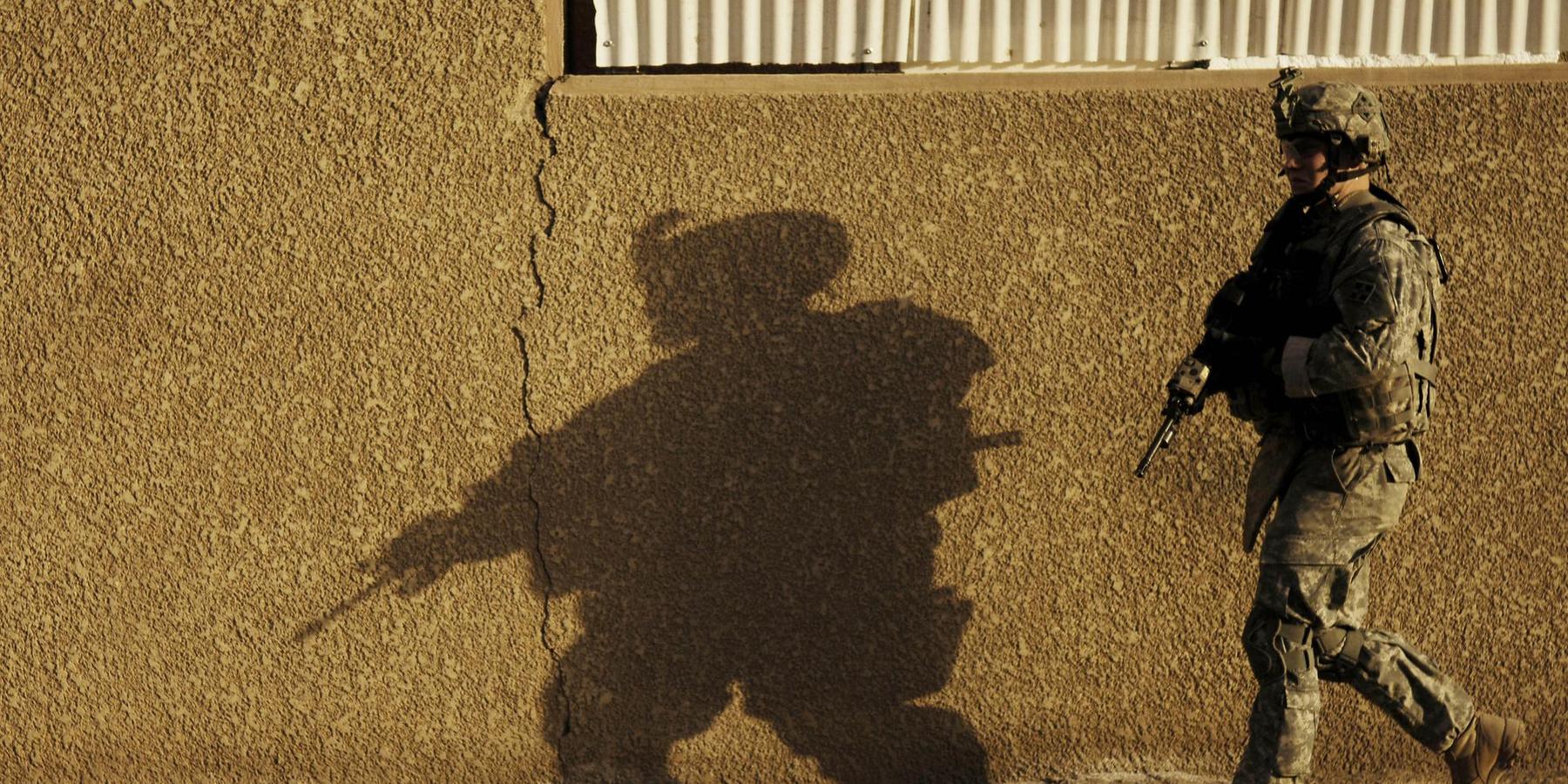
Many experts now recognize that the militarized response to 9/11 was counter-productive. In the two decades that followed, the number of groups and fighters that claimed allegiance to the jihadist cause increased, as did their geographic areas of operation. Even as U.S. forces made gains against al-Qaida, new groups such as the Islamic State in Iraq and Syria (ISIS) emerged that were even more extreme and violent. The precipitous demise of the Afghan government in August 2021 – and the return of the Taliban to power – further illustrated the limits of American military power.
All of this occurred despite the concerted effort by the U.S. government and others to rein in Islamist militancy and counter the ideology of violent extremism. The problem, in short, got worse, not better.
Misdiagnosing the problem
The failures of America’s war on terror were rooted in a misdiagnosis of the problem. The Bush administration promoted the idea that the 9/11 hijackers were motivated by their hatred of American values and rejected any notion that U.S. policies contributed to either anti-American sentiment or violent extremism. “They” hated us for who we are, it was argued, not what we do.
By framing the challenge of Islamist militancy within a discourse of terrorism and civilizational struggle, governmental leaders embraced a belief common on the political right that “the application of [military] power is the most important thing in winning the war on terrorism.” American policy makers subsequently pursued a military strategy to effect political change in the Middle East, South Asia and Africa at the expense of diplomatic, legal and other alternatives. The 1990s debate was effectively over; those arguing for a policy of confrontation had won.
While the intent of the American military strategy was to deny terrorist groups safe havens, the practical effect was the opposite. American military interventions destabilized entire regions and created the kind of lawless anarchy in which militant groups proliferated. U.S. interventions also exacerbated anti-American sentiments and allowed militant groups to portray themselves as nationalist defenders fighting an occupying enemy.
The 2003 invasion of Iraq exemplified this trend, with the American occupation becoming a “‘cause celebre’ for jihadists” and inadvertently breathing new life into the militant movement. American policy in the Sahel, the Horn of Africa, and Yemen paint a similar picture. In each instance, military intervention created the conditions in which Islamist militancy flourished. This, in turn, justified further U.S. interventions, creating a vicious cycle of perpetual conflict.
American military strategy also relied upon regional autocracies to prosecute the war on terror. This aspect of American policy represented a key paradox. While U.S. actions were said to be defending freedom, the reality is that U.S. government agencies prioritized support for the militaries and security services of authoritarian allies. Little was done to promote democratic accountability or protect civilian populations from abuses inflicted by these same governments. The prosecution of the war on terror, thus, meant diminished freedom for populations living under authoritarian rule and failed to address the relationship between government repression and radicalization.
The failure of America’s military strategy reflected a tendency to focus on symptoms, rather than causes. While the budgets of the Department of Defense, various intelligence agencies and the Joint Special Operations Command (JSOC) expanded dramatically in the post-9/11 period, similar investments were not made in other aspects of American power. There was no corresponding expansion of the mission or budgets for the U.S. Department of State or for the U.S. Agency for International Development (USAID). Funding for democracy promotion, moreover, paled in comparison to military spending and little was done to address the economic stagnation and marginalization that fueled extremism.
While this lopsided approach to counterterrorism was, in part, a continuation of past American policy, it was also due to the wartime paradigm that prioritized military power over all else. The result was “indiscipline and disappointments” as military operations failed to fix problems and Americans tired of the country’s wars.
As we reflect on the terrible events of 9/11, we can honor those who perished by learning the central lesson of the war on terror: the overreliance on military power to accomplish political objectives does not serve American national security interests. As in the current war with Iran, the U.S. military has consistently demonstrated that it can secure tactical victories while still failing to achieve strategic ends.
What is needed is not just a change in policy, but a shift in the way that the United States political leadership thinks about the problems that it is trying to solve. We owe it to those millions of Americans who have grown up in the shadow of 9/11 not to repeat the mistakes of the past.
- US universities get millions to do military research for Israel ›
- Forget the Vietnam war 'gap' we have a real credibility chasm today ›
- Symposium: What I miss most about pre-9/11 America | Responsible Statecraft ›